


Children learn food through shared meals, familiar experiences, and the steady rhythm of everyday life.
You’re standing in the grocery aisle, looking at yogurt.
It used to feel like a simple choice. Now it feels oddly consequential. Labels call out protein grams in bold numbers. Some promise to keep your child full longer. Others imply they are the smarter, more complete choice.
You turn one container around, then another, comparing what once felt interchangeable. For a moment, you find yourself wondering whether this choice matters more than you thought.
Should you choose the one with more?
Later in the week, the same question shows up again, this time in a quieter, more familiar way.
You’re packing a lunch. You add a sandwich, some fruit, something you know your child usually eats. The lunch is reasonable, balanced, and likely enough. Still, there’s a brief pause before you close the container.
You reach for something else.
A yogurt pouch. A meat stick. A protein bar.
Not because anything is clearly missing, but because the moment feels slightly uncertain. Adding one more item softens that uncertainty. It makes lunch feel more reassuring, even if you cannot fully explain why.
This small instinct, this “just in case” addition, has become increasingly common.
And it all traces back to a question that feels louder than it used to:
Is my child getting enough protein?
Why this question feels so present right now
Protein has always been part of pediatric nutrition. What has changed is not its importance, but how often it is emphasized and how it is presented to parents.
Part of the tension is that protein recommendations were designed to ensure children receive enough for healthy growth. Protein recommendations were designed to prevent deficiency and support healthy growth, not to encourage continual optimization of every snack and meal.
But in modern wellness culture, “enough” rarely feels emotionally satisfying.
Parents are often encouraged to think beyond adequacy and toward maximizing fullness, focus, performance, and long-term health in every eating moment.
That’s why the conversation around protein can feel so persistent, even when most children are already fully meeting their needs.
Over time, protein has shifted from being a component of a meal to often feeling like the main component. It is highlighted on packaging, discussed in everyday parenting advice, and woven into conversations about fullness, growth, and overall health. Protein now appears in everything from children’s snack bars to yogurts, cereals, smoothies, and convenience foods marketed as smarter or more sustaining choices for busy families.
The message is rarely forceful, but it is consistent: make sure there is enough, and when in doubt, add more.
The pressure on protein does not come from a single source. It grows from the overlap among modern wellness culture, parenting advice, convenience food marketing, and the understandable desire to feel certain that your child is doing well.
Protein offers emotional reassurance because it feels measurable. It gives parents a visible way to feel responsible and prepared in a part of family life that can otherwise feel unpredictable.
And over time, that reassurance can quietly turn into pressure, especially when ordinary meals no longer seem sufficient unless something extra has been added.
Those messages begin to shape how ordinary decisions feel. What once felt like a simple snack or an ordinary meal now carries a subtle layer of evaluation.
Is this enough?
Should something else be added?
What often gets lost in that shift
From a clinical perspective, most children in the United States are already meeting, and often exceeding, their protein needs.
This is true even before parents begin intentionally “boosting” protein through bars, pouches, powders, or prepared snacks.
Part of the confusion comes from how protein recommendations are interpreted publicly. Recommended intake levels are designed to comfortably cover nearly everyone’s needs, including those with higher requirements. They are not targets that must be hit at every meal or snack for a child to grow well.
In fact, average protein intake in Western diets already tends to sit well above estimated requirements.
That reality rarely makes headlines.
What parents hear far more often is the message that protein needs to be added, optimized, or reinforced continuously throughout the day.
In practice, protein intake tends to accumulate naturally across a day. An egg at breakfast, yogurt or cheese at a snack, beans or grains at lunch, and a familiar protein offered at dinner all contribute more than most parents realize.
In many parts of the world, diets naturally contain far less protein than modern Western diets, yet children still grow, develop, and participate in rich food cultures.
The body does not evaluate nutrition one snack at a time.
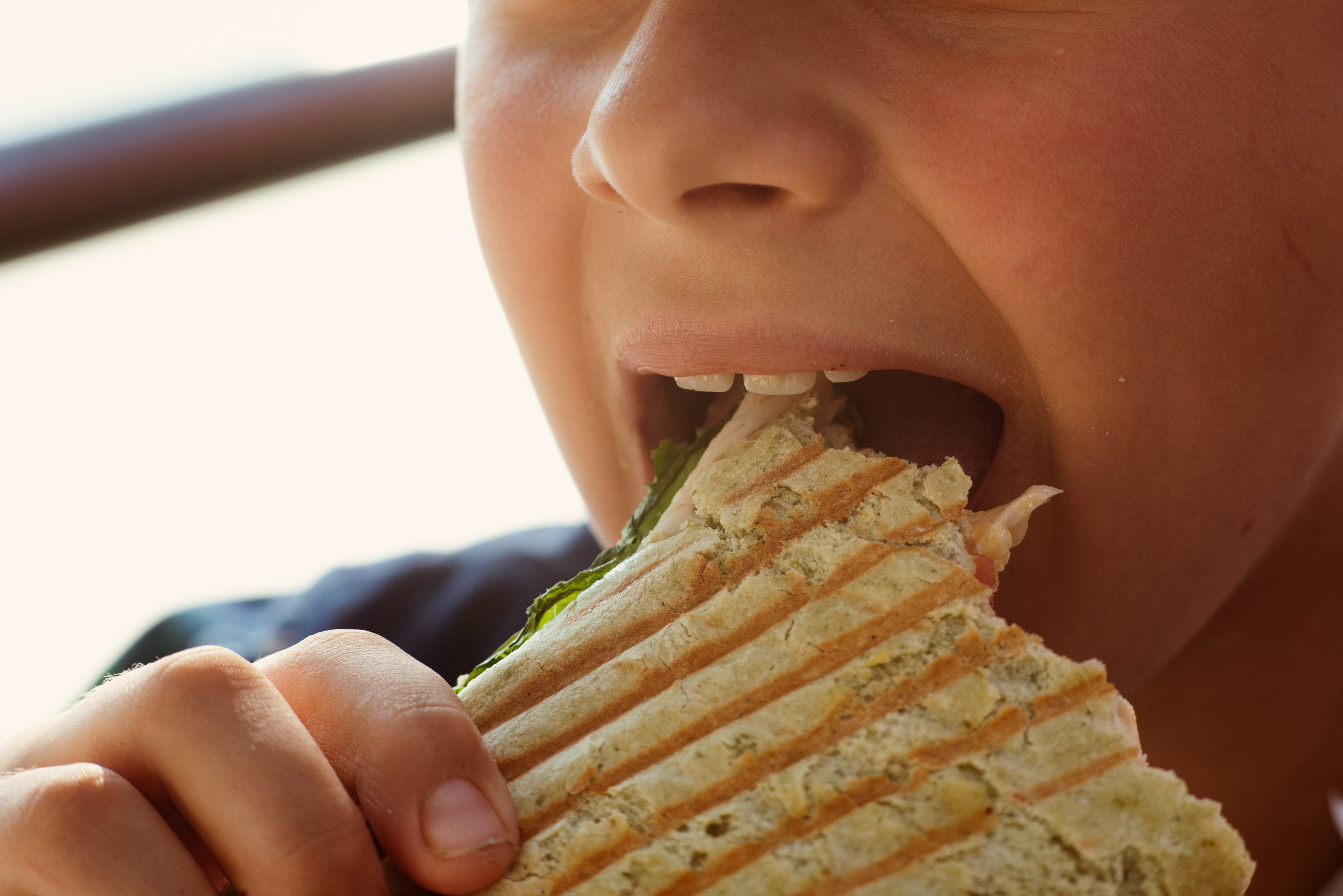
Ordinary foods often do more work across a day than parents realize.
The body uses protein as it is needed. Unlike certain nutrients, there is no dedicated storage system waiting to “hold onto” excess intake from one snack or meal. What matters far more is the steady pattern of nourishment across time.
This is where the emotional shift often begins.
The question shifts from:
“Are they getting what they need overall?”
to:
“Did they get enough right now?”
When the focus narrows to individual meals and snacks, the question changes. Instead of asking whether a child is getting what they need overall, it becomes much easier to ask whether this specific moment has done enough.
Over time, this changes the emotional tone of feeding itself.
How that pressure shows up in everyday decisions
It rarely feels dramatic. It appears in small adjustments that seem reasonable on their own.
A snack that once felt fine now seems incomplete without something more substantial. A meal feels slightly unfinished if one part is left untouched. A familiar set of foods is heavily relied upon because it provides reassurance.
Many parents also begin intentionally planning protein-heavy snacks. This often comes from a practical place. Protein can help children feel full for longer stretches, which can make the day feel more predictable. Fewer hunger swings can mean smoother transitions, easier outings, and a greater sense of stability.
Those are real and meaningful benefits.
Over time, however, protein can begin to feel like the most reliable way, sometimes the only way, to create that steadiness. A snack without it can feel less dependable, even if the child would be satisfied.
The role of “just in case” foods
This is where certain foods take on a larger role.
Items like meat sticks, protein bars, yogurt pouches, and drinkable yogurts slide easily into modern family life. They travel well, require little preparation, and often solve a problem quickly.
There is nothing inherently wrong with them.
But when they are used repeatedly to ensure nothing is missing, their role begins to shift. They are no longer just part of a snack or a meal. They become a way to answer a lingering question in the parent’s mind.
Will my child be okay if this is all they eat right now?
In that sense, the food nourishes more than the child. It also reassures the parent.
That is what makes this pattern difficult to change. It is not about the food itself. It is about what the food represents in that moment.
What this conversation tends to overlook
Protein is important for growth, but it is not the most complex part of feeding children.
What tends to shape how children eat over time is not how precisely nutrients are distributed, but how consistently they are exposed to food in ways that feel manageable and familiar.
Children learn to eat through repeated experiences. They begin to recognize flavors, grow more comfortable with textures, and gradually accept variation. These changes do not happen because one nutrient is emphasized more heavily than another. They happen because food appears regularly, predictably, and without pressure.

Children learn food by participating in it, not simply by being told what is healthy.
When too much attention is fixed on one nutrient, it can quietly pull attention away from these broader experiences.
And once you begin to recognize that shift, the question changes from:
“How do I add more protein?”
to:
“What actually helps feeding feel steadier and less loaded in everyday life?”