


Small moments like this are often where children begin to feel comfortable around food – before any expectation to eat.
Maybe you’ve read that it takes ten to fifteen exposures for a child to accept a new food, and you’ve tried to stay with that idea. You have offered the same vegetable in different meals, brought it back a few days later, and reminded yourself to be patient. Sometimes it seems to help. Other times, it seems to change very little. Over time, what begins to settle in is not just confusion, but the quiet feeling that you are putting in real effort without a clear sense of what is actually helping.
For many parents, this is where feeding begins to feel heavier than expected. It is not just about whether your child eats broccoli or leaves it untouched. It is the daily responsibility to feed them while also considering nutrition, variety, and whether you are handling this as best as you can. If your child has a food allergy or a condition like Food Protein-Induced Enterocolitis Syndrome (FPIES), that weight can feel even more constant. But even without medical concerns, the same worry shows up in ordinary moments – packing lunch, sitting down to dinner, visiting friends or relatives, traveling, or deciding whether going out to eat will feel manageable or stressful.
In response to that tension, many families turn toward approaches that aim to make food feel easier. One of the most common is play. The idea is appealing for good reason. Food play, introduced through books, simple kitchen activities, and hands-on exploration, can make food feel lighter and less loaded. A child may press peas between their fingers, stir plain yogurt in a bowl, or line up slices of colorful vegetables with real curiosity. There is no pressure in those moments, and because of that, the interaction can feel encouraging. It gives the sense that your child is starting to get comfortable.
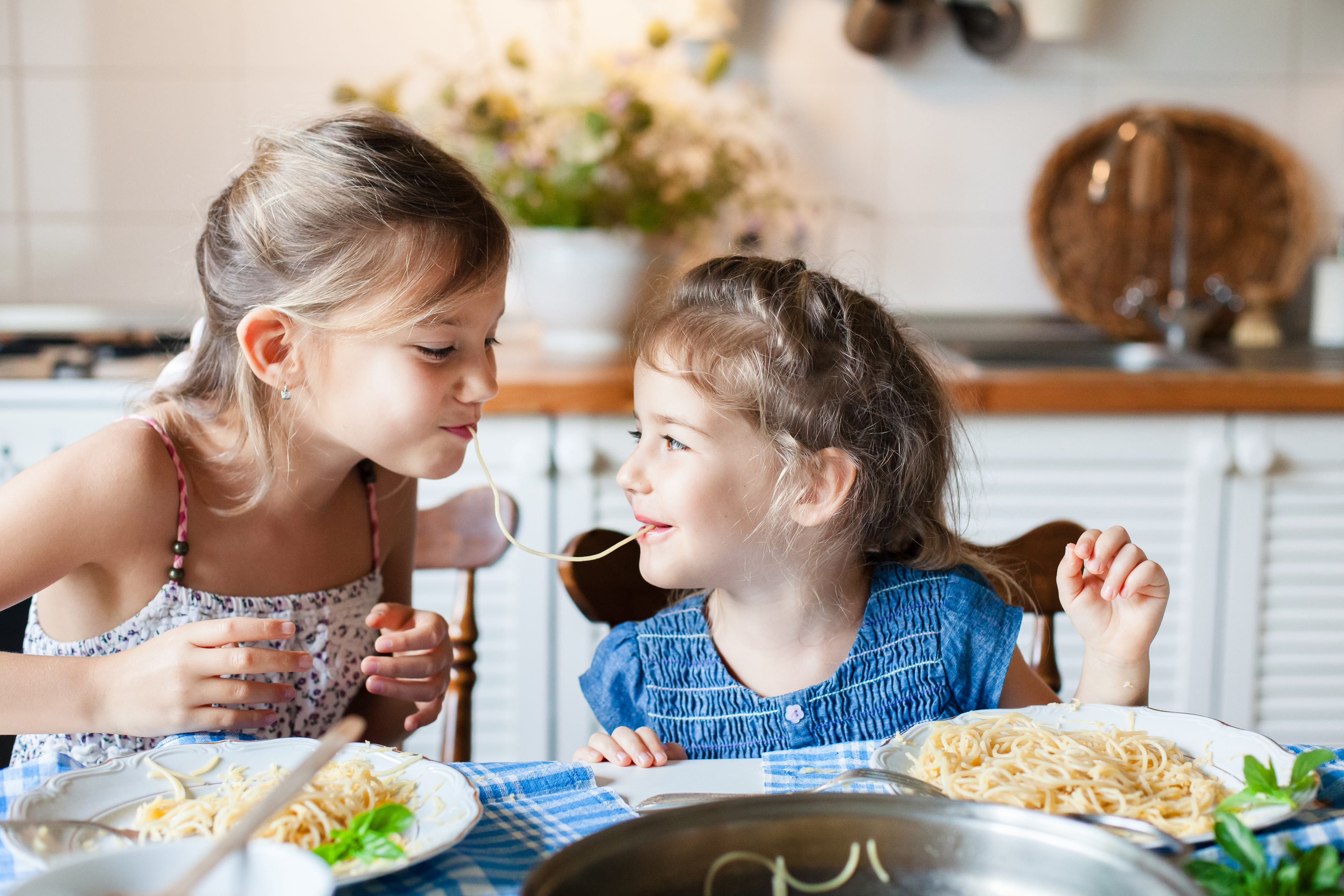
Being around food, watching others eat, and sharing the moment all help a child feel more at ease – before they decide what to do themselves.
But the harder moment often comes later.
That same food shows up at the table, and the response can be completely different. Your child hesitates, looks away, or reaches for something familiar instead. What felt easy during the activity does not carry over into the meal. This is often the moment when parents start wondering what they are missing. The effort was real, the intention thoughtful, and still the outcome feels inconsistent.
What is often missing in that moment is not another activity or a different strategy, but a clearer understanding of how children learn to eat.
Learning to eat is not simply about exposure or interaction. It is about building the ability to experience, interpret, and gradually feel comfortable with flavor and texture. That kind of learning happens in a specific setting: when a child is seated at the table, with food in front of them, often alongside something familiar that helps them feel grounded. In that moment, they are not just noticing the food. They are beginning to sort through that experience. Does this taste feel manageable? Does this texture feel acceptable? Is this an experience I could come back to again?
This is where the difference between play and eating matters most.

At the table, the experience changes. This is where children notice flavor, texture, and what feels manageable to eat.
Play introduces food in a low-pressure way, which can help reduce hesitation and build familiarity with a food’s presence. But exploring food does not necessarily build familiarity with the experience of eating it. When a child is touching or stirring yogurt during play, they are not deciding whether to swallow it, how it feels in their mouth, or whether they want to try it again tomorrow. Those are very different processes, and they require a different kind of repetition.
This is also where feeding approaches start to differ, even when they are trying to fix the same problem. Some focus on building willingness through curiosity, variety, and repeated exposure across activities. That can support engagement. But it can also leave parents without a clear sense of what to do at the table, where decisions about eating are happening in real time.
A developmental approach starts in a different place. Instead of asking, “How do I get my child to try this?” it asks, “How does my child learn to make sense of this flavor over time?” That shift may seem subtle, but it changes how meals are structured and how progress is understood. It places less emphasis on novelty and more emphasis on recognition. It allows sameness to have a role. Familiarity with a flavor can be a stabilizing anchor, helping a child feel secure enough to gradually expand. In this approach, sameness is not treated as a failure. It is often part of how confidence begins.
In practical terms, this means that learning happens through small, repeated experiences within meals themselves, not just through exposure. A child may meet the same ingredient in slightly different forms over several days. For example, zucchini might first appear as a smooth purée or roasted with olive oil, depending on that child’s level of flavor confidence. Later, it may show up sautéed in pasta, where the texture is softer but still recognizable. Over time, the child begins to connect those experiences, not because they were pushed toward something new, but because the flavor feels more familiar and easier to recognize.
This is what developmental scaffolding looks like in feeding. It is intentional and less complicated than it sounds. It helps a child build familiarity in a way that feels manageable for the child and more understandable for the parent. It begins where the child is, rather than asking them to leap toward novelty before they are ready.
One of the simplest ways this shows up is through small adjustments in how food is prepared and presented. A vegetable that feels bland or inconsistent one day may become easier to experience with a slight change. Roasting instead of steaming can reduce excess moisture and create a crisper texture. Serving a sauce on the side rather than mixed in allows a child to approach it at their own pace. Pairing a new food with something familiar, like rice or bread, can make the overall meal feel more predictable.
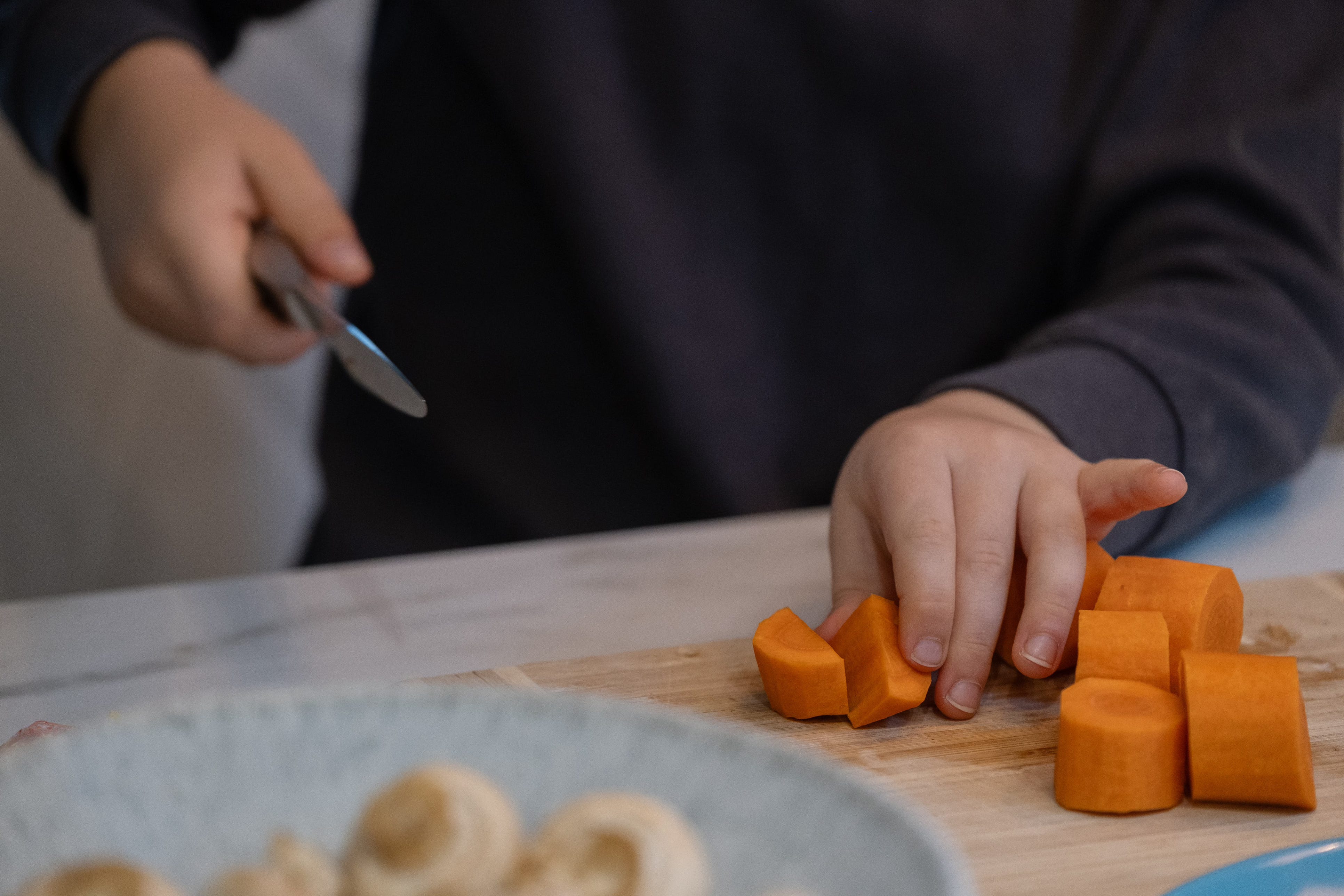
Small shifts in how food is prepared and presented can make it easier for a child to recognize and return to a flavor.
Sometimes, the adjustment is even smaller.
A drizzle of olive oil can make vegetables feel smoother, adding a silky mouthfeel and helping the flavor carry more evenly. A pinch of salt can bring out a taste that otherwise feels dull. A squeeze of lemon can brighten the flavor just enough for a child to notice it more clearly. You might think of this as a small “zhuzh.” Not in the sense of making food flashy or more performative, but in the sense of making flavor easier to recognize. When a food feels more approachable, a child is more likely to come back to it. And when that experience repeats across meals, familiarity begins to build in a way that feels steady, rather than pressured.
This transition is often the point when feeding starts to feel different for parents, too. The process starts to make more sense. Instead of trying to eliminate resistance or create the perfect moment, the focus shifts toward guiding small, steady experiences that add up over time. And that shift, from feeling responsible for fixing each moment to understanding the larger process, is often where frustration begins to soften.
What comes next is where this begins to feel clearer and more manageable in everyday meals.