

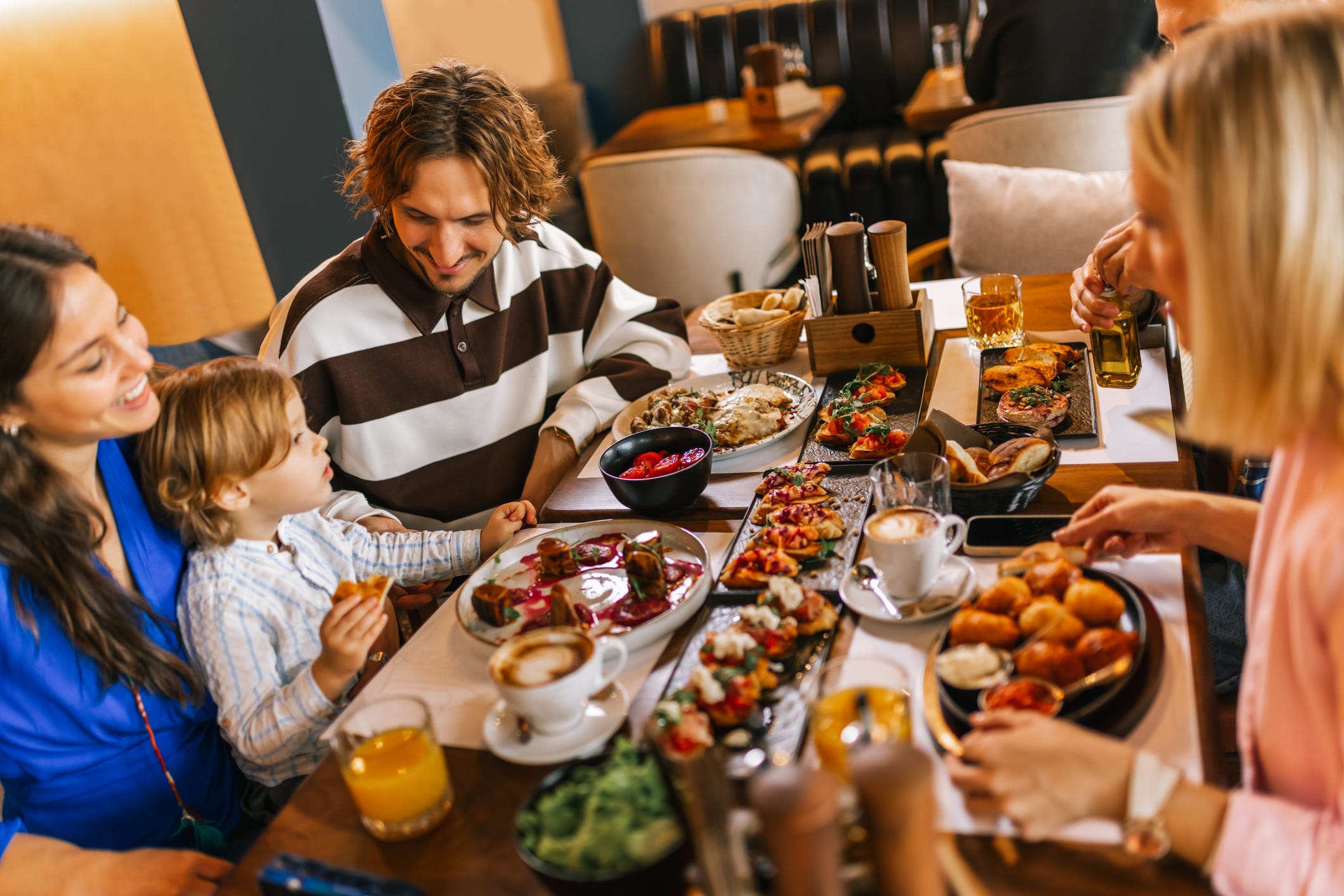
Belonging at the table changes how children approach food, even far from home.
When our children were two, seven, and nine, we traveled to Paris while my husband attended a professional meeting. My mother thought we were a bit out of our minds. Why travel so far with three young children when we could go alone?
I understood the question. Travel with young children is rarely simple. But I saw the trip differently. Not as chaos waiting to happen, and not as a test of how adventurous our kids might be, but as an opportunity to share something bigger than convenience or routine. New foods. New places. The quiet understanding that the world is wide and worth tasting.
What mattered to me wasn’t whether they loved every dish. It was whether they felt included in the experience.
Our days settled into a rhythm that felt grounded, even with young kids. Mornings began with a small pastry and warm chocolat chaud from the neighborhood patisserie. Later came fruit, thick yogurt, and a simple lunch at a nearby bistro. Dinners were savory and shared. Food wasn’t treated as an event to manage or a moment to perform. It was simply part of the day, woven into where we were and what we were doing.
Before we departed for our travels, we offered our children something that mattered more than rules or expectations. We explained that food would be prepared differently, but the ingredients would still be familiar. Eggs were still eggs. Chicken was still chicken. Pasta was still pasta. And there would always be a fresh baguette. Traveling, we told them, meant being willing to notice new things, even when they felt unfamiliar.
We weren’t asking them to be adventurous or even setting an expectation that they needed to take a taste of everything. We were asking them to notice. For our youngest, that meant looking, smelling, and staying close. For the older kids, it meant paying attention to what felt familiar and what felt new.
What we were really asking for was trust. Trust that we would guide them, and trust that they could take things in at their own pace. And they did. Not because they loved every sauce or dish, but because they felt safe enough to try, or not try, and still belong at the table. They were missing school, friends, and familiar routines, but they understood they were part of something shared and meaningful.
That experience stayed with me. Not as a story about “good eating,” but as a lesson in how children learn flavor: through context, trust, and the feeling that food is something they are allowed to approach on their own terms.
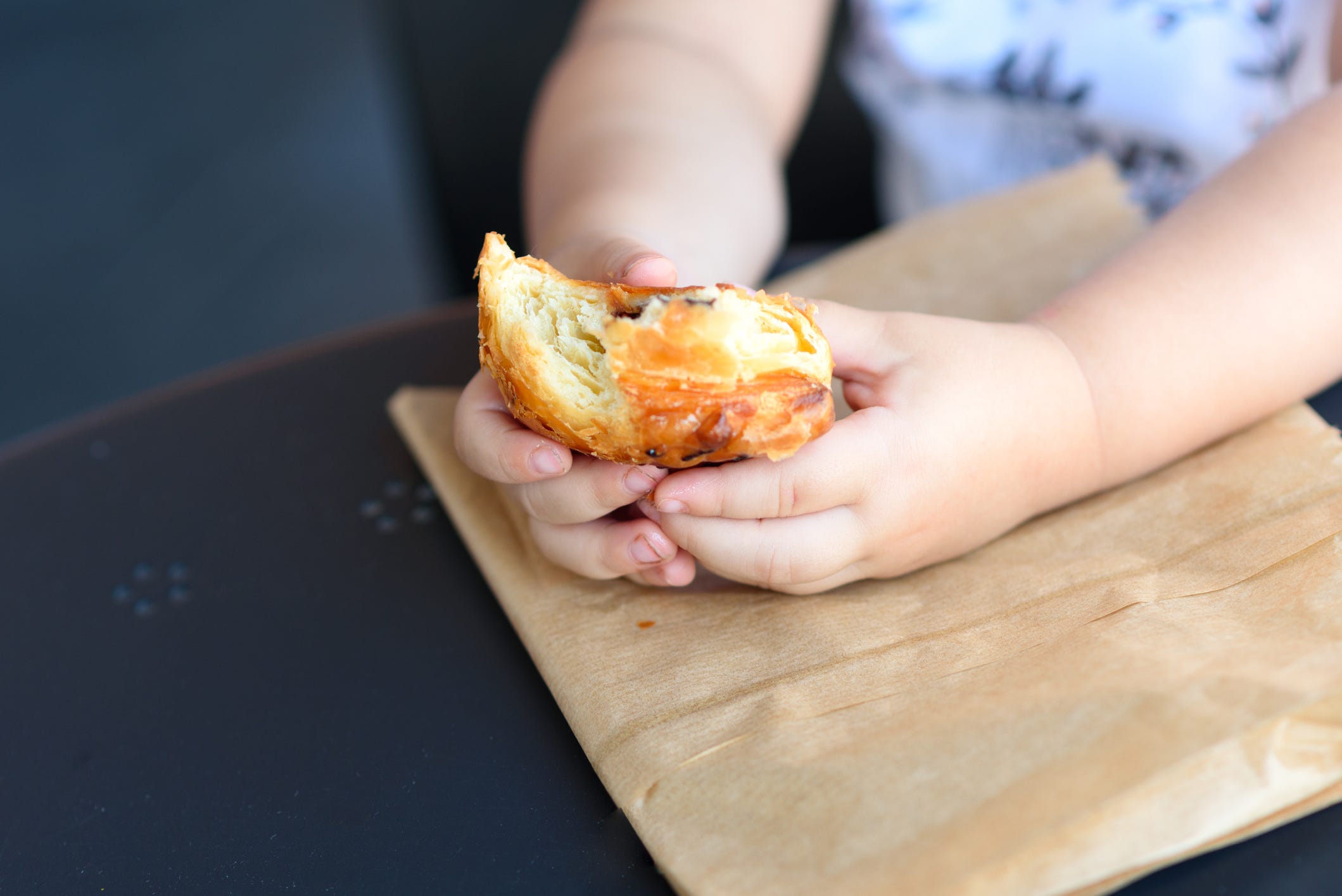
Noticing comes before tasting.
How travel can change the way children approach food
Many parents notice that when they travel, their child responds to food differently. A child who is cautious at home may linger longer at the table, notice what others are eating, or take a taste they would normally refuse. Siblings who struggle around meals may seem easier with one another. From the outside, this is often brushed off as “vacation behavior,” something temporary or situational.
But what’s happening is more specific than that.
At home, meals are layered with memory. Children don’t just remember what was served. They remember how the meal unfolded, who commented on their plate, whether the pace felt rushed, whether a bite turned into a negotiation or commentary. Over time, those experiences shape expectations long before food arrives. A child’s body often responds to dinner before their mind does.
Travel interrupts that familiar pattern.
For many families, travel is not calm, especially during the late December and early January stretch of packed suitcases, time changes, family visits, and meals out of routine. Days can be long. Hunger can arrive suddenly. Adults may feel pressure to keep things moving.
What changes is that the old expectation script no longer applies in the same way.
In a new place, whether that’s a hotel restaurant, a relative’s holiday table, or a small café in another country, children do not yet know how the meal is supposed to go. There is no familiar sequence to react to. In that uncertainty, children look to their parent for orientation and context. They are trying to understand what kind of situation this is, and where they fit within it.
That orientation, more than novelty or encouragement, is what changes how children approach food.
When parents help children understand what to expect, who will be there, how long the meal might last, what choices they’ll have, and that there’s no rush to decide, children often settle. They are no longer anticipating pressure, correction, or urgency, and their attention widens. Food becomes something to notice rather than something to manage.
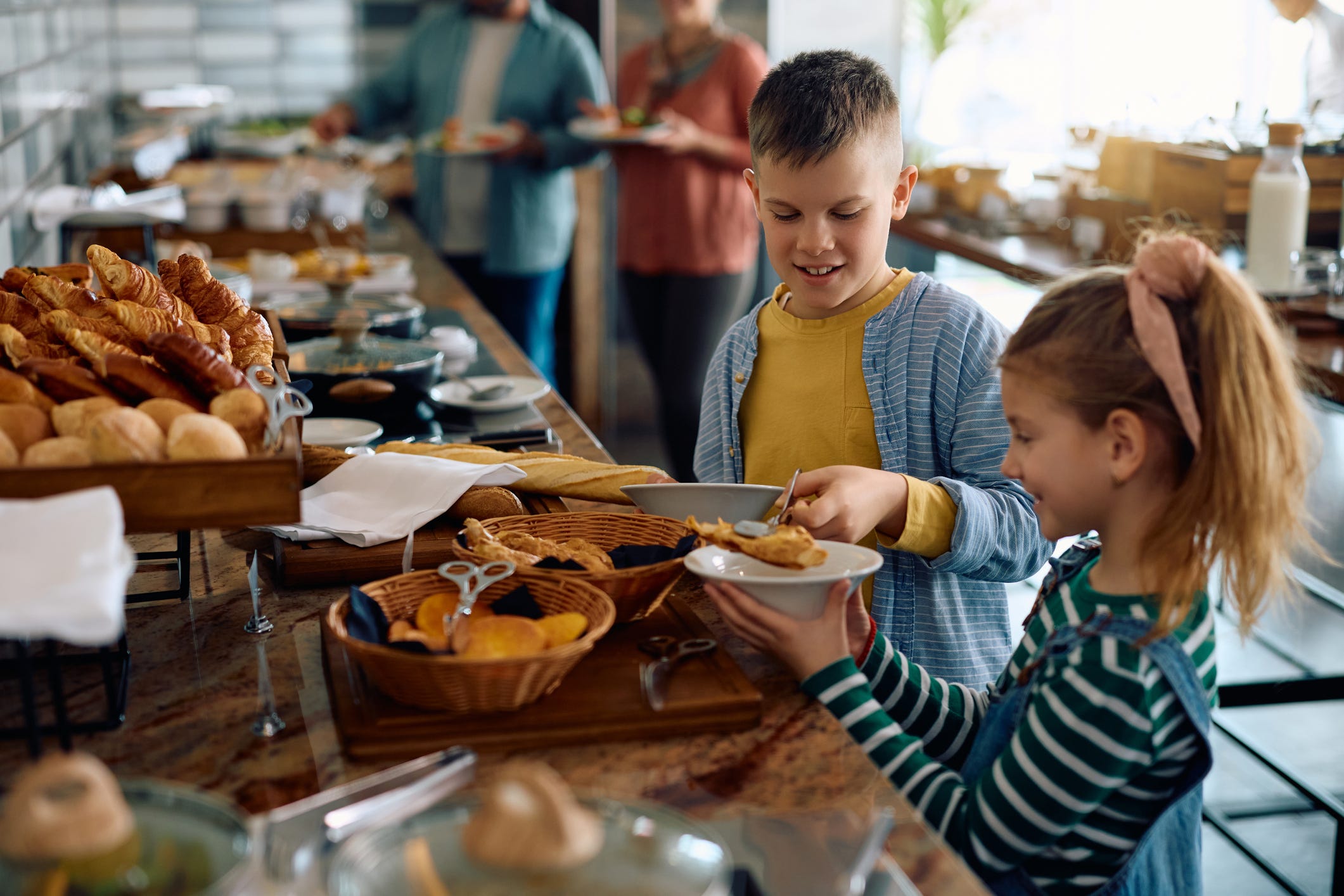
Clear expectations make space for children to decide at their own pace.
In that steadier state, curiosity becomes possible.
This is the beginning of taste literacy. Taste literacy isn’t the willingness to eat everything. It’s the ability to be comfortable enough around food to observe, choose, and participate over time. Travel makes this easier to see because the context shifts so clearly. Taste literacy is the skill that children use multiple times every day, at home and away, when conditions support it.
On one family trip to Italy, we stayed at a small, family-run hotel with a daily breakfast buffet. There were a few kinds of bread, crostini, sliced meats and cheeses, crostata ai frutti di bosco, eggs made to order, stewed prunes, fresh fruit and Nutella. Breakfast looked different from what our children were used to.
We let our two older children navigate the buffet with some guidance – choosing what appealed to them and what felt like it would hold them until lunch. For our youngest, we selected more deliberately, keeping his preferences in mind and noticing what he watched his siblings take. We had talked ahead of time about how breakfast in Italy might look different, and how part of traveling was noticing new combinations such as cheese with jam on bread, melon with thinly sliced ham alongside eggs, or Nutella on crostini.
What stood out wasn’t how much they ate, but how engaged they were. They compared plates and we talked about different foods and flavors. Breakfast felt participatory rather than performative. The structure was clear enough that the children didn’t have to guess what was expected of them. They knew how the meal would work, what choices they had, and that there was no rush to decide, no expectation to taste, comment, or explain how they felt. With that clarity in place, curiosity unfolded naturally.
Many parents notice this shift while traveling but aren’t always sure what to make of it – or how to bring that same sense of ease into everyday meals without turning food into something else to manage.
This is where understanding turns into guidance.
In the rest of this article, I share what this looks like in real life: how children respond when food feels overwhelming, how parents quietly steady those moments, and how taste literacy is scaffolded during everyday meals at home and while traveling.
A moment from a French fromagerie
One afternoon, while visiting friends in Saint-Germain-en-Laye, we stepped into a small fromagerie. The kind with wheels of cheese stacked behind glass and wedges carefully cut and wrapped, each one carrying a story of place. As soon as we stepped inside the door, the aroma hit us.