

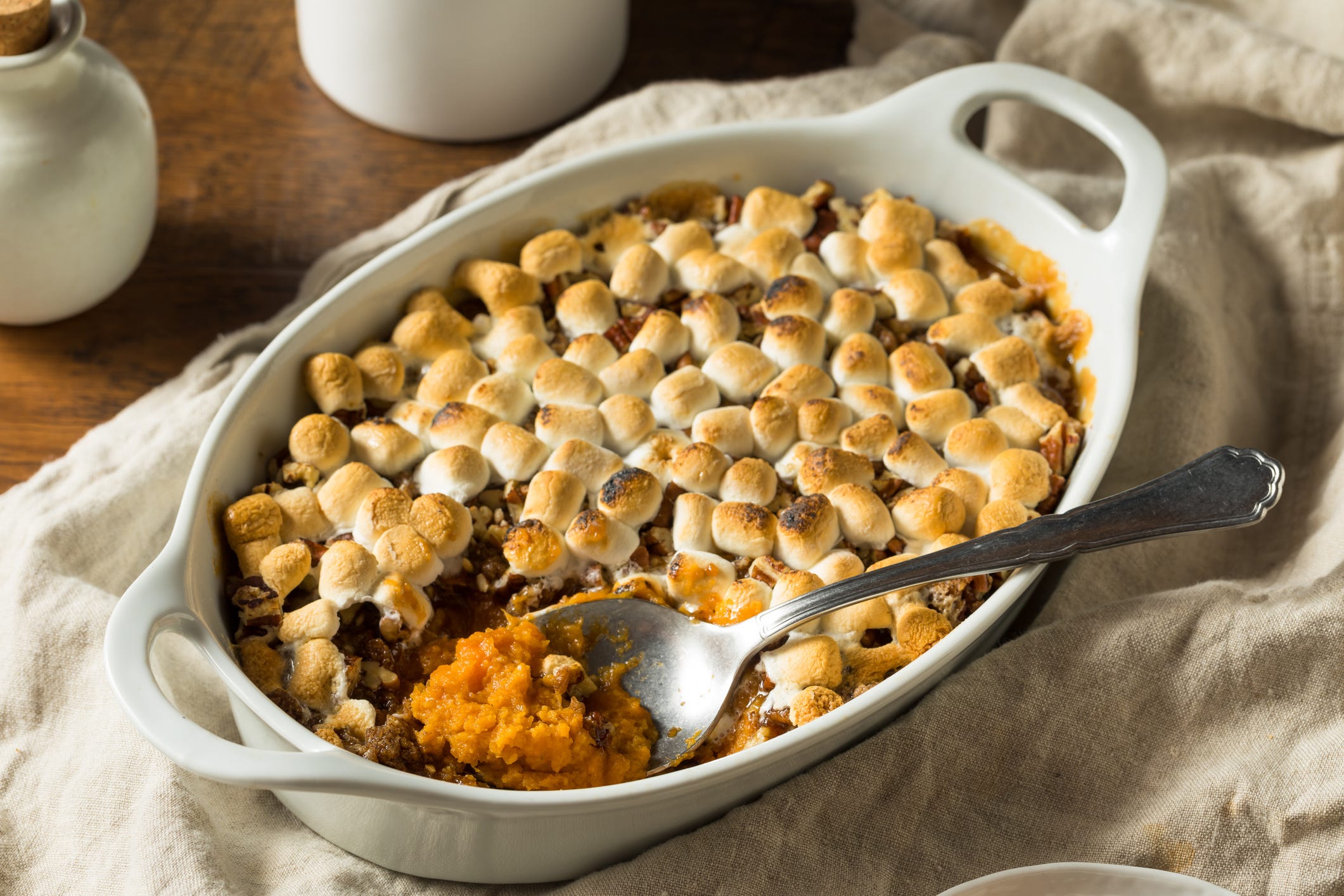
Sweet potato casserole topped with toasted mini marshmallows.
Marshmallows for dinner? If you grew up with sweet potato casserole topped with toasted mini marshmallows at Thanksgiving, you are in good company. If that same toasted topping is what draws your child today, you may wonder whether they will ever enjoy sweet potato without it. Does the marshmallow topping cancel out the nutritional value of the sweet potato? And what could this holiday casserole possibly have to do with getting an ordinary dinner on the table? The answer begins with the sweet potato underneath.
A marketing story lies behind the pairing. In 1917, a commercial marshmallow company hired Janet McKenzie Hill, founder of The Boston Cooking School Magazine, to create a recipe booklet showing home cooks new ways to use marshmallows. One recipe topped baked or mashed sweet potatoes with marshmallows. That pairing became a familiar part of holiday dinners on many American tables.
My earliest memory of sweet potatoes is that casserole. I waited for the sweet, toasted layer. It was the only way I ate what my family called “yams,” and we had them only on Thanksgiving.
Years later, on a trip to Tokyo, I saw a mother unwrap a foil package and offer her toddler a cooked, cooled sweet potato while seated in the stroller. I was struck by how simple it was to carry and serve. A food I knew only under a layer of marshmallows was being offered as an everyday snack.
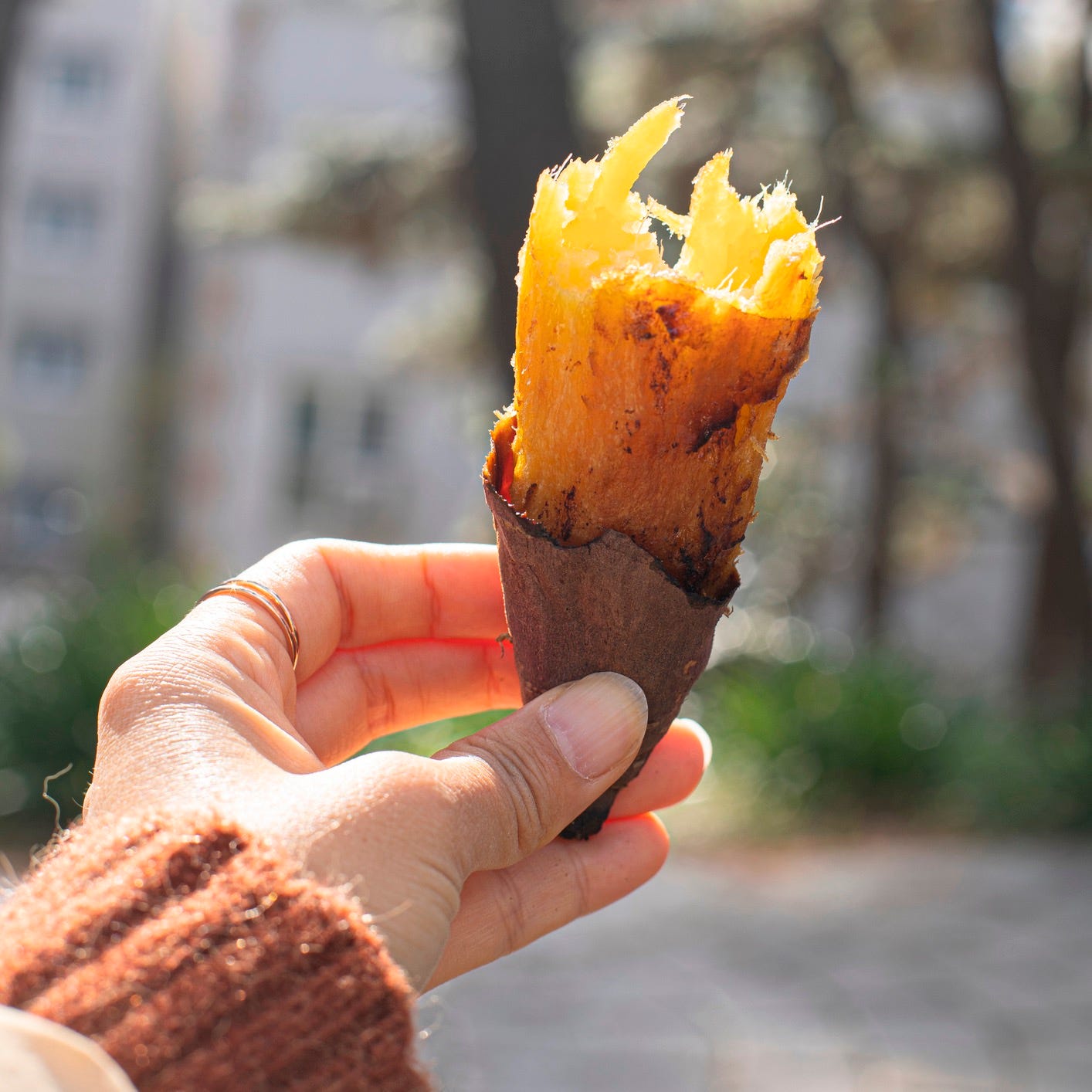
A cooked sweet potato, ready to serve.
That scene changed how I thought about sweet potato. At home, it can be just as practical. You can bake it whole, roast pieces for dinner, or use the soft flesh in pancakes, soups, or other family dishes. Each preparation changes its flavor and texture, giving you more than one way to serve the same ingredient. The marshmallow-topped casserole can stay part of your holiday tradition while sweet potato finds a place in the meals your family shares throughout the year.
Why This Flavor Matters
Children naturally tend to prefer sweet flavors, especially early in life. If your child reaches for the top layer of toasted marshmallows first, that makes sense. Sweet potato offers its own familiar sweetness and an earthy flavor, with browned surfaces, soft interiors, and colors ranging from white and yellow to orange and purple.
That culinary range makes sweet potato valuable for taste literacy. Varieties differ in moisture, sweetness, color, and texture. Marshmallows may be what first interests your child in the casserole. Over time, that casserole can become one preparation among several ways your family serves sweet potato.
Your child may enjoy mashed sweet potato and leave a roasted wedge on the plate. That does not necessarily mean they have rejected sweet potato. The mash is smooth and evenly soft. The wedge has a browned surface, a firmer edge, and a soft center. From a child’s point of view, those two preparations can look and feel like very different foods. Your child may be comfortable with the mash and unfamiliar with the wedge. That gives you more useful information than deciding that your child simply does or does not like sweet potato.
Sweet potato also earns its place in family meals because you can use it in so many ways. You can bake and fill it, add it to curry, blend it into a smoothie, or roast it with dinner. It is a nutrient-dense, plant-based ingredient that stores well and can move from breakfast to dinner as part of a meal your whole family can share.
Picture a dinner of chicken, green beans, and roasted sweet potato wedges. If your child knows sweet potato from that marshmallow-topped casserole, the wedges may not look familiar at all. You can name the connection: “This is sweet potato too. These pieces browned in the oven.” You are giving your child useful information about the food while putting one family dinner on the table.
Over time, your child may begin to recognize sweet potato in more than one form: its orange color in a purée, its earthy sweetness in a waffle, or its soft center in a roasted slice. That broader recognition is part of taste literacy. Sweet potato is no longer linked only to the marshmallow casserole. It fits across different meals and preparations.
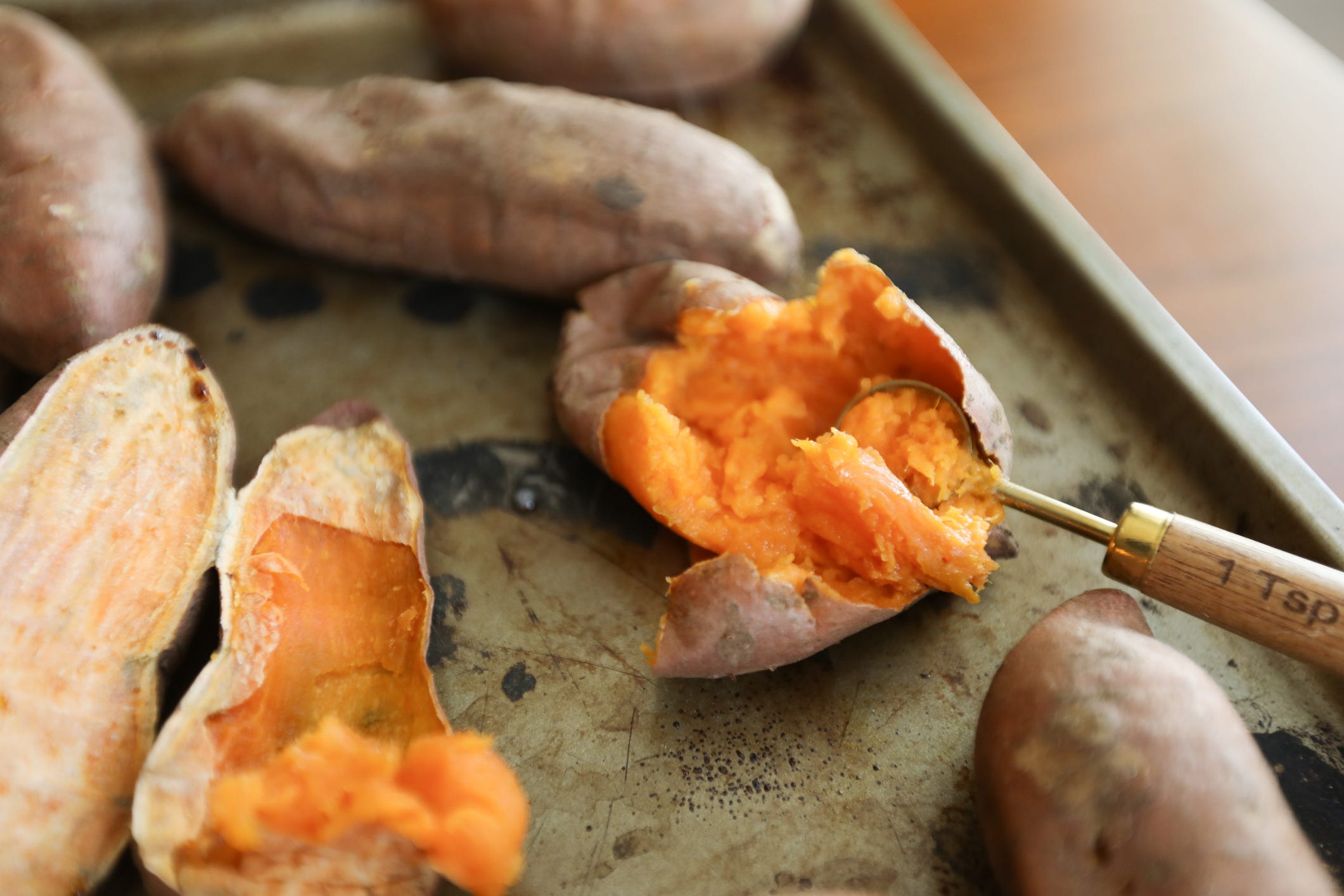
Soft, baked sweet potato, ready to scoop or mash.
Pediatric Culinary Medicine Insight
Sweet potatoes are not a type of white potato. They come from different plant families and behave differently in the kitchen. What many American families and grocery stores call “yams” is usually an orange-fleshed sweet potato. True yams come from a different plant and are much less common in American supermarkets.
Chefs value sweet potatoes because cooking brings out more than sweetness. Slow baking yields soft flesh and a deeper, sweeter flavor. Roasting adds browned edges and more savory notes. Salt, citrus, chile, herbs, and warm spices can each enhance a different part of the sweet potato’s flavor. This is why the same ingredient can work in a simple mash, a fritter, a curry, a soup, or a pie.
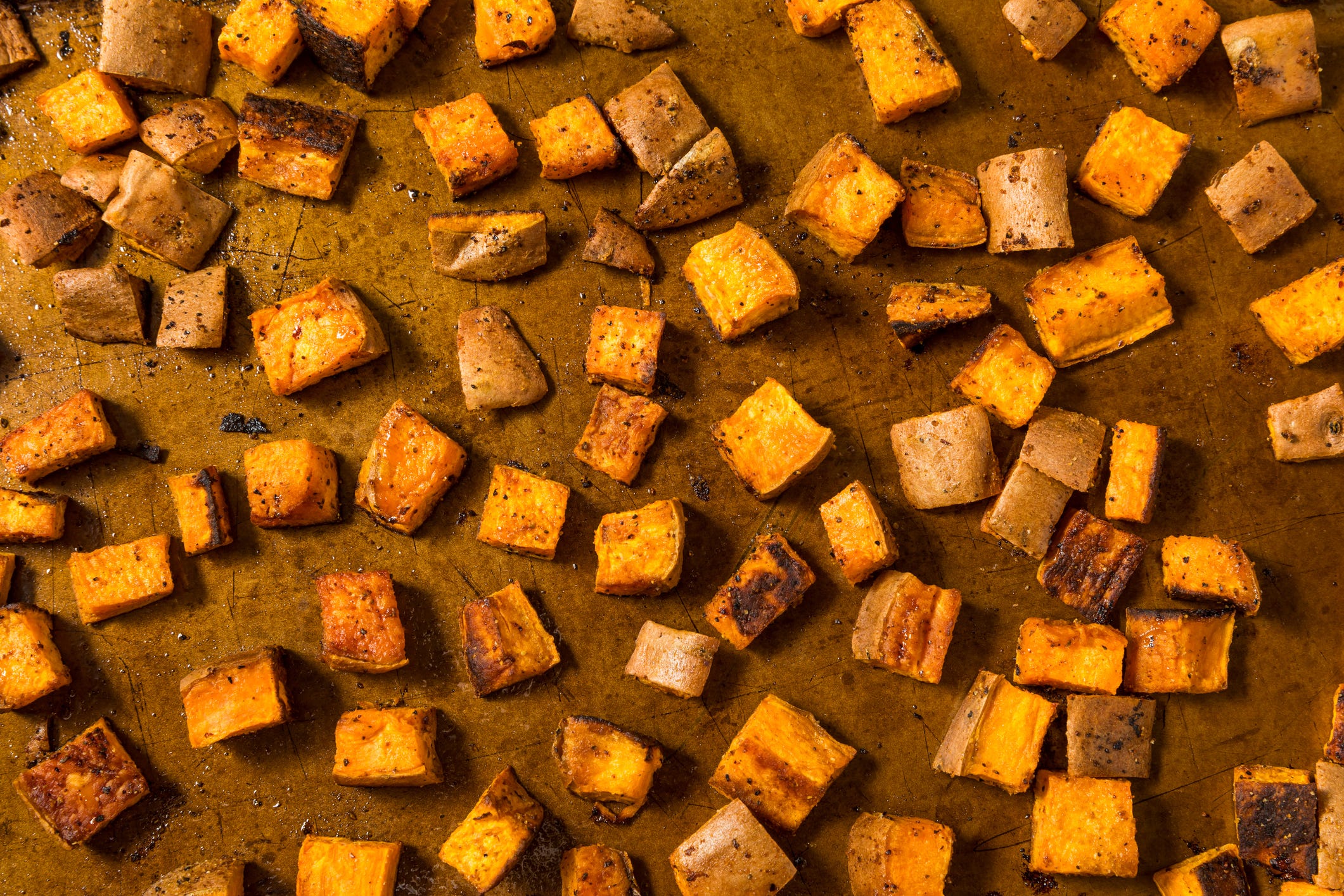
Sweet potato cubes spaced out for roasting.
Sweet potato contains starch and natural sugars. As it heats, an enzyme called beta-amylase helps break down some of the starch into maltose, a type of sugar. A slower bake gives this enzyme more time to work, so a whole sweet potato baked until tender may taste sweeter than one cooked quickly. Cooking technique changes the flavor before you add anything else.
For roasted pieces, cut the sweet potato into similar sizes and spread them out on the pan. When pieces are crowded, steam collects around them, making them more likely to soften than brown. Give them room and turn them as needed. Expect browned edges and a tender center rather than the crisp texture of a white potato fry.
It can feel reassuring to know that the marshmallow topping does not cancel out the sweet potato’s nutritional value. The sweet potato still provides fiber and nutrients, including beta-carotene, vitamin C, and potassium. The topping adds sugar and makes the entire dish taste sweeter. The fiber remains and can help slow the digestion and absorption of carbohydrates, but it does not erase the added sugar. Both can be true: the sweet potato retains its nutrients, and the casserole contains added sweetness.
A marshmallow-topped casserole can remain a special holiday tradition without becoming an everyday dish. At other meals, taste the sweet potato before deciding whether you want to add maple syrup, brown sugar, or another sweetener. A slowly baked sweet potato may already taste sweet enough. Butter, salt, citrus, herbs, or spices can bring out other flavors.
Color offers more than a visual difference. Orange-fleshed sweet potatoes are rich in beta-carotene, while purple varieties contain different plant pigments called anthocyanins. The varieties may also differ in moisture and texture. Many orange varieties cook into a moist mash, while some white or purple varieties remain firmer and drier. Knowing the variety can help you choose a cooking method that suits it and understand why the result may differ from the sweet potato your family usually eats.
Sweet potato skin is edible and adds fiber and texture, but whether to leave it on or remove it depends on the dish and your child’s eating skills. Keep it on for a baked sweet potato or roasted wedge if the skin becomes tender and works for your child. Remove it when you want a smoother purée or mash. For a baby starting solid foods, cook the sweet potato until you can mash it easily between your fingers, then offer it in a form that matches the baby’s developmental readiness and eating skills.
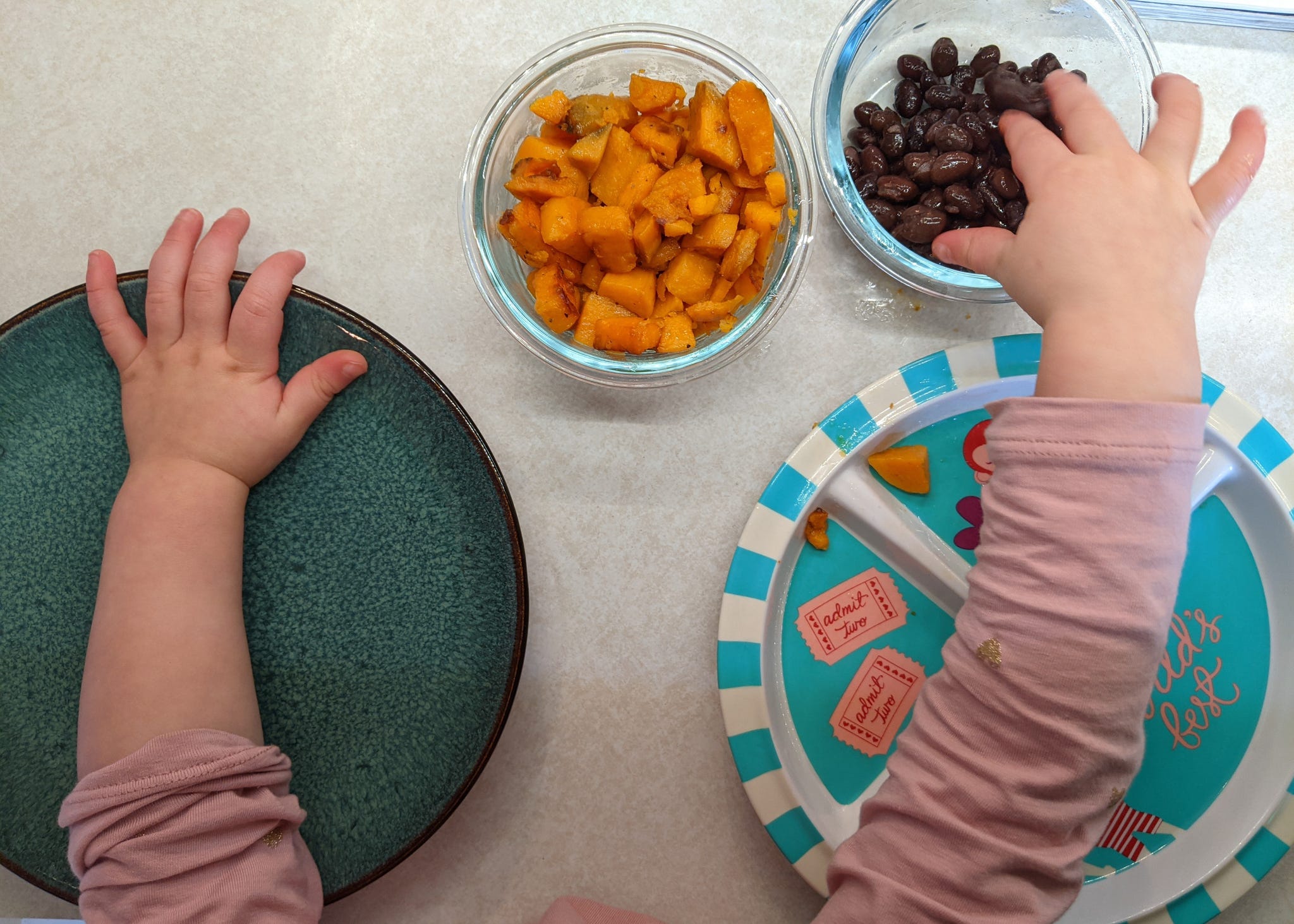
A toddler reaches toward sweet potato and beans at the table.
Levels of Flavor Confidence
These levels describe how your child may respond to sweet potato in different forms. Your child may be comfortable with casserole but less familiar with roasted pieces. Begin with a form that feels familiar to your child and family, then use the levels to consider what might come next.
Early Flavor Explorer: Sweet potato feels most familiar in a form your child has seen before, such as casserole, mash, or a soft baked sweet potato. Your child may recognize its color, smell, or soft texture.
Growing Flavor Adventurer: Sweet potato mash may appear in a pancake, then as roasted pieces beside dinner. The preparation changes, while the color, aroma, or sweetness may begin to feel familiar.
Confident Flavor Taster: Sweet potato is familiar across several preparations. Your child may recognize it baked, mashed, roasted, or in a savory dish, and notice how its color, flavor, or texture changes with cooking.