

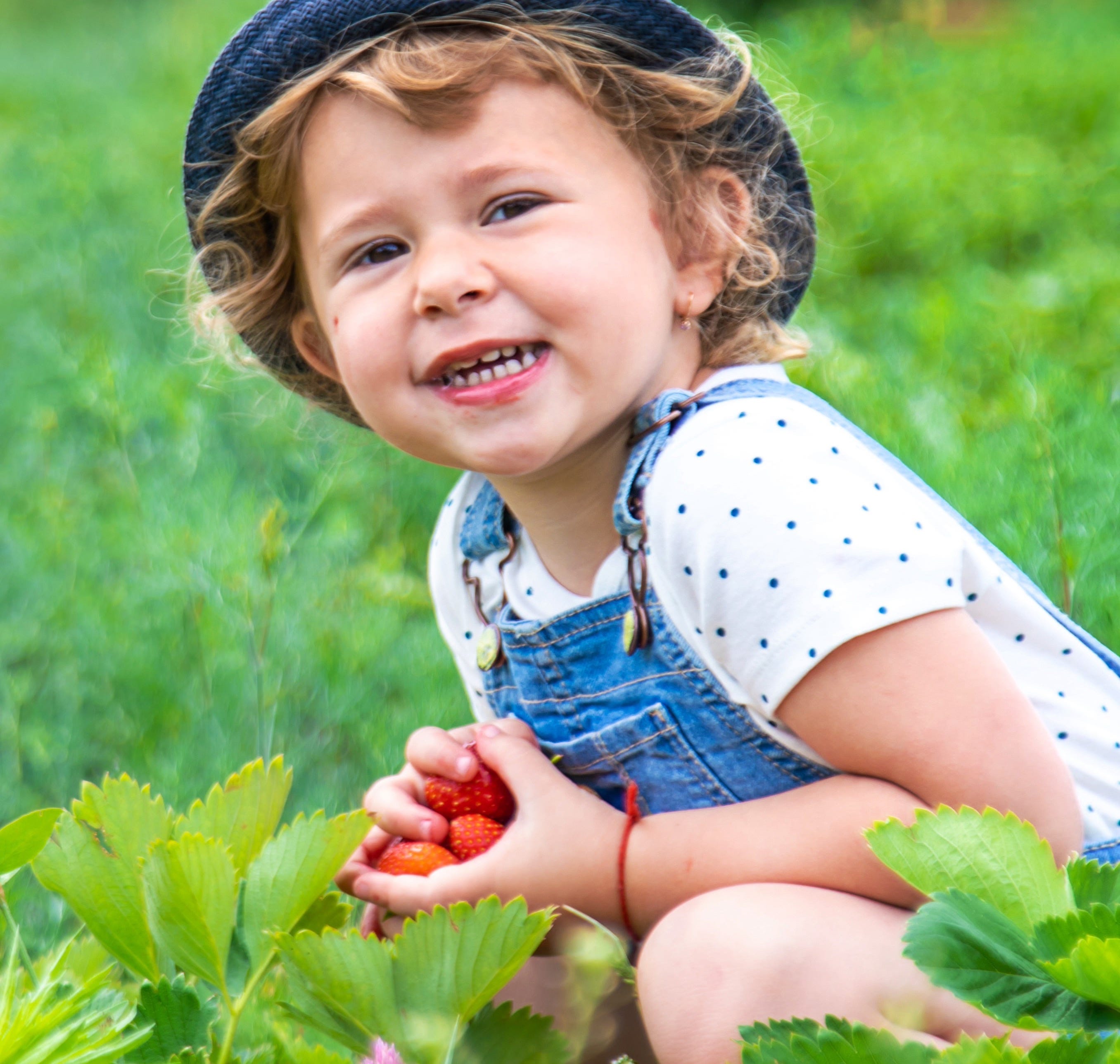
Noticing comes before taste. Color, scent, and context shape how children learn flavor.
Strawberries start appearing in grocery stores right around February, just as the aisles fill with pink boxes and heart-shaped promises. They show up early now – bright and polished, sometimes dipped in chocolate before winter has fully loosened its grip.
When I was growing up, strawberries arrived differently.
They were a spring and early summer food, something you waited for. In Michigan, strawberries meant fields, sunshine, and stained fingers. We ate more than we brought home. No chocolate. No fanfare. Just sweetness warmed by the sun for a short window of time.
That timing mattered.
Strawberries were not just a flavor. They marked a shift. After months of cooler days and heavier foods, they signaled that something was changing. Food felt lighter again.
That sense of recognition still matters for children.
Strawberries are often one of the first fruits parents feel hopeful about. They are soft, naturally sweet, and familiar. But when they arrive wrapped in expectation – this should be easy, my child should like this – they can quietly take on more meaning than intended.
Instead of responding with enthusiasm, many children respond with preference. They may choose one strawberry over another, hesitate if it looks different than last time, or wait for the version that feels most familiar to them. Children notice subtle differences in food long before they can explain them.
Taste literacy develops through recognition.
It develops through noticing color before the bite, or scent before taste. Through experiencing how sweetness shifts when a strawberry is fresh, chilled, warm, or paired with something familiar. Strawberries invite this kind of noticing without asking a child to perform.
For many children, strawberries act as a starting point. A familiar sweetness that helps them feel ready to stay at the table. Not because they are pushed to eat more, but because something on the plate already feels welcoming.
Strawberries are not about getting a child to eat fruit or love sweetness. They show how one familiar, seasonal flavor can help support trust – both for children learning food, and for parents learning to let familiarity lead.
Why This Flavor Matters
Strawberries matter because they sit at the intersection of familiarity and learning for many children.
They are often one of the first foods parents expect children to enjoy - sweet, soft, and widely labeled as “kid-friendly”. That familiarity can feel reassuring, and it can also raise quiet expectations at the table.
From a taste literacy perspective, strawberries offer more than easy acceptance. They offer variation within sameness.
No two strawberries taste the same. Some are very sweet, others gently tart. Some are firm, others are soft and juicy. Even within a single bowl, a child encounters small but meaningful differences. This variation helps the brain practice noticing, comparing, and staying oriented as flavor shifts – skills that support confident eating over time.
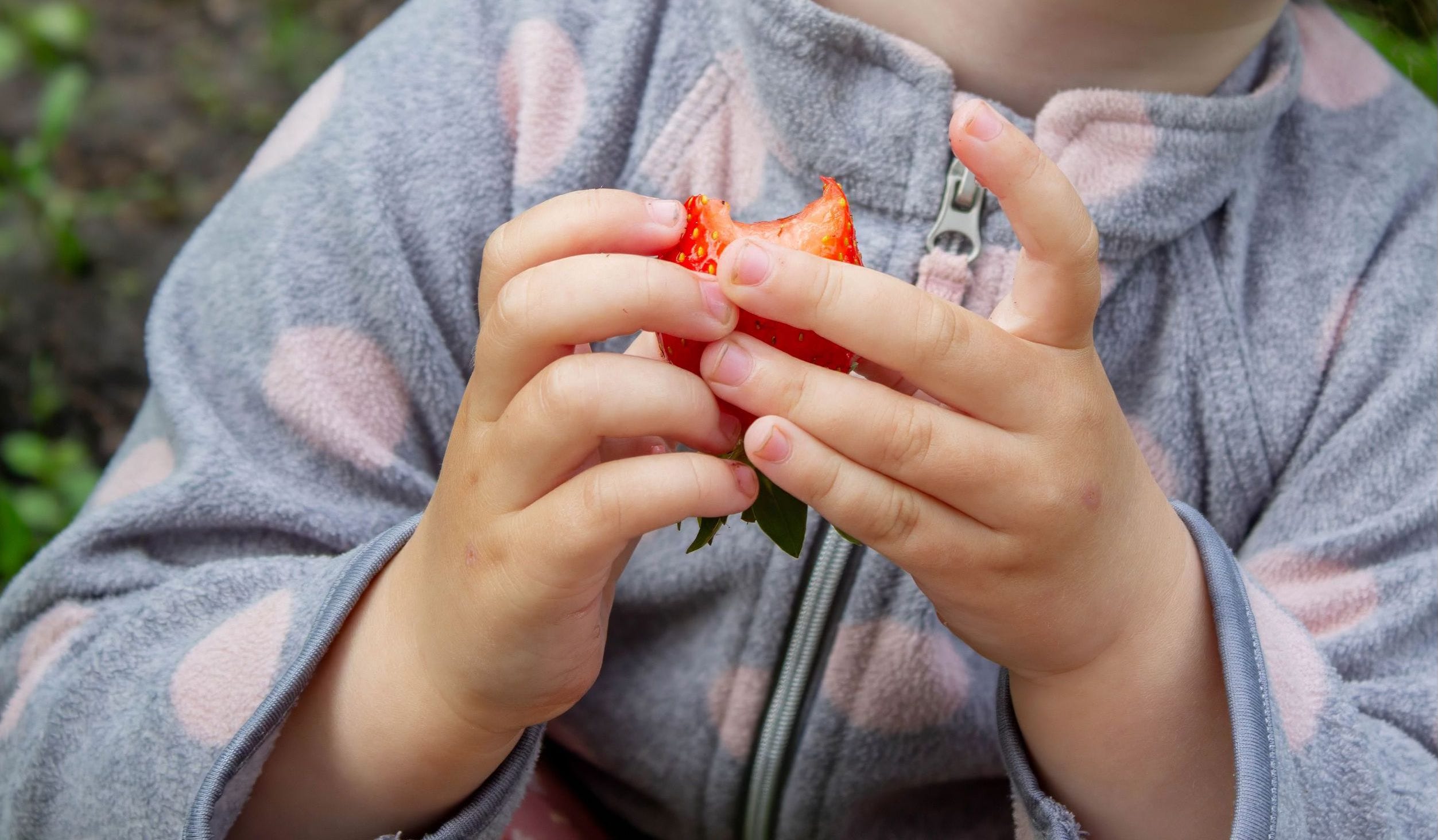
Familiar foods still offer variation. Size, firmness, and scent give the brain something to notice.
Strawberries engage multiple senses even before a child takes a bite. Their color is vivid and recognizable. Their aroma is familiar. Their tiny seeds subtly change mouthfeel without overwhelming it. A child can learn from strawberries through sight, smell, touch, or taste – or simply by having them nearby – and still be building meaningful sensory experience with food.
For parents, this familiarity matters too. Because strawberries are already known, they often lower the pressure at the table. It becomes easier to slow down, observe, and let a child lead without feeling that the meal hinges on one decision or one bite. When the emotional tone stays calm, children are more able to remain present, and learning happens more naturally.
From a pediatric culinary medicine perspective, strawberries also demonstrate an important principle of taste literacy: natural sweetness is already enough. When fruit is offered as it is – washed, sliced, and familiar – children learn to recognize and trust real flavor without embellishment. That trust becomes a reference point they carry forward to other foods.
In this way, strawberries function much like a favorite book at story time. Their familiarity invites a child to settle in rather than rush ahead. That steadiness is what makes curiosity possible.
Strawberries are not a shortcut. They are a practice food, offering the repetition and steadiness children need to learn flavor over time. They help children learn that flavor can be bright without being overwhelming, familiar without being boring. And they remind parents that confidence at the table often grows from foods that feel steady, when they are offered with intention and ease.
Pediatric Culinary Medicine Insight
Strawberries are a powerful teaching food because they engage sensory learning, flavor science, and cultural meaning while staying within a child’s comfort zone.
Flavor is not just taste. It is smell, texture, temperature, visual cues, and memory working together. Strawberries activate all of these pathways naturally.
Their aroma is often noticed before the bite. Their bright red color signals sweetness to the brain in advance. Their texture shifts from firm to juicy, while the tiny yellow achenes create a gentle mouthfeel that invites noticing rather than reflexive reaction. Even learning that those small dots are individual fruits reinforces an important idea: foods often hold more complexity than they first appear.
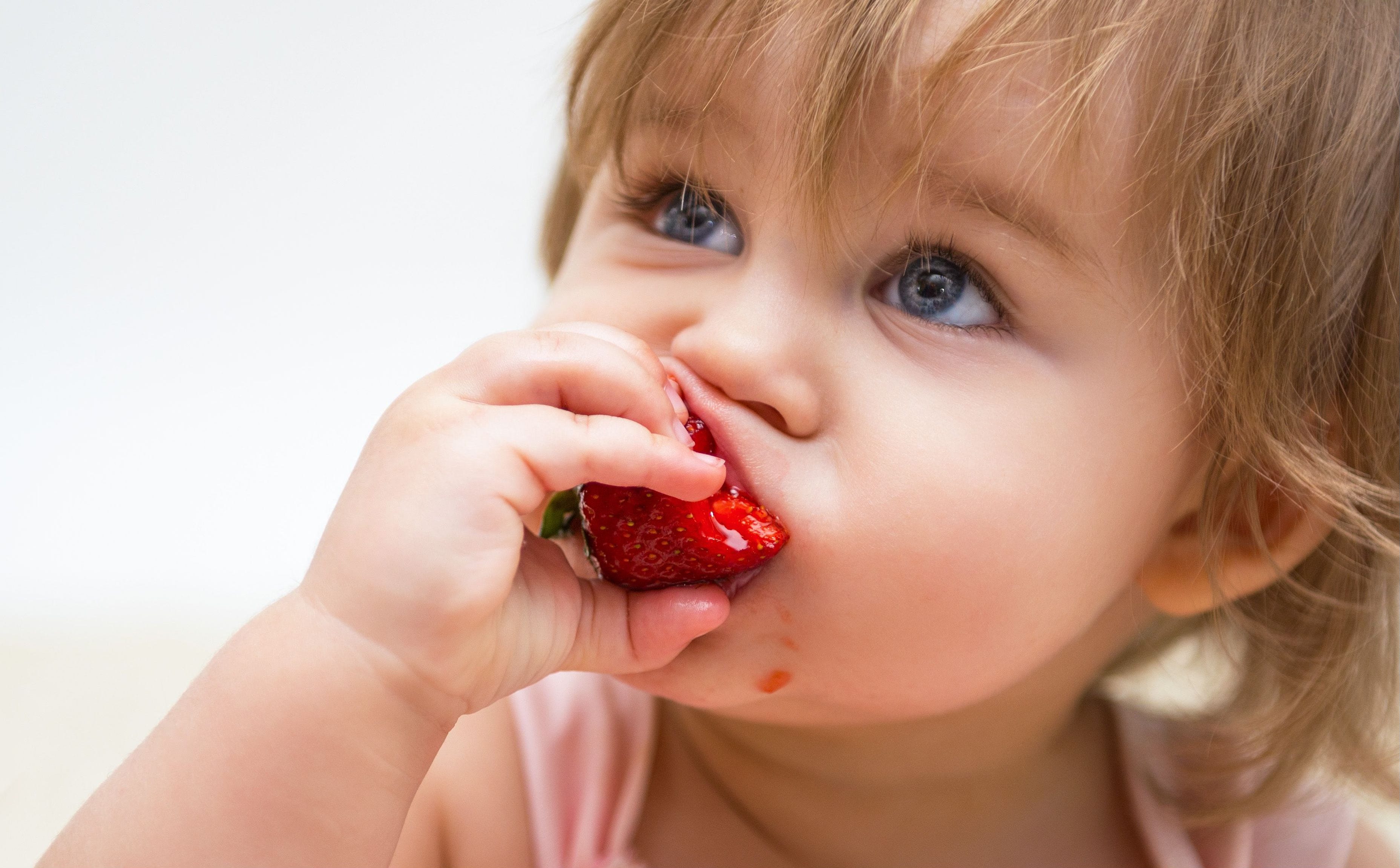
Taste follows recognition. This bite reflects readiness.
This layered sensory experience supports flavor memory.
Each encounter with strawberries – fresh, chilled, gently warmed – strengthens recognition. Over time, the brain begins to register familiarity. That recognition supports confidence, even when the same flavor appears in a new context. This is one way taste literacy develops – through steady return.
Strawberries also offer an early lesson in flavor balance.
They combine sweetness with acidity. That brightness allows children to experience contrast without intensity and lays the groundwork for understanding more complex flavors later. Sweetness does not need to be added to or emphasized to be satisfying.
Nutritionally, strawberries support this learning in the background. They are rich in Vitamin C, contributing to growth and immune support without needing to be framed as “healthy” or “good.” When nutrition stays in the background, sensory learning remains front and center.
Seasonal rhythm matters here as well.
Even when strawberries appear in stores earlier than local harvests, they still carry cues of spring – light, freshness, and change. For children, familiar flavors returning at predictable times support emotional safety at the table. They also help parents release urgency. A child does not need to eat much for learning to occur.
Strawberries show us that confidence around food is built quietly – through repeated, calm encounters with a familiar ingredient.
Levels of Flavor Confidence
Children build sensory memory through familiarity. When a flavor returns in calm, predictable ways, it becomes a reference point the brain can rely on. Strawberries often play this role early on, offering a steady place for the senses to settle.
Over time, these familiar encounters shape taste literacy. A child learns not only what strawberries taste like, but what it feels like to recognize a flavor and approach it with ease.
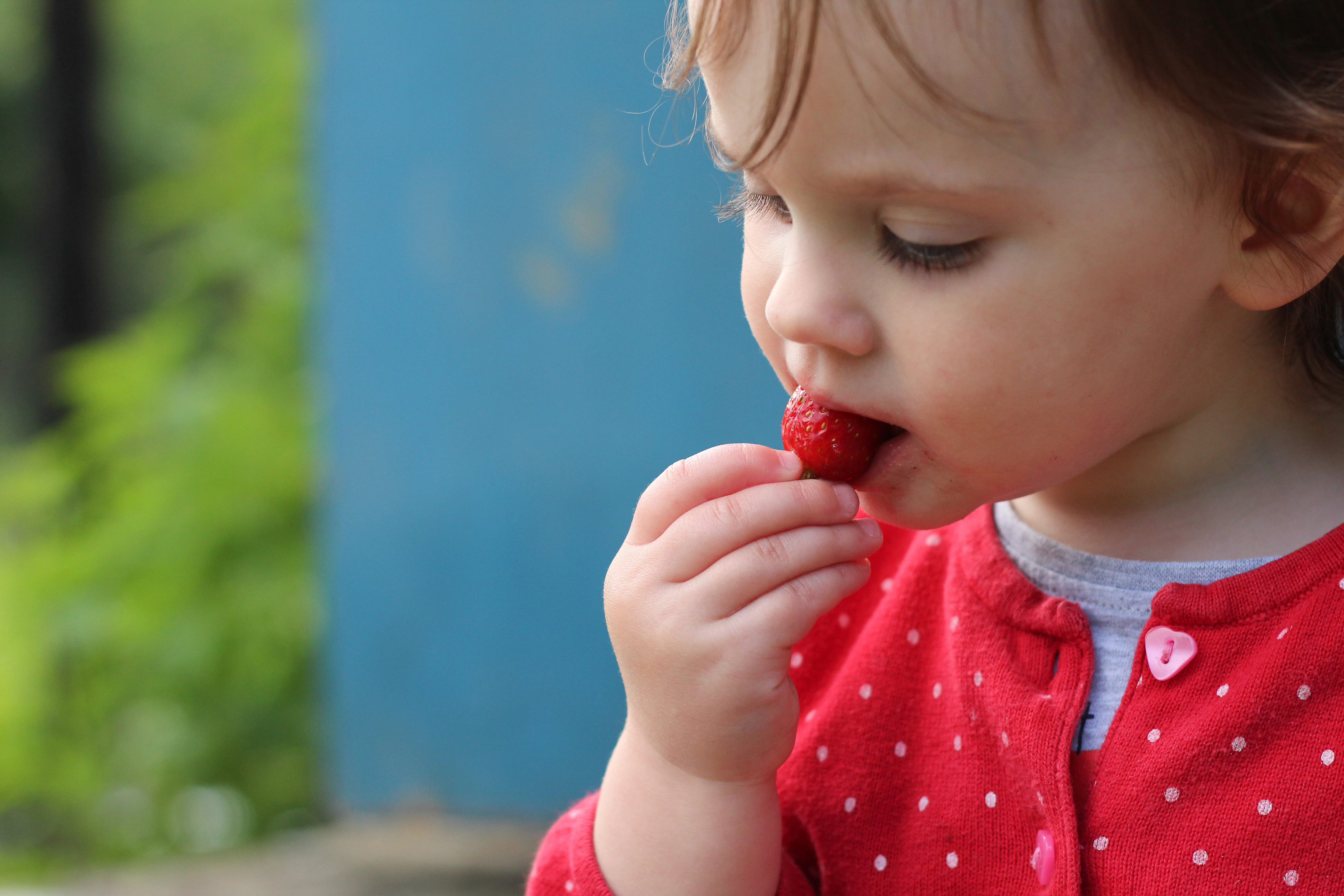
Confidence with flavor often looks quiet. Comfort is a valid place to begin.
The three Levels of Flavor Confidence help you notice where your child feels most comfortable right now – and how to guide them forward without urgency.
Some days, your child may lean in. Other days, they may pause or return only to what feels known. Both are normal. Confidence with flavor is not linear. It grows through steady returns.
Strawberries already feel familiar to many children, and that familiarity is something to work with thoughtfully.
Inside the Six Paths, we explore how one trusted flavor can steady a meal, stretch gently into new contexts, and support taste literacy as foods grow more complex.