

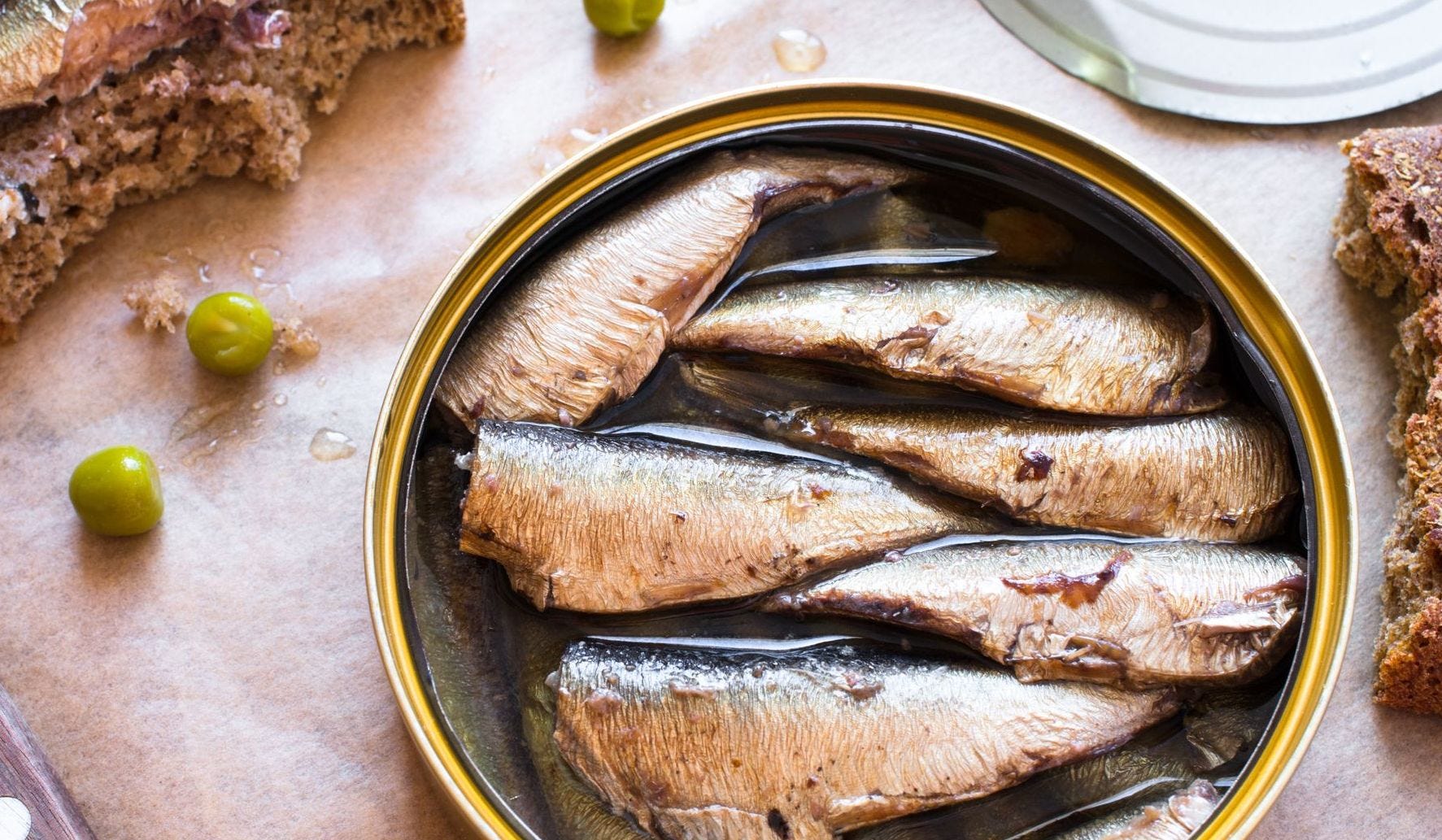
Tinned sardines are ready to serve. A small amount can go on one plate, while the rest becomes part of the family meal.
An interesting question lies inside a flat little can with a pull-top lid: Would you serve your child what is inside?
Whether or not you enjoy sardines yourself, offering them to your child may give you pause. Their aroma is noticeable, their flavor is concentrated, and many are packed with silvery skin and tiny, soft bones intact.
Tinned seafood has recently received new attention. Colorful packages line specialty grocery shelves, restaurants open tins at the table, and friends arrange sardines with bread, butter, pickles, herbs, and citrus on boards meant for sharing. This presentation has helped many adults see sardines as more than a practical pantry staple.
The colorful packaging may feel new, but the sardine tin I remember from childhood looked different. A long, thin key was tucked beneath the paper wrapper. I would slide it onto the metal tab and slowly roll back the lid, revealing the small fish layered inside.
If salt-cured anchovies are your closest reference point, sardines offer a different experience. Tinned sardines are generally larger, fleshier, and milder than the intensely savory anchovy fillets commonly used on pizza or in salad dressing. Even so, serving them to your child may feel like a big step, especially if you don’t eat sardines yourself.
For many families around the world, sardines have long been an ordinary part of family meals. They are eaten fresh, grilled over open flames, fried until crisp, folded into pasta, served over rice, or preserved in oil. Each preparation changes the aroma, flavor, texture, and appearance.
For parents, that variety is useful. Your child’s first experience could be a small taste of mashed sardine, a soft flake served separately, or sardines incorporated into a family dish they already recognize. You know which textures your child manages comfortably, what foods already work at your table, and whether your child currently eats any fish at all.
Those details can help you choose the amount, preparation, and pairing that make sense now. You may not be able to predict what your child will think of sardines, but you have several ways to introduce the experience and learn from their response.
What might sardines add to your child’s food world?
Why This Flavor Matters
For busy parents, part of the appeal is immediate: tinned sardines require no cooking. Kept in the pantry until they are needed, they can turn toast, pasta, rice, beans, or vegetables into a snack, lunch, or family dinner in minutes.
Sardines also let children become familiar with fish beyond a mild fillet or breaded fish stick. Nutrition may be one reason you bring them home, but your child encounters sardines first through their appearance, aroma, flavor, and texture. Presenting them as a flavorful food with many culinary uses keeps the emphasis on taste, recognition, and the gradual development of familiarity.
One tin can also work across different plates at the same meal. You might mash a spoonful into potato for one child, fold sardines into white beans for another family member, or serve the rest with tomatoes, herbs, and bread. The meal remains shared even when the amounts or presentations differ. Your child can taste the sardines, look at them closely, smell them, or simply become more familiar with seeing them at the table.
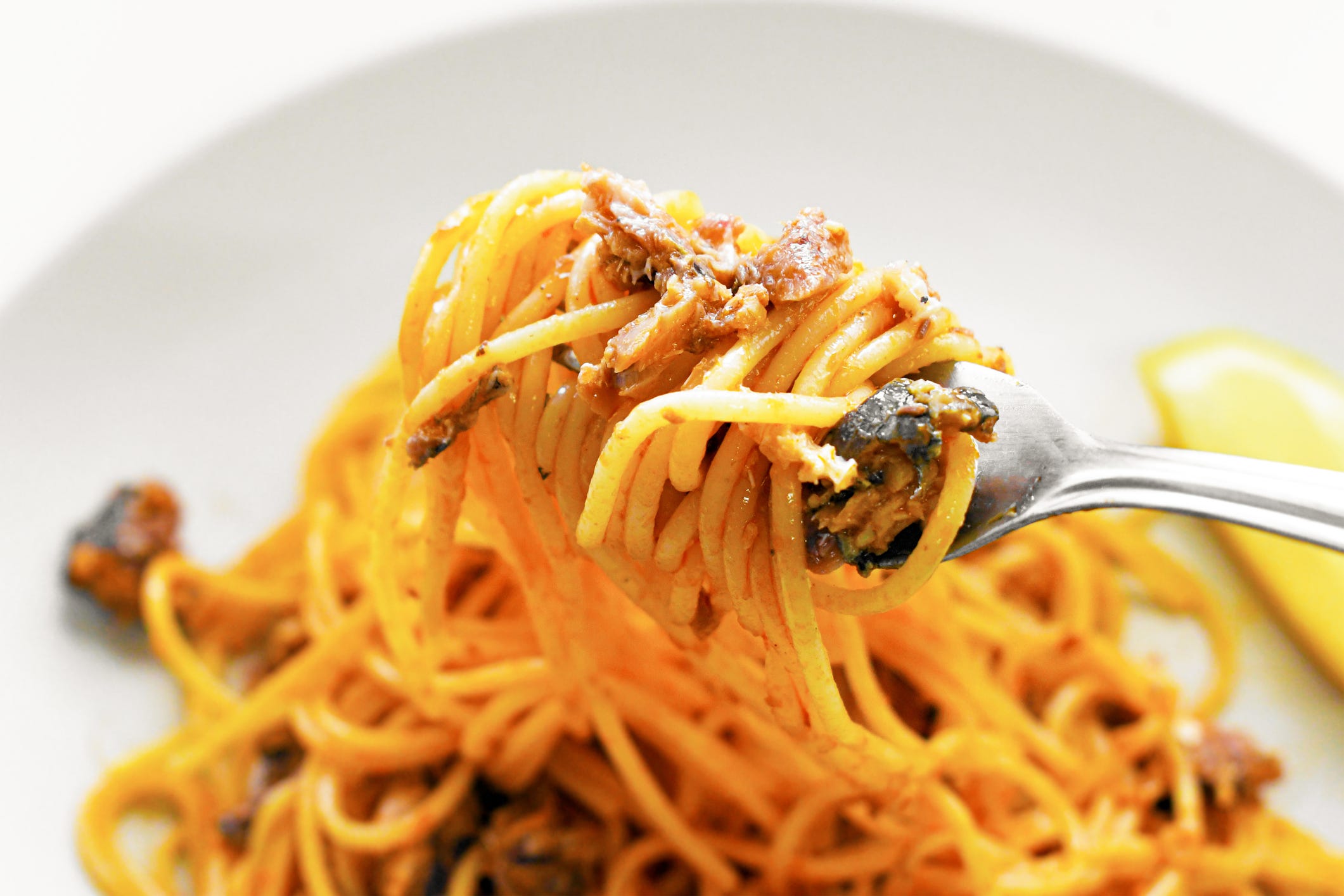
In pasta, sardines become part of a familiar dish.
Canning makes this flexibility possible. Heat cooks the fish, prevents spoilage, and makes it shelf-stable. A simple tin containing sardines, olive oil, and salt is generally considered processed rather than ultra-processed. Products with sauces or flavoring vary, so the ingredient list shows what a particular tin contains. In this case, processing preserves the sardines, so they are available when buying and cooking fresh fish does not fit your schedule.
Pediatric Culinary Medicine Insight
A sardine does not offer one fixed sensory experience. Preparation changes what your child sees, smells, tastes, and feels in their mouth.
A fresh sardine grilled over high heat may have moist flesh, crisp skin, and a lightly charred aroma. Frying creates a crisp exterior. Smoking produces a firmer texture and a more noticeable aroma. Sardines packed in olive oil are usually soft, rich, and easy to mash. Tomato sauce, citrus, mustard, herbs, or red pepper flakes introduce other flavors.
These differences help explain why your child may enjoy sardine pasta but feel uncertain about a whole tinned fillet or prefer a crisp fish cake to a soft sardine spread. Familiarity with one preparation does not automatically extend to every form of the fish. Each experience adds to your child’s understanding of what sardines can be.
This is part of taste literacy. Children notice that grilling, frying, smoking, and canning change a food. They learn that they may prefer sardines soft rather than crisp, cool rather than warm, or paired with tomato rather than served alone. Recognizing and describing those differences is meaningful progress, even if certain preparations aren’t favorites.
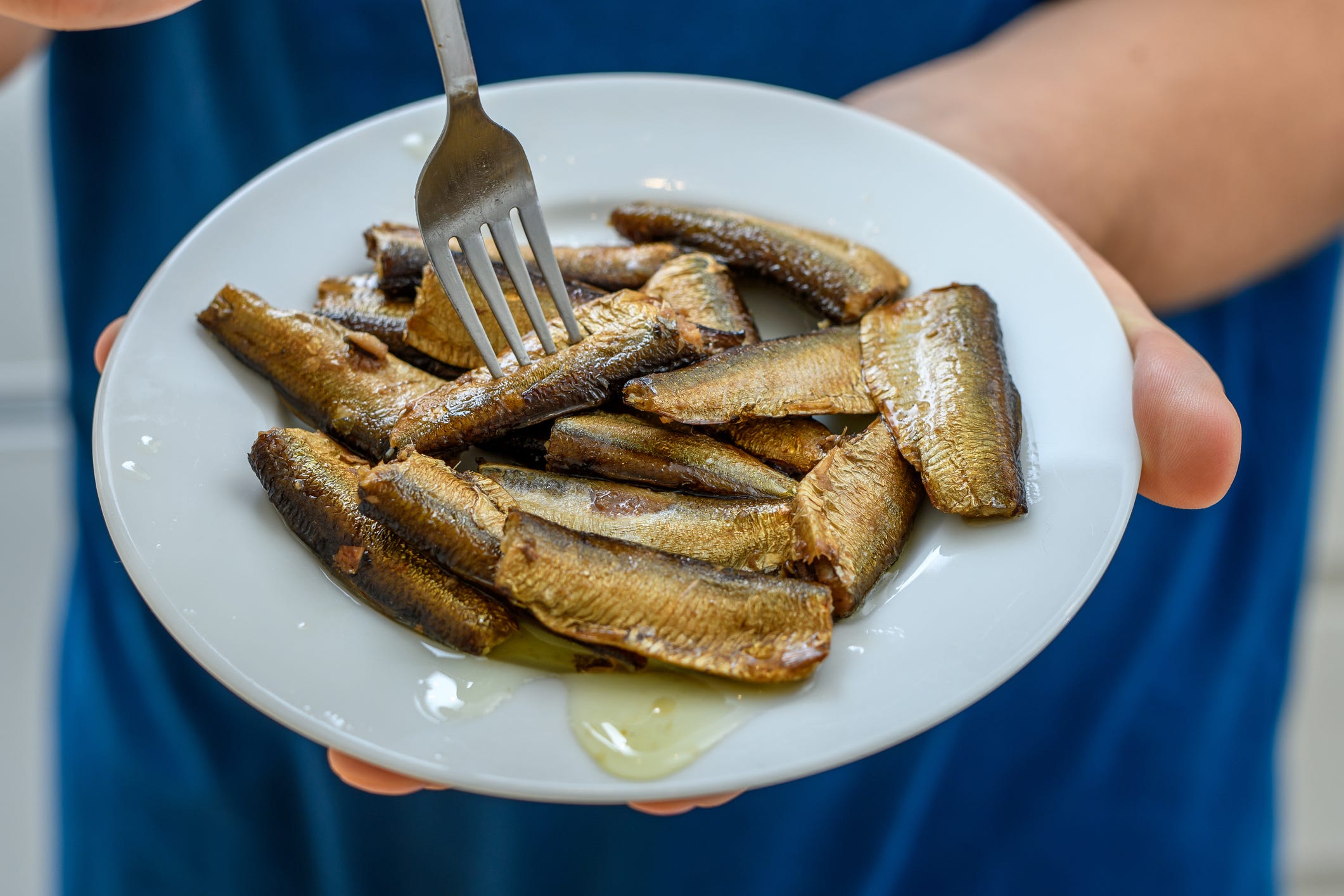
Smoked sardines are firmer and more aromatic than sardines packed in olive oil.
Pairing gives the flavor additional context. Lemon or another acidic ingredient balances the sardines’ richness and brightens their savory flavor. Bread, pasta, rice, potato, or beans can provide familiar structure, while tomatoes, herbs, vegetables, and alliums add contrasting flavors and textures. Together, these foods can turn a small amount of sardine into a complete family meal.
Canned bone-in sardines are a good source of calcium. For babies and toddlers, boneless sardines can offer a simpler starting point. If using bone-in sardines, check the fish carefully and mash the soft bones into the flesh. Then prepare the fish in a texture your child can safely manage. Sardines also provide protein, omega-3 fats, vitamin B12, vitamin D, and selenium, which support growth, brain development, healthy blood cells, bones, and thyroid function. The Food and Drug Administration includes sardines among its “Best Choices” for children because they are lower in mercury.
Sodium varies by tin, so comparing labels can be useful when serving with other salty foods.
Your child’s experience with sardines can begin well before they eat a full serving. Watching you open the tin, noticing the aroma, helping arrange the fish, spreading a small amount onto bread, or recognizing sardines in pasta all contribute to familiarity.
Your knowledge of your child helps you decide which part of the experience to explore first and what might make sense the next time sardines appear.