

Your child eats salmon easily.
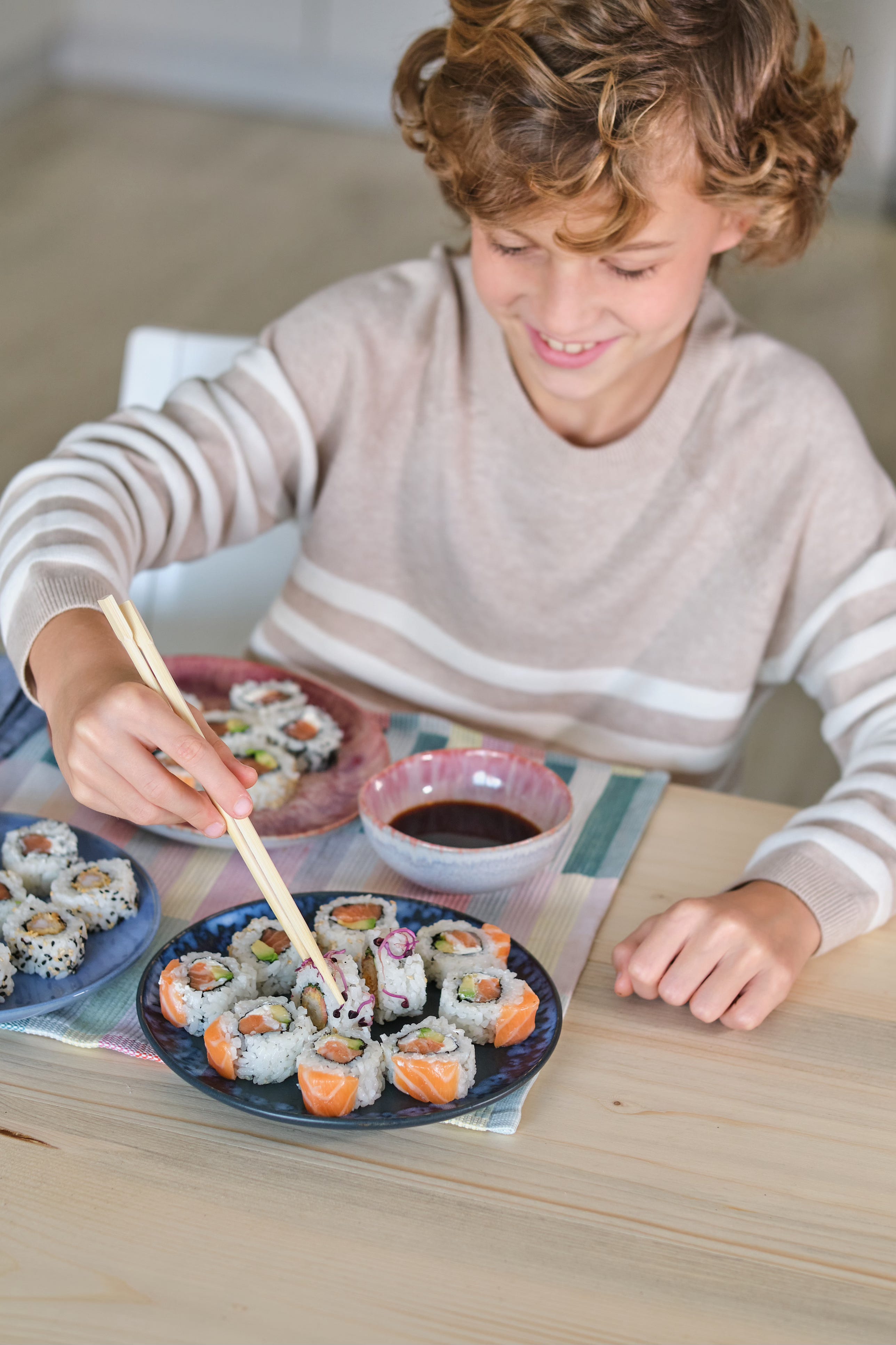
Sometimes it shows up in ways you didn’t expect.
At home. At restaurants. In ways that still surprise you.
And that is where it starts to feel complicated.
You might start to wonder:
Are you serving it too often?
Is it too expensive to rely on?
Should it always be wild-caught?
Is it too much of a “grown-up” food?
Should you be offering something else instead?
There’s a quiet sense that you should be doing this “just right.”
For many families, salmon is the first fish their child accepts easily. It often becomes one of the most uncomplicated parts of the meal. Yet it can still feel like a food that you should rotate away from.
Instead, think of salmon as more than a nutritious choice. It can be a steady place to build from. When a child accepts salmon, it matters more than most parents realize. Salmon is a low-mercury fish, a reliable source of protein and omega-3 fatty acids, and naturally soft, mild, and easy to eat.
For most families, salmon once or twice a week fits comfortably within general guidance. If it shows up a little more often during a season when it is working well, that is usually not something to overthink.
Other proteins will still have their place across the week: eggs, chicken, beans, lentils, beef, tofu, nuts, seeds, and grains. Variety does not have to mean moving away from the food your child already trusts.
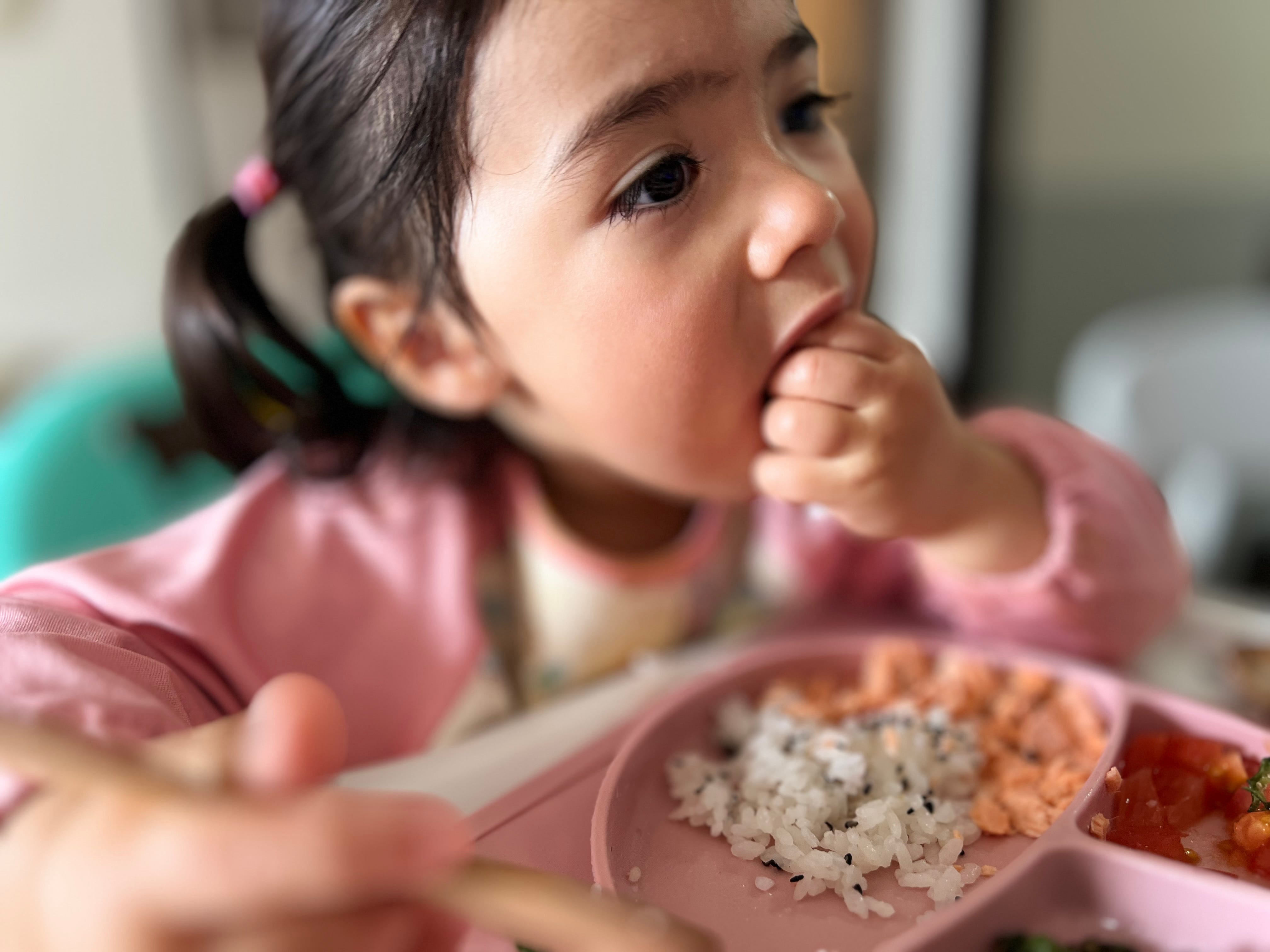
Sometimes, it’s simply what works at home.
What’s Driving the Guilt
For many parents, the guilt is not only about salmon.
It’s about what salmon represents: a higher-cost ingredient, a food associated with an adult palate, and a food that appears in many forms: raw in sushi, smoked as lox, cooked at home.

A familiar food, except in a form that feels more “grown-up.”
Even when your child accepts it easily, it can feel like something you should limit or rotate away from.
What is often missed is that salmon is not one single experience.
The salmon your child eats at a restaurant may be softer, richer, or more consistent. When you serve different types of salmon at home, sockeye, Atlantic, or Faroe Islands salmon, it may feel firmer, taste stronger, and flake differently. Lox, Nova, or flaky smoked salmon can bring a saltier, smoother, or more concentrated flavor or texture.
If your child prefers one form over another, that’s not a setback. It shows that they are noticing differences within the same food.
Why This Flavor Matters
When a food works, it creates something valuable at your table: ease, predictability, and a calmer starting point.
This is where confidence with food begins: not by moving on quickly, but by letting a trusted food return in ways that still feel familiar.
Salmon is soft and flaky. It has a mild, slightly sweet flavor. Its natural fat gives it a smooth, satisfying feel. That combination makes it easier for children to manage, recognize, and return to. When a food feels predictable, children don’t have to work as hard to figure it out.

Salmon isn’t just a “special” food. It’s a real food – caught, cooked, and shared.
Pediatric Culinary Medicine Insight
Salmon is also one of the most nutrient-dense proteins commonly served to children.
It provides omega-3 fatty acids, high-quality protein, and vitamin D.
It can be offered regularly as part of a typical week.
But what matters just as much is how it shows up at the table.
Salmon keeps enough of its flavor identity across preparations: baked, flaked, smoked, or served raw. That consistency helps children begin to recognize a flavor, even as the experience shifts slightly.
That recognition is one way taste literacy begins.
Inside the Collective, this Flavor Pathway shows you how to use salmon as a steady starting point without overthinking it.
You’ll see how to move from what already feels familiar into small shifts in texture, pairing, and shared meals, without adding pressure at the table.