

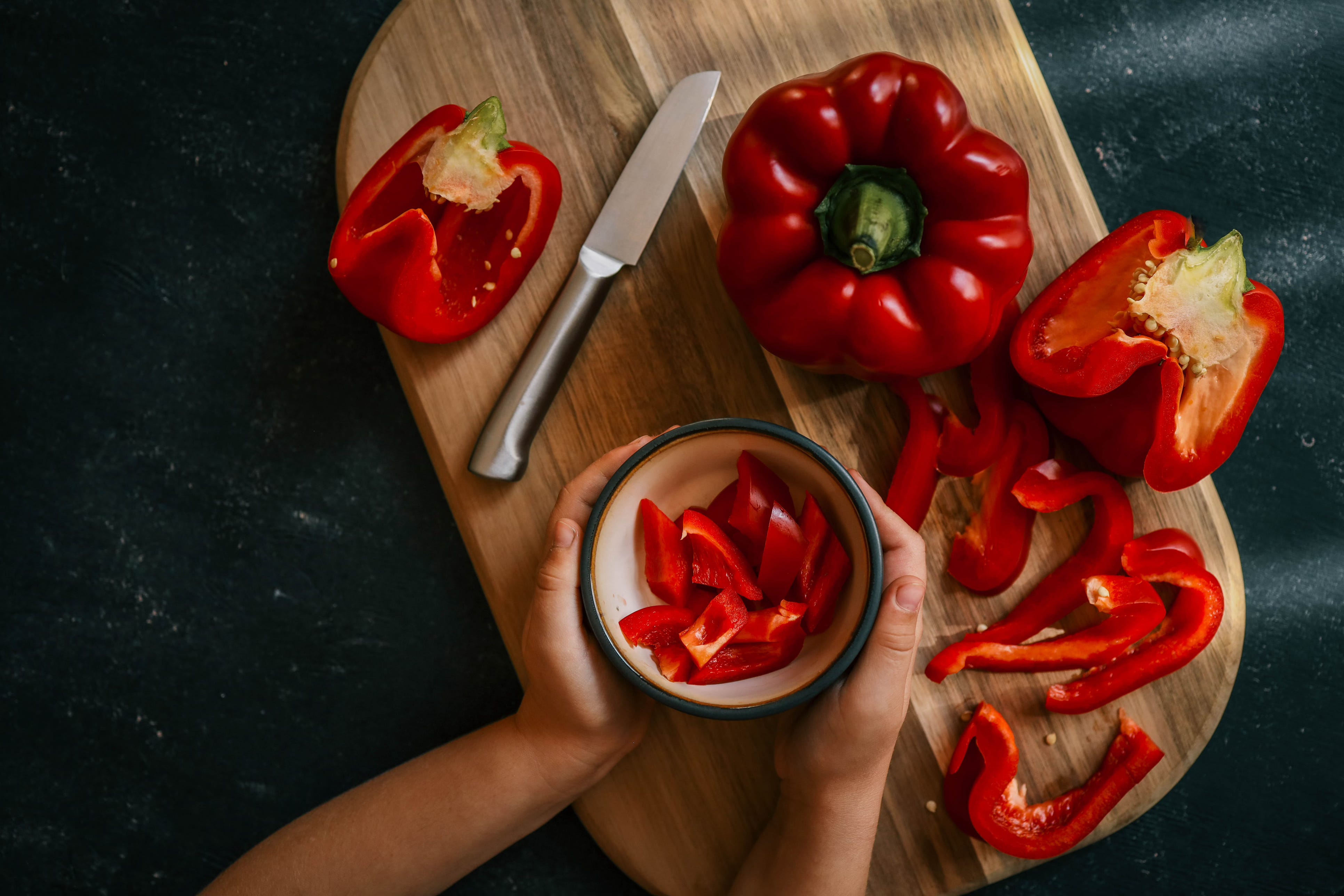
Red pepper becomes more familiar when children experience it across different forms, textures, and meals.
Green bell peppers are usually the ones parents grab first.
For many families, green peppers are the “normal” peppers. They are the most common peppers at the grocery store. Familiar with fajitas, salads, pizza toppings, and veggie trays.
But children often experience green bell peppers very differently from adults.
The sharper bitterness, firmer texture, and more intense flavor can make green pepper feel surprisingly difficult for young children to accept easily. Still, parents keep offering it with the best of intentions.
Red pepper tells a different story.
Many parents do not realize that red bell peppers are fully ripened green peppers.
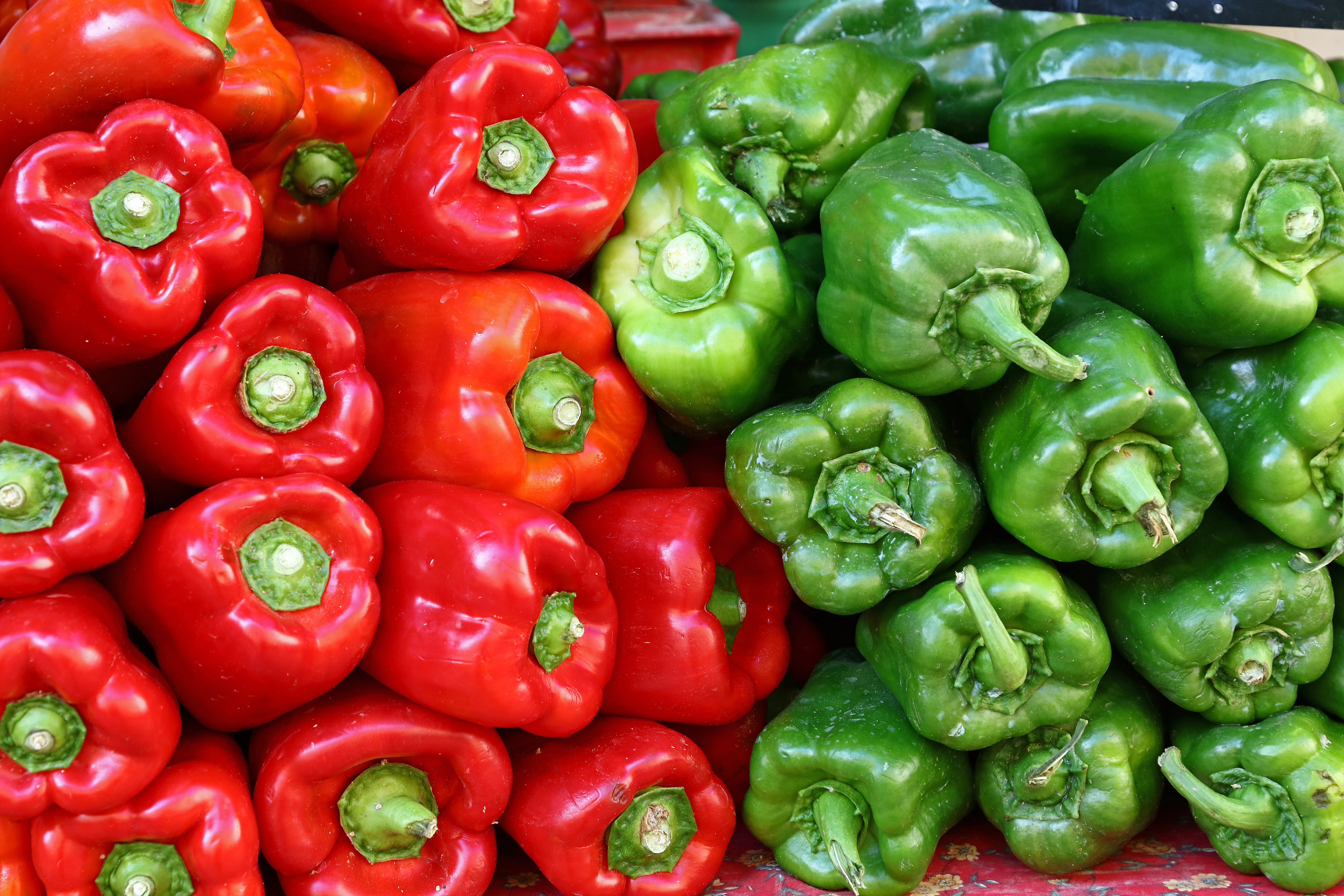
Ripening changes both sweetness and bitterness, which can shape how children experience flavor.
As the pepper ripens, its flavor becomes noticeably sweeter and less bitter, creating a gentler sensory entry point for many children.
Red pepper also fills an interesting gap in many family meals.
Parents hear constant reminders to “eat the rainbow,” yet red foods beyond apples, strawberries, and tomatoes can feel surprisingly limited. Beyond that, the color red is often absent, disappearing from the everyday dinner table.
Red pepper helps fill that gap.
It brings sweetness, color, crunch, and flexibility into everyday meals.
But this is also where feeding may become confusing for many parents.
A child who happily crunches cold raw red pepper slices with ranch dressing may refuse roasted peppers the next night. The crisp crunch becomes soft and slippery. The flavor deepens. The entire sensory experience shifted.
That moment helps explain taste literacy: Children are not simply learning whether they “like” red pepper. They are learning how the same flavor changes across texture, temperature, and preparation.
Why This Flavor Matters
Red pepper is one of the clearest examples of how flavor learning changes when parents shift from thinking about “vegetables” to thinking about sensory experiences.
Many children who struggle with green pepper respond differently to red pepper, not because they suddenly “like peppers,” but because ripening changes the flavor substantially. The bitterness softens. Sweetness increases. The aroma becomes rounder and less sharp.
Children experience flavor long before they think about nutrition. A sweeter, less bitter flavor can feel easier for children who are still learning vegetable flavors.
Red pepper also offers something surprisingly valuable: flexibility.
It can be cold and crisp beside a creamy dressing.
Slow roasted until smoky and soft.
Blended into soup, hummus, romesco, or pasta sauce.
Finely diced into eggs, rice, tacos, or grain bowls.
Each preparation changes the experience while helping children still recognize the same flavor.
That is important because taste literacy develops familiarity through flavor variation.
Children begin building continuity around the flavor, even when the texture or preparation changes. Over time, the flavor starts settling into the child’s internal library of familiar foods.
This is also why preparation matters so much in pediatric culinary medicine.
For some children, the crisp crunch of raw red pepper feels easier to manage. For others, the crisp skin and watery snap may feel too intense, while blended red pepper purée may feel smoother and easier to manage.
Parents often assume acceptance should look consistent:
“If my child likes red pepper, they should like it every way.”
But flavor learning is rarely that linear.
Familiarity grows through layered sensory experiences over time, not identical repetition.
Pediatric Culinary Medicine Insight
Red pepper is a powerful example of how children build neuroflavor maps through repeated sensory experiences.
The brain is continuously organizing flavor information: sweetness, bitterness, texture, moisture, aroma, and temperature.
With red pepper, these sensory shifts are especially noticeable.
A cold, raw strip dipped in a dip or dressing creates a very different experience from a silky roasted pepper blended into soup. Even though the underlying flavor remains related, those experiences may not immediately feel connected for a child.
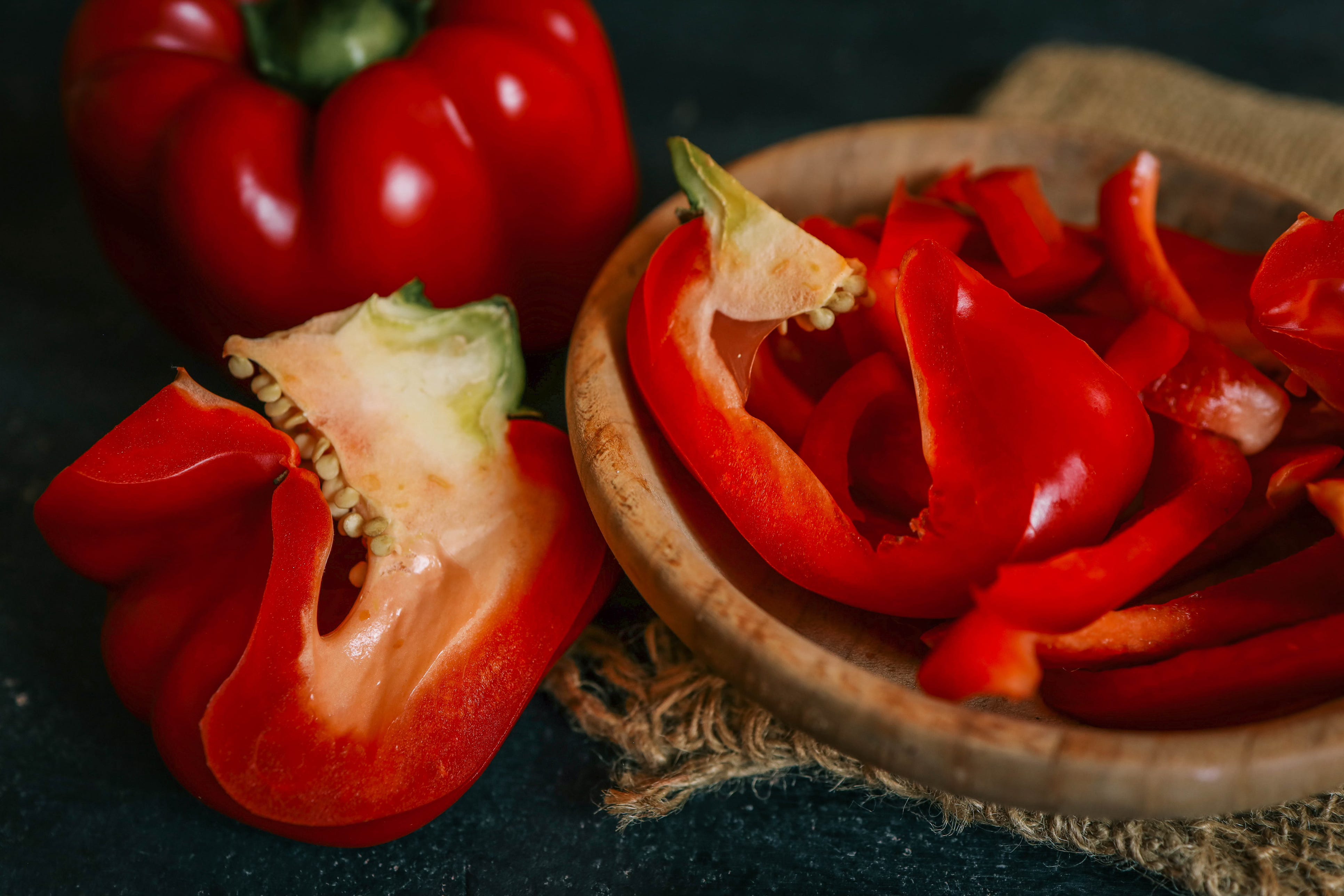
Recognition of a new flavor grows as children experience the flavor differently.
This is where gustatory priming becomes important.
When children encounter the same flavor in slightly different forms, the brain gradually begins to organize shared sensory patterns. The flavor starts to feel more familiar. Over time, children come to accept the flavor even when the texture or preparation changes.
Parents do not always see this learning happening right away.
A child may reject roasted red pepper while still quietly strengthening recognition of the flavor itself. Another child may tolerate blended red pepper long before managing the slippery mouthfeel of soft roasted strips. Neither experience represents failure or regression.
This is one reason pediatric culinary medicine places such strong emphasis on preparation and culinary technique.
Cooking changes flavor chemistry.
Roasting increases sweetness and softens bitter notes.
Blending changes mouthfeel and sensory predictability.
Temperature changes aroma intensity and texture perception.
These small culinary changes can make a food feel much easier for a child to approach over time.
Inside the Collective, this Flavor Pathway shows you how to use red pepper as a steady starting point to expand what your child will eat.
You will see how to move from what already feels familiar into small, manageable shifts in texture, pairing, preparation, and shared meals without increasing pressure at the table.