


Connection at the table is the foundation for confidence.
Why red lentils raise an eyebrow in my Italian kitchen.
In households where food is part of identity, you can feel a shift in the room when someone suggests altering a beloved dish. My husband grew up in an Italian family where tomato sauce is not just dinner. It is memory, pride, and the way you honor the people who taught you to cook. Many families have their own versions of this – recipes guarded, perfected, passed down.
So, when I see parents on social media stir red lentils into a pot of tomato sauce, I can almost hear that raised eyebrow from the other side of the kitchen. Not out of judgment, but out of love for what food represents and from loving food deeply.
At the same time, red lentils enter the conversation for a very real reason. Many parents carry the quiet, persistent questions:
Is my child getting enough protein? Are they eating enough fiber? Am I doing enough?
Those questions tend to surface right in the middle of an already long day, when dinner needs to happen and the mental space is limited.
Red lentils were one of the first foods highlighted in my culinary medicine training for exactly this reason. They cook quickly. They offer steady nourishment. And they blend easily into dishes without demanding much from the cook.
What matters most is this: red lentils are valuable not because they disappear into food but because they bring their own gentle, earthy flavor – something children can explore at their own pace. They are soft, warm, and comforting. They can be stirred into a soup, simmered with spices, or served on their own, glorious in their simplicity.
Parents reach for them because they want meals that feel hearty without pressure. Red lentils offer a way to nourish children in a manner that feels doable and grounded in reality.
In a kitchen where food matters, red lentils do not need to overshadow cherished dishes. They can sit alongside them – offering their own quiet, confident place at the table.
And that leads to the real reason red lentils belong in this series: not as a nutrition hack, but as a calm entry point into plant-based flavor.
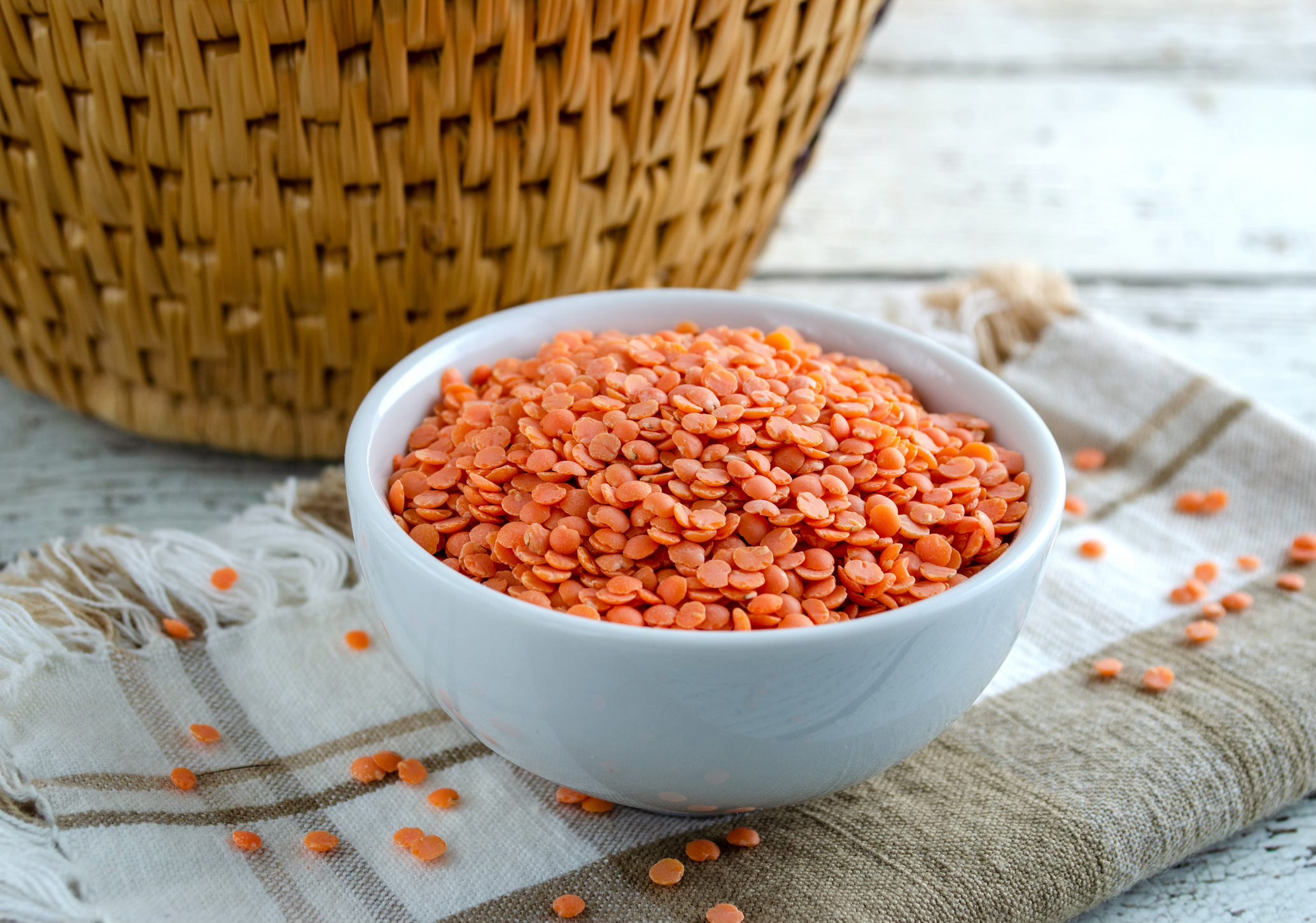
Red lentils are gentle, cozy, and developmentally approachable – an easy entry into plant-based flavor.
Why This Flavor Matters
Red lentils give families something rare: a comforting, plant-based flavor that meets children exactly where they are developmentally. Their gentle earthiness introduces legumes without the firmness or shape that often makes young children hesitate. That softness is not simply texture – it is an invitation into a new flavor category with ease.
Parents often worry about protein, fiber, and whether their child is eating “enough.” Those concerns can make meals feel heavy before they even begin. Red lentils lighten that mental load because they provide nourishment without demanding complicated cooking. They bring steadiness to the plate in a way that feels achievable, especially on nights when energy is low and the desire for something wholesome is high.
From a taste literacy lens, red lentils serve another key purpose: they help children develop familiarity with the warm, earthy notes found across plant-based dishes. This gentle introduction creates comfort long before a child encounters more structured legumes – like brown, green, or Puy lentils – where texture can become the barrier.
Red lentils matter because they:
Offer flavor without texture resistance.
Create space for calm exploration.
Allow gentle layering with aromatics.
Build confidence that generalizes to other legumes.
Red lentils shift the focus away from pressure and performance – all those little moments of “please just try it” – and back toward enjoying your child. When flavor feels approachable, children notice more, parents relax, and mealtime becomes a foundation for future curiosity.
Red lentils are humble, often overlooked, and deeply useful. They bring exactly the qualities that help children move from hesitant tasters to confident eaters.
Let’s look at how red lentils support development in a way that feels calm, respectful, and aligned with children’s readiness.
Pediatric Culinary Medicine Insight
Red lentils are often introduced for nutritional reasons: steady fiber, reliable protein, and micronutrients that support iron. From a pediatric culinary medicine perspective, their greatest value comes from allowing children to meet flavor without pressure-filled moments.
Because they soften completely when cooked, children can focus on taste rather than texture.
Developmentally, this matters because:
It aligns flavor introduction with oral motor skill readiness.
Texture steps out of the spotlight, so flavor can be noticed calmly.
Children are not asked to process competing sensory demands.
For children 18–36 months, repeated, low-pressure exposure helps:
Open the “culinary window” toward future aromatics.
Build confidence with mild onion, cumin, or gentle tomato.
Establish a pathway toward broader plant-based flavors.
Families often worry that legumes are “too advanced,” imagining firm green lentils or structured salads. Red lentils quietly shift that assumption. They open the door without resistance. They invite curiosity in small, meaningful steps.
This approach respects culinary identity. Red lentils do not compete with cherished dishes. They can be their own gentle spoonful or join flavors that hold cultural significance. The goal is not to hide them, but to let children notice and gradually appreciate them.
In pediatric culinary medicine, red lentils remind us that confidence comes from comfort. When children meet flavor without pressure, they revisit it – and that revisiting is where change happens.
Levels of Flavor Confidence – Red Lentils
Every child approaches flavor differently. Some are beginning to notice new tastes, some explore cautiously, and some feel comfortable discovering variations. The three levels that guide every Flavor Pathway reflect where your child feels most comfortable meeting new flavors, based on confidence, not age.