

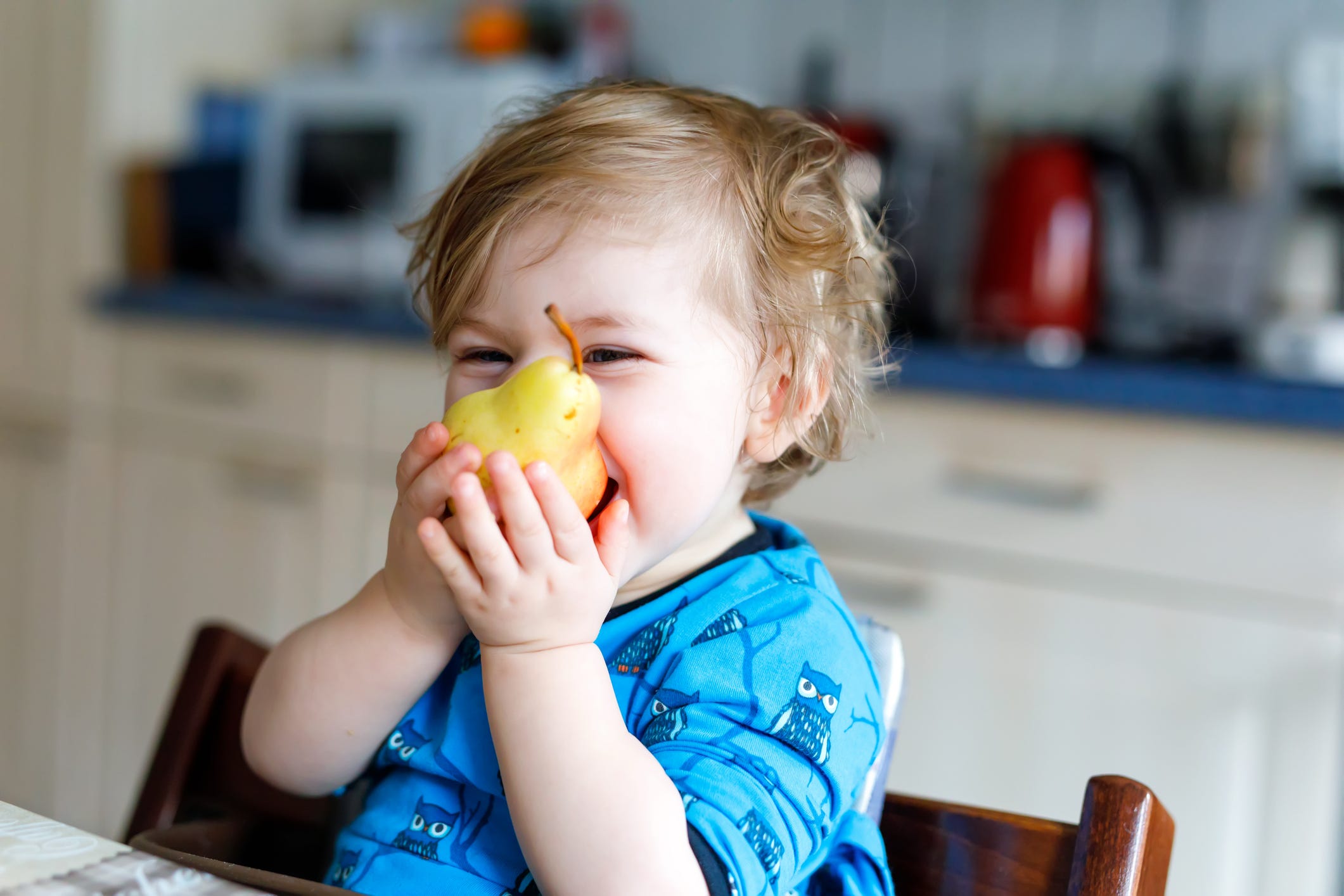
A child getting to know pear, one bite at a time.
Pears are the ultimate kitchen paradox. Because they ripen from the inside out, waiting for a pear can feel like high-stakes fruit management. You buy them rock hard and check on them each day. The moment they seem ready, you rush to eat them before they become softer than you intended. Managing their timeline can feel a little like living with a toddler: everything appears calm, and then suddenly the moment has changed.
That unpredictable ripening can make pears tricky to plan for, even though they are lovely to share. If you have wondered what to do with a pear that is still too firm, already very soft, or not welcomed by your child, you are not alone.
My first taste of pear likely came from a small cup of fruit cocktail. Diced pieces sat among other fruit in light syrup. It was soft, sweet, familiar, and ready in the pantry whenever we wanted it. I am not completely sure when I first enjoyed a fresh, perfectly ripe pear, but it must have made an impression. I love pears. Waiting for them to ripen is a lesson in patience, but one that can end with a delicious, juicy reward.
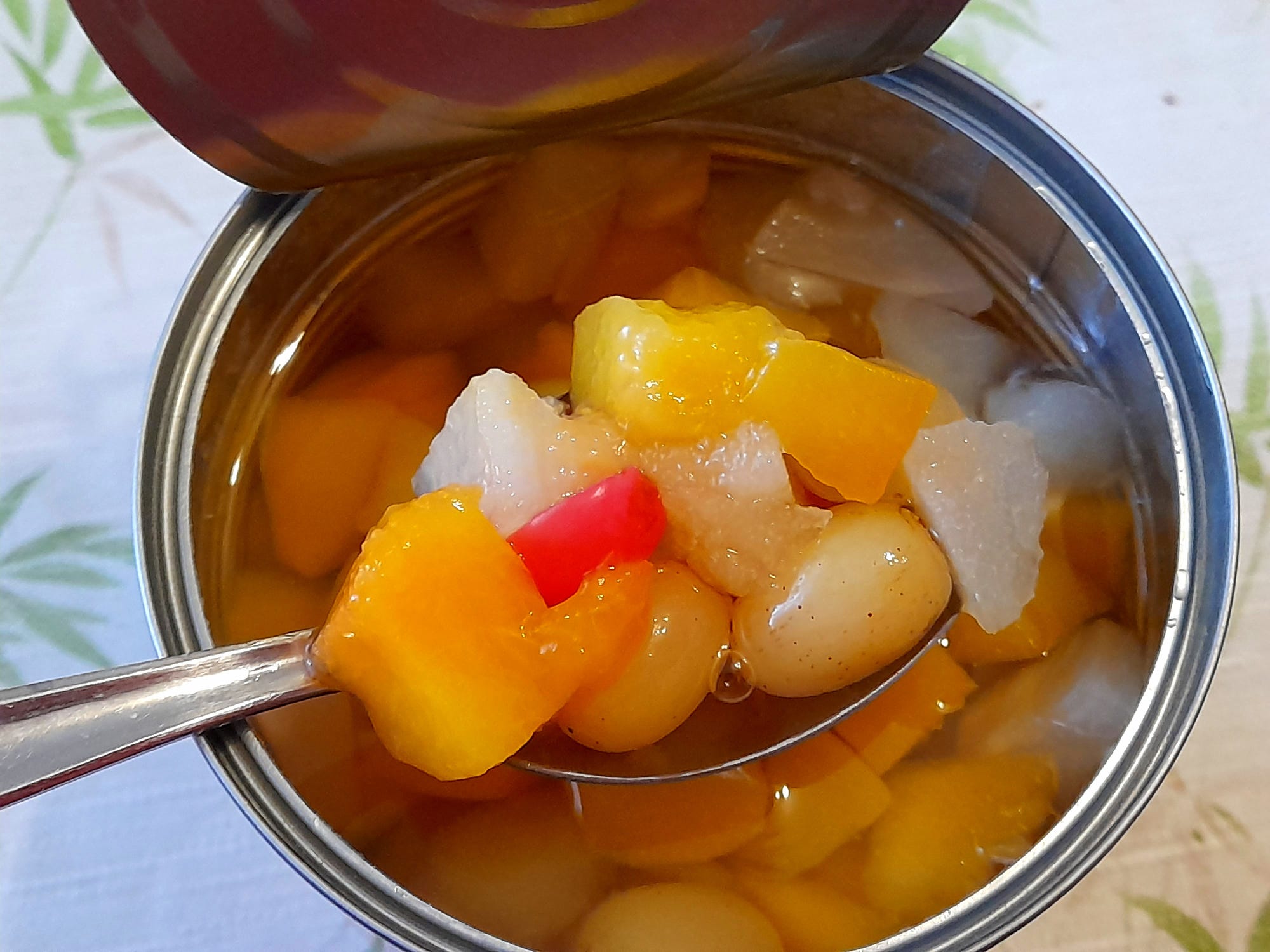
My first taste of pear was in a fruit cocktail cup: soft, sweet, and ready when we were.
My children first met pear in a different form: smooth purée on a baby spoon, offered when each was ready for complementary foods. I froze purée so I could serve pear beyond its fresh season. All three enjoyed it early. That first purée was not the only way they came to know pear, but it gave them an early taste of its gentle flavor.
Fresh pears bring a different kind of timing. Many familiar varieties are picked firm and ripen after harvest. A gentle press near the stem can help you tell when one is ready. Even then, it takes planning and often feels like guesswork. Because pears bruise easily, I handle them gently and unload them last from my cart, so they sit at the top of the grocery bag on the way home.
Fall is a natural time to notice fresh pears, although many varieties are available beyond the season. Your child’s experience might begin with purée, pear mixed into a familiar food, or a ripe piece served in a way they can manage. Each is a meaningful starting point for learning about pear.
Why This Flavor Matters
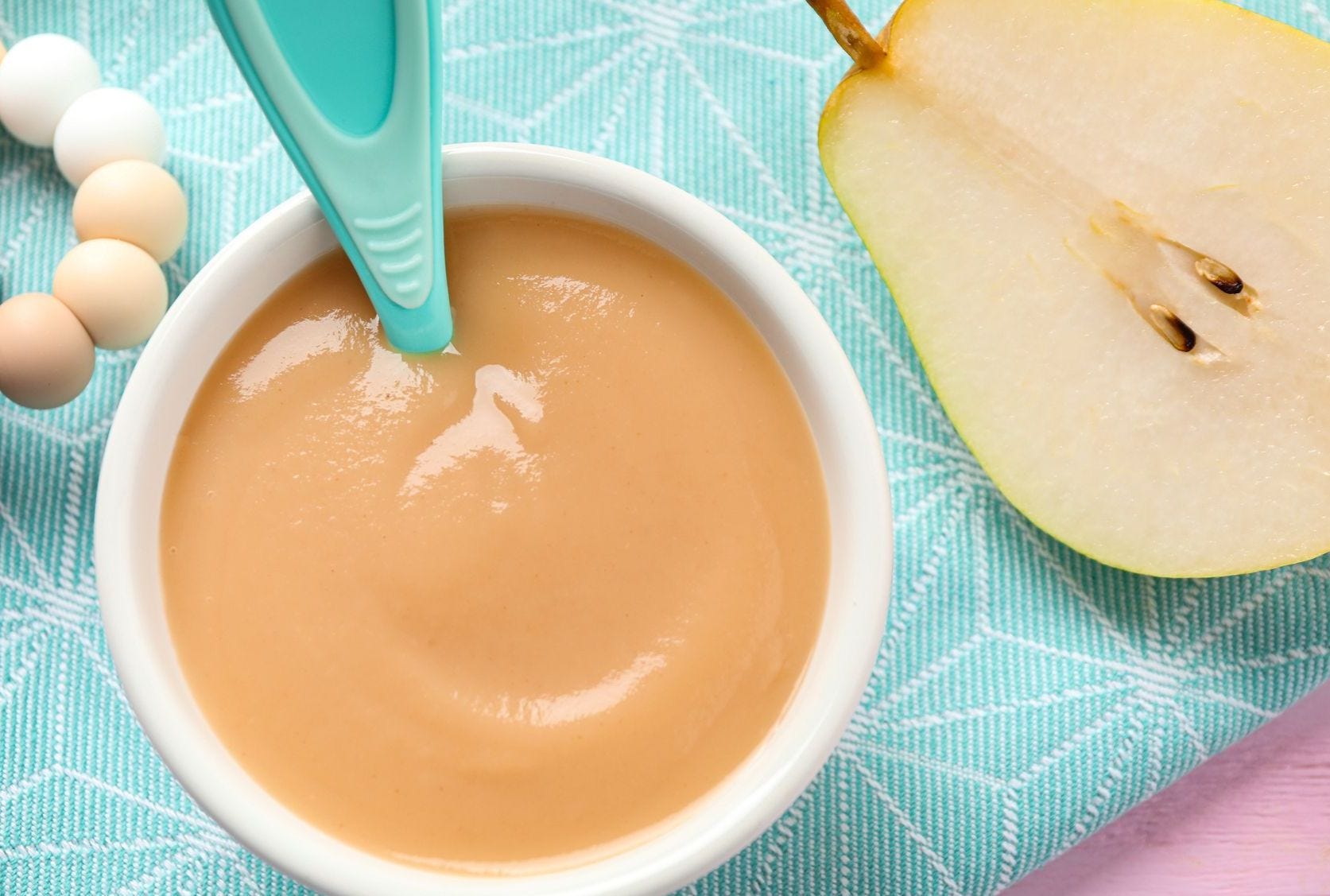
Pear purée offers a simple way to begin experiencing pear’s flavor and texture.
Flavor learning begins before a baby can pick up food and feed themself. Babies encounter flavors before birth and, when breastfed, through breast milk, giving them early experiences with some of the foods their family eats. During the 4- to 6-month flavor window, tiny tastes offer another way for babies to experience flavor without replacing breast milk or formula. These first tastes are small sensory introductions. As babies become developmentally ready for complementary foods, they continue learning about flavor through tasting, touching, smelling, watching, and joining their family at the table.
This early period matters, but it is only the beginning. Taste literacy develops as children connect one experience with another over time. A child who first tastes pear as a smooth purée may later recognize something familiar in a ripe slice, cooked pear, or pear served with cheese. The texture and presentation change, while the flavor remains recognizable.
Pear shows this learning especially well because it does not offer the same experience every time. One pear variety may be crisp and lightly sweet; another may be soft, juicy, and deeply aromatic. Fresh pear feels different from pear that has been roasted, mashed, or folded into another food. Even the same pear changes as it ripens.
For parents, these differences can feel inconvenient. Your child may accept a firm slice one week and turn away from a softer pear the next. That response does not necessarily mean your child no longer likes pear. They may be responding to the graininess, juiciness, peel, temperature, or softness rather than rejecting the flavor itself. Recognizing that distinction gives you more useful choices for the next pear experience.
Baby-led feeding offers valuable opportunities to explore food and practice self-feeding, but it is not the whole story of flavor development. Parents also guide learning by offering a tiny taste, using a spoon, preparing a manageable texture, or including a familiar flavor in the family meal. Purées, soft pieces, shared foods, and self-feeding can all have a place. What matters is noticing how your child responds and offering an appropriate next experience.
This is how your role as a guide helps your child build confidence with pear. You notice whether the pear is firm, ripe, or ready to be cooked. You can peel it, mash it, pair it with cheese, or serve it plain for dessert. You can eat it alongside your child and notice together that one pear is crisp while another is soft and juicy. These small culinary decisions give your child many ways to experience pear.
The goal is not to persuade your child to eat pear in every form. It is to make pear recognizable across experiences, so each variation does not feel entirely new. Over time, your child builds an internal library of what pear can look, smell, feel, and taste like.
Your child’s growing taste literacy is not measured by whether they finish the pear today. It grows through layered sensory experiences, not identical repetition. By sharing pear in ways that fit your child’s current readiness and your family’s meals, you help your child move from simply encountering pear toward approaching it with greater familiarity and confidence.
Pediatric Culinary Medicine Insight
Pear is a clear example of why feeding your child well involves more than choosing a nutritious food. Variety, ripeness, storage, temperature, and preparation all shape the way your child will experience pear.
European pears, including Bartlett, Bosc, D’Anjou, and Comice, are usually firm when purchased, then ripen at home. Bartlett pears soften and become juicy, while Bosc pears tend to hold their shape for slicing, baking, or roasting. D’Anjou pears are gently sweet and versatile. Comice pears are especially soft and luscious when ripe. Asian pears, sometimes called apple pears, offer a different experience. They stay crisp when ready to eat rather than softening like European varieties.
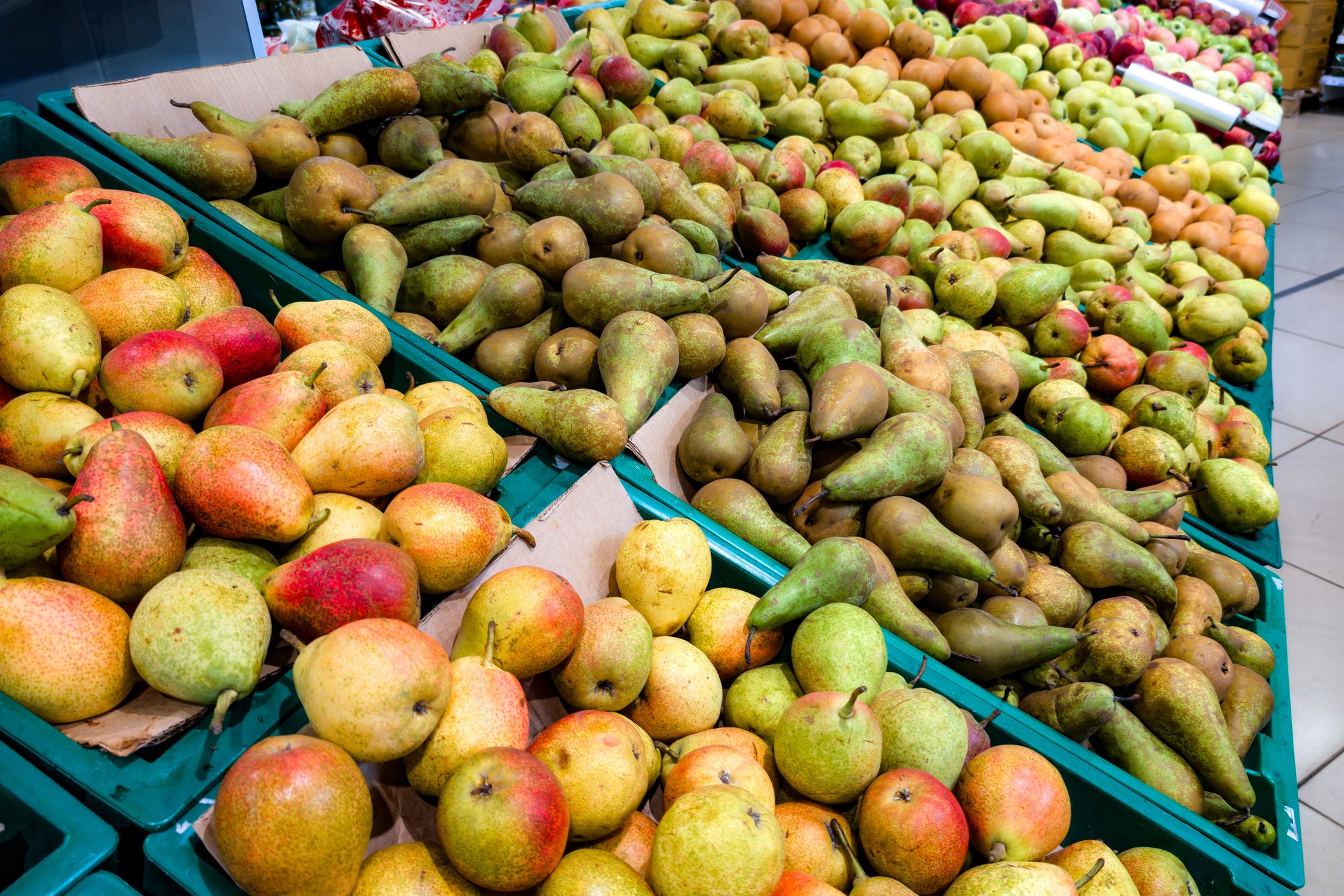
Different pears bring different textures, from crisp and firm to soft and juicy.
These textural differences provide options. If your child hesitates around soft or grainy fruit, an Asian pear may be a better fit. A ripe Bartlett mashes easily for a baby learning to manage complementary foods. If the pear you purchased is still firm, wait longer for it to ripen, grate it, slice it thinly, or cook it.
Pears also raise a common parenting question: Will pears help with my child’s constipation? Pears contain fiber and water, which is why parents may think of them when a child has trouble with bowel movements. Pears may help in the short term but may not be enough to address ongoing constipation. Persistent or painful constipation deserves a conversation with your child’s pediatrician.
Once cut, pear flesh can brown quickly. Gently dipping or brushing pear with diluted lemon or orange juice can slow the color change, but it also adds tartness. For a snack eaten soon after cutting, a little browning may not matter. For a plate prepared ahead, a light dip in lemon water can help preserve the pear’s bright flesh color. You are balancing appearance, flavor, timing, and what works for your family.
When offering pear to your child, consider the whole experience. Aroma, temperature, firmness, whether the pear is peeled, and textures ranging from crisp or grainy to meltingly soft may all shape your child’s response. These details also give you language for guiding your child’s attention without pressuring a bite: “This pear is crisp,” “This one is very juicy,” or “The pear tastes sweeter beside the cheese.”
Because pear can feel different from one serving to the next, your child’s starting point is best guided by readiness and familiarity.
Levels of Flavor Confidence
These levels can help you identify that starting point. They are not tied to your child’s age or a schedule. Your child may feel confident with one form of pear and need support with another. Begin where the experience feels manageable and move between levels as needed.
Early Flavor Explorer: Your child is noticing pear. They may watch you eat it, look at a piece, smell it, touch it, or explore it without tasting. Progress may look like interest, recognition, or growing comfort with pear.
Growing Flavor Adventurer: Your child is beginning to explore pear in more than one form. They may accept a small taste, try it in a familiar combination, or notice differences in ripeness, peel, or texture. Progress may look like a willingness to return to pear or try a small change in how it is prepared.
Confident Flavor Taster: Your child is comfortable eating at least one form of pear. They may be ready to notice how pear changes with preparation or try it with another food. Confidence may look like comfortably eating a familiar form of pear and being willing to explore it in a new preparation or dish.