

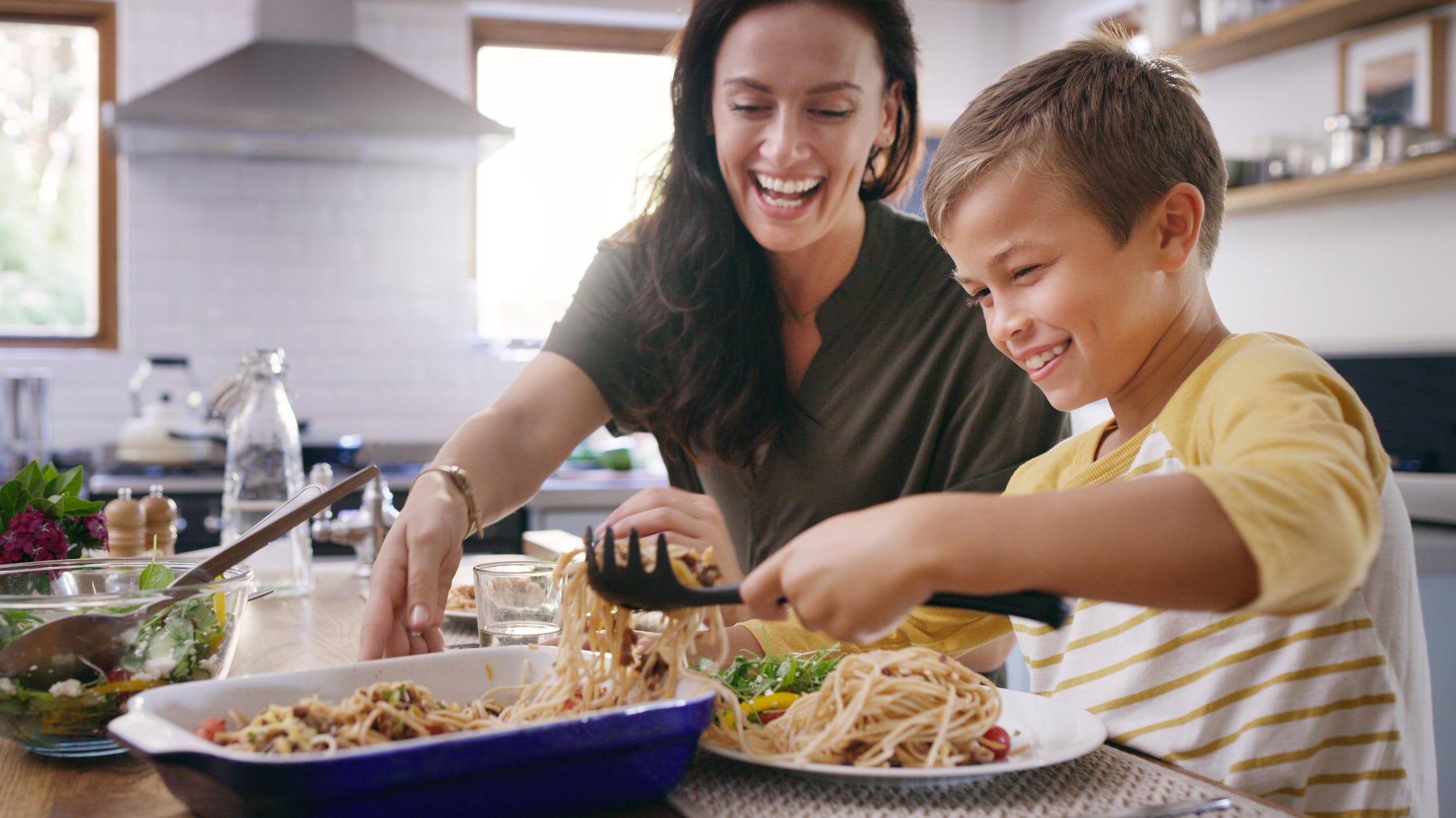
A familiar food can help children join the family meal with confidence. Inviting your child to help serve also gives them an active role at the table.
Several years ago, while visiting my husband’s extended family in Italy, I asked one of his younger cousins, Angelo, a question I thought would be easy to answer.
“What is your favorite kind of pasta?”
He was 11. Surely, he would say spaghetti. Or rigatoni. Maybe ravioli.
Instead, he shrugged his shoulders and said, “Well, it all depends on the sauce.”
Such an Italian answer.
To him, pasta was not one food with one fixed identity. The shape mattered. The sauce mattered. How the shape worked with the sauce mattered. Pasta was part of a dish, and the dish was part of the meal.
For many parents, pasta brings both relief and second-guessing. It is familiar, quick to prepare, and one of the few dinners everyone may be willing to eat. Yet serving it frequently can leave you wondering whether an easy dinner is also good enough.
Your child loves regular pasta, perhaps with butter, olive oil, Parmesan, or no sauce at all. At the grocery store, you see boxes promising more protein, more fiber, organic wheat, “non-GMO,” or no gluten at all. Chickpea, lentil, whole-wheat, vegetable, and “protein boost” pastas appear to offer something regular pasta does not.
You are trying to make a thoughtful choice. You want food your child will enjoy, but you also want to know that you are supporting their growth and health.
You may have read books or headlines questioning modern wheat. You may have heard that gluten-free foods are healthier or easier to digest. Perhaps someone you know says they can eat pasta and pizza in Italy without discomfort, even though those foods bother them at home. Questions about processing, pesticides, and glyphosate can make a simple bowl of pasta feel like a test of whether you are making the healthiest choice.
These questions deserve thoughtful answers, but they do not mean that the pasta your child already enjoys must be replaced. For most children without a medical reason to avoid wheat or gluten, regular pasta can remain an enjoyable part of a varied diet.
Your child’s love of pasta can also be a starting point for greater variety. By understanding what makes pasta familiar and changing one feature at a time, you can introduce different shapes, finishes, sauces, and dishes while preserving something your child already recognizes.
Why This Flavor Matters
Pasta offers children something important: recognition. The color is familiar. The aroma is usually mild. The texture can be predictable. The shape is easy to see before the first bite. For a child building an internal library of familiar foods, pasta’s predictability makes it feel comfortable.
When you understand what makes pasta feel manageable for your child, you can keep its familiar shape, flavor, texture, or presentation steady while changing another feature.
Pasta also offers considerable sensory and culinary variety. That flexibility is useful on an ordinary weeknight and when your family eats out. A child who recognizes pasta already has a familiar point of reference, even when the shape, sauce, or setting is new. Pasta can be long, short, smooth, ridged, curled, folded, or hollow, and served with anything from olive oil or butter to vegetables, beans, cheese, fish, meat, herbs, or sauce.
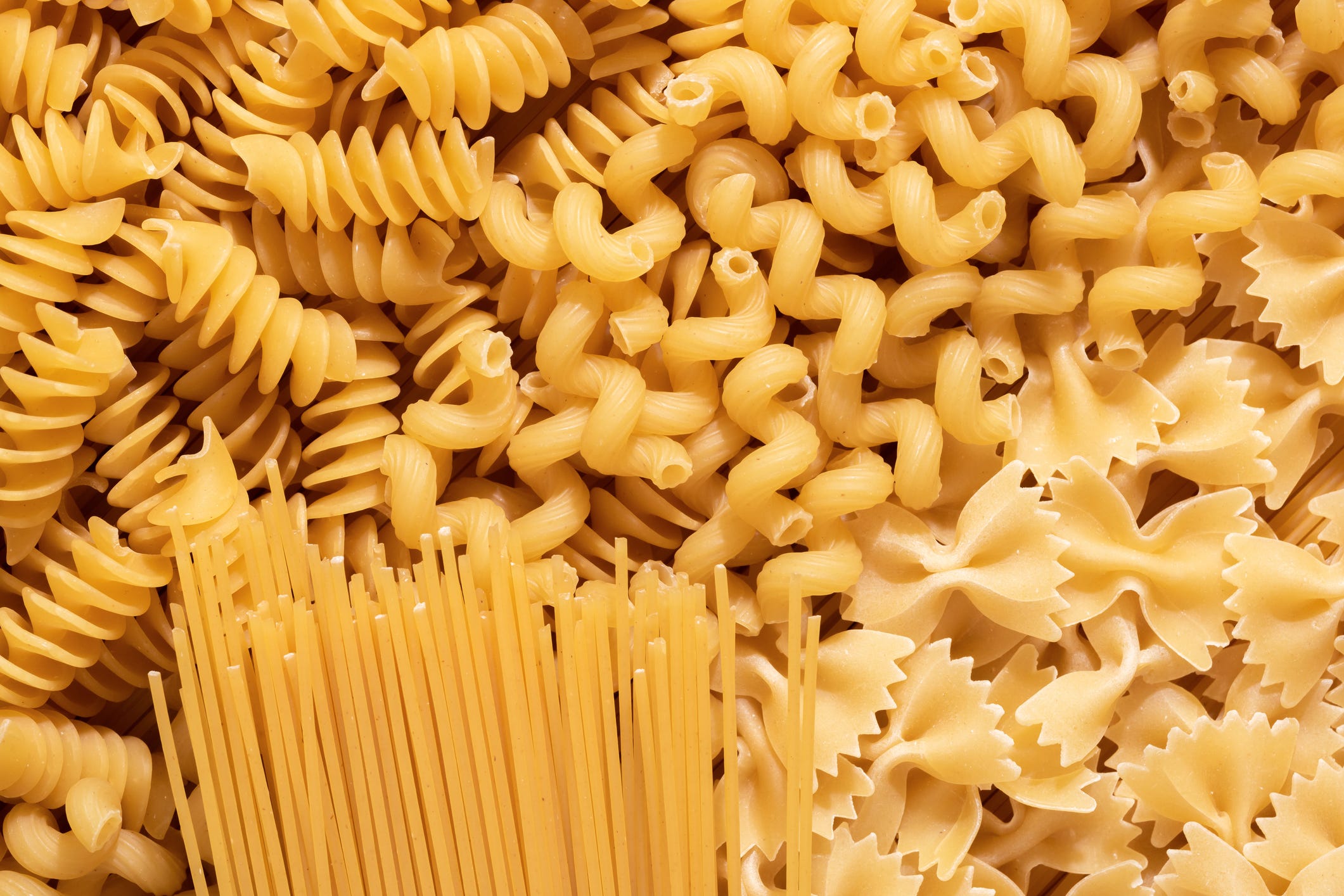
When made from the same dough, fusilli, cavatappi, farfalle, and spaghetti still create different eating experiences. Changing the shape is one way to build taste literacy without changing the pasta’s familiar flavor.
Traditional pasta is usually made from durum wheat semolina and water. For example, A 2-ounce dry serving of De Cecco Spaghetti No. 12 provides about 8 grams of protein and 2 grams of fiber. Although chickpea or higher-protein pasta may contain more protein and whole-wheat pasta usually provides more fiber, the eating experience differs. Chickpea pasta may smell earthier, break more easily, or feel softer or grainier in the mouth. Whole-wheat pasta often tastes nuttier and feels firmer.
Some children enjoy chickpea or whole-wheat pasta, while others immediately recognize that their regular pasta has been replaced. Your observations can help you decide whether a different pasta adds something useful for your family or makes the meal harder to eat.
That outcome matters because nutrition includes both what a food provides and what your child is comfortable eating.
Pasta can provide a familiar base for a varied meal. Peas and Parmesan, white beans and olive oil, broccoli and cheese, tomato sauce and meatballs, or salmon and greens each contribute different nutrients, flavors, and textures. Other foods served during the meal and throughout the rest of the day can provide additional protein, fiber, fats, vitamins, and minerals. Consider the pasta and the rest of the meal together. The noodles do not have to provide everything. On a busy night, pasta, peas, Parmesan, and fruit can make a meal.
Perhaps the most useful way to reconsider “optimizing” pasta is to cook it well, choose a shape that complements the sauce, and build flavor and nourishment around it.
Pediatric Culinary Medicine Insight
It is understandable to wonder whether regular pasta is “good enough” when your child asks for it often. You want your child to enjoy dinner, but you also want to feel confident that the foods you rely on support their growth and health. Conflicting messages about wheat, gluten, carbohydrates, protein, fiber, food processing, and pesticides can make that decision more difficult.
Understanding a few distinctions can help you decide what matters and what may be food marketing rather than a medical need.
Gluten-free pasta is medically necessary for a child with celiac disease and may be appropriate for certain other conditions under medical guidance. However, “gluten-free” describes the absence of gluten. It does not automatically establish that a food is more nutritious. If your child regularly experiences abdominal pain, diarrhea, constipation, vomiting, poor growth, or unexplained iron deficiency, discuss those symptoms with their healthcare professional before removing gluten. Testing for celiac disease may be less accurate after gluten has been eliminated.
What about friends and family who say they can eat pasta and bread while traveling abroad without discomfort?
Their experiences may be genuine, but they do not prove that wheat, gluten, or glyphosate caused their symptoms. During travel, portions, eating pace, physical activity, stress, snacking, recipes, and overall meal patterns may be different.
Travel can still offer useful food learning. Instead of asking whether your child will eat at a particular restaurant, look for one recognizable item on the menu. It may be spaghetti, a tomato sauce, grated Parmesan, or ravioli. Your child can begin with that familiar element while noticing what is different.
Families may also have questions about glyphosate or where wheat is grown. Choosing organic pasta or pasta made with Italian-grown wheat may reflect a family’s preferences. Still, origin alone does not determine whether a pasta will be nutritious, enjoyable, or well suited to a child.
Italian pasta-making traditions offer useful lessons about culinary quality. Durum wheat semolina helps pasta maintain its structure during cooking. Bronze-die extrusion can create a rougher surface that helps sauce and grated cheese cling. Wheat selection and drying methods may also affect flavor, texture, and cooking reliability. A higher price does not automatically make pasta more nutritious, but you can decide whether those culinary differences matter to your family. No single box will be the right choice for every family.
If pasta is one of the foods your child already loves, learn to cook it well and notice how the shape works with what you are serving. Shells, tubes, spirals, and long strands each hold ingredients differently and require different eating skills. Even when the ingredients are almost identical, changing the shape changes how a child handles, tastes, and experiences the pasta. That is taste literacy.
A child does not need to move directly from plain pasta to tomato sauce, pesto, ragù, or carbonara for the experience to count as food learning. A new pasta shape or a slightly different finish can be a meaningful experience.
Pasta reinforces an idea we have explored throughout One Flavor, Six Paths: familiarity supports food learning. Read on to identify where pasta feels easiest for your child and how to build variety through six practical paths.
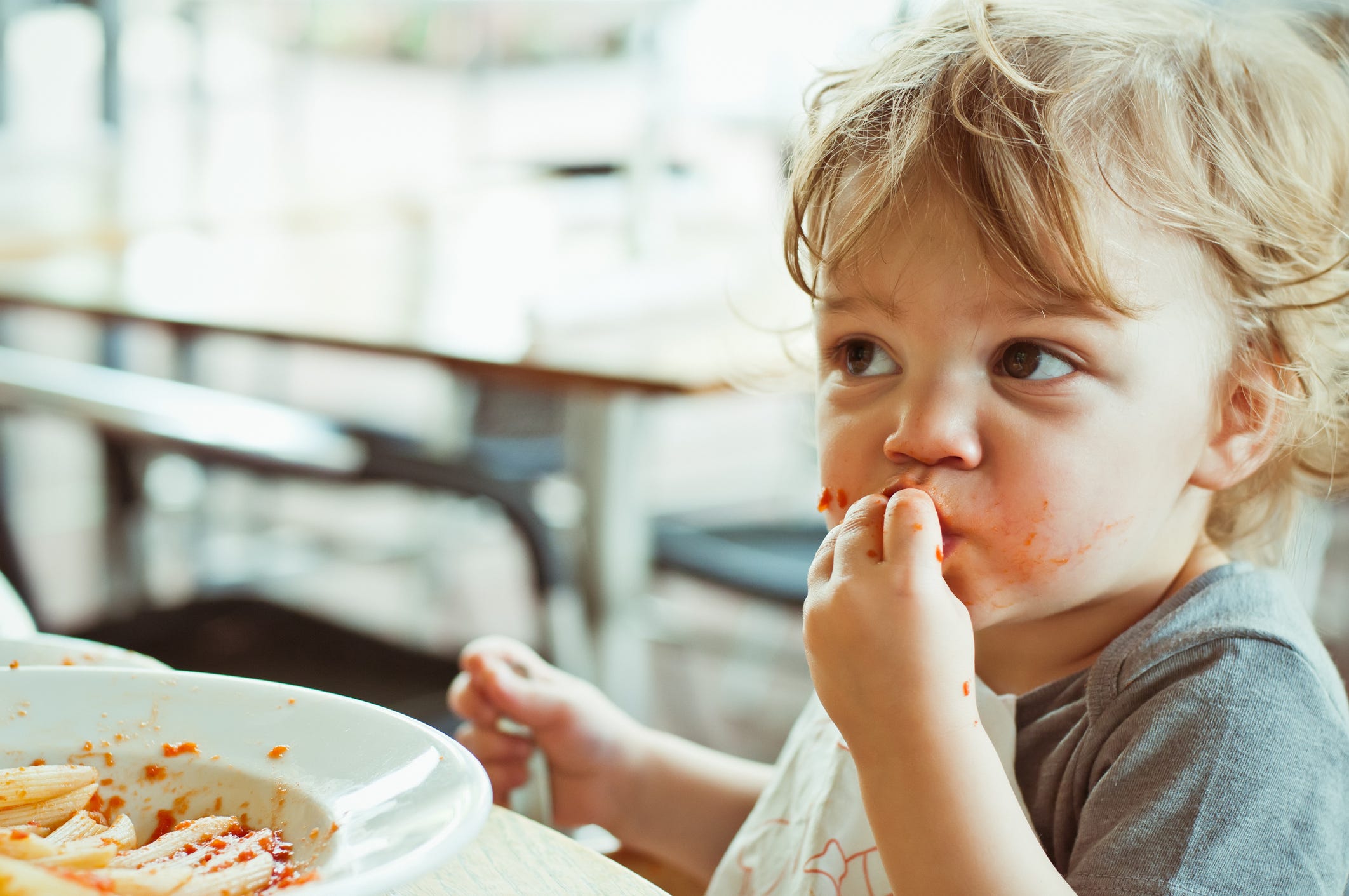
Young children may move between fingers and utensils as they learn to eat pasta. A shape that is easy to grasp, bite, or spear can support both eating skills and confidence.
Levels of Flavor Confidence
The three levels reflect how your child approaches familiar and unfamiliar food experiences. Begin where pasta already feels easiest, using a shape, size, and texture your child can comfortably manage. A child may also be at different levels in different situations. They may be confident with pasta at home and more cautious when the shape, sauce, or restaurant setting changes.
Early Flavor Explorer: Pasta is about recognition, predictability, and physical ease. Your new eater may begin with tiny pastina offered on a spoon or a soft, short pasta shape that is easy to grasp. Another child may feel most comfortable with familiar macaroni, spaghetti cut to a manageable length, or another well-known shape served simply with butter, olive oil, or Parmesan.
Success looks like recognizing, managing, and enjoying a pasta experience your child already knows.
Growing Flavor Adventurer: Your child begins noticing pasta in new forms and settings. A familiar noodle may appear in a different shape, with ridges instead of a smooth surface, in broth or soup, or finished with grated cheese, herbs, peas, beans, or a small amount of sauce.
Success looks like curiosity and a willingness to explore a familiar food with one or two sensory changes.
Confident Flavor Taster: Pasta becomes a familiar and flexible part of your child’s food world. Your child may comfortably enjoy long, short, tubular, layered, or filled pasta in preparations such as lasagna, stuffed shells, ravioli, tortellini, pasta e fagioli, pesto, ragù, or shared family dishes.
Success looks like flexibility, confidence, and ease when pasta appears in different shapes, preparations, meals, and cultural traditions.
If this guidance has helped you feel more confident feeding your child, consider becoming a paid subscriber, whether you have been reading for some time or are new to the Collective.
The Fussy to Foodie® Collective is reader-supported.
With your subscription, you support the pediatrician-chef work behind each weekly article and receive ongoing guidance through the complete archive, every new article, and practical tools for building your child’s taste literacy.