

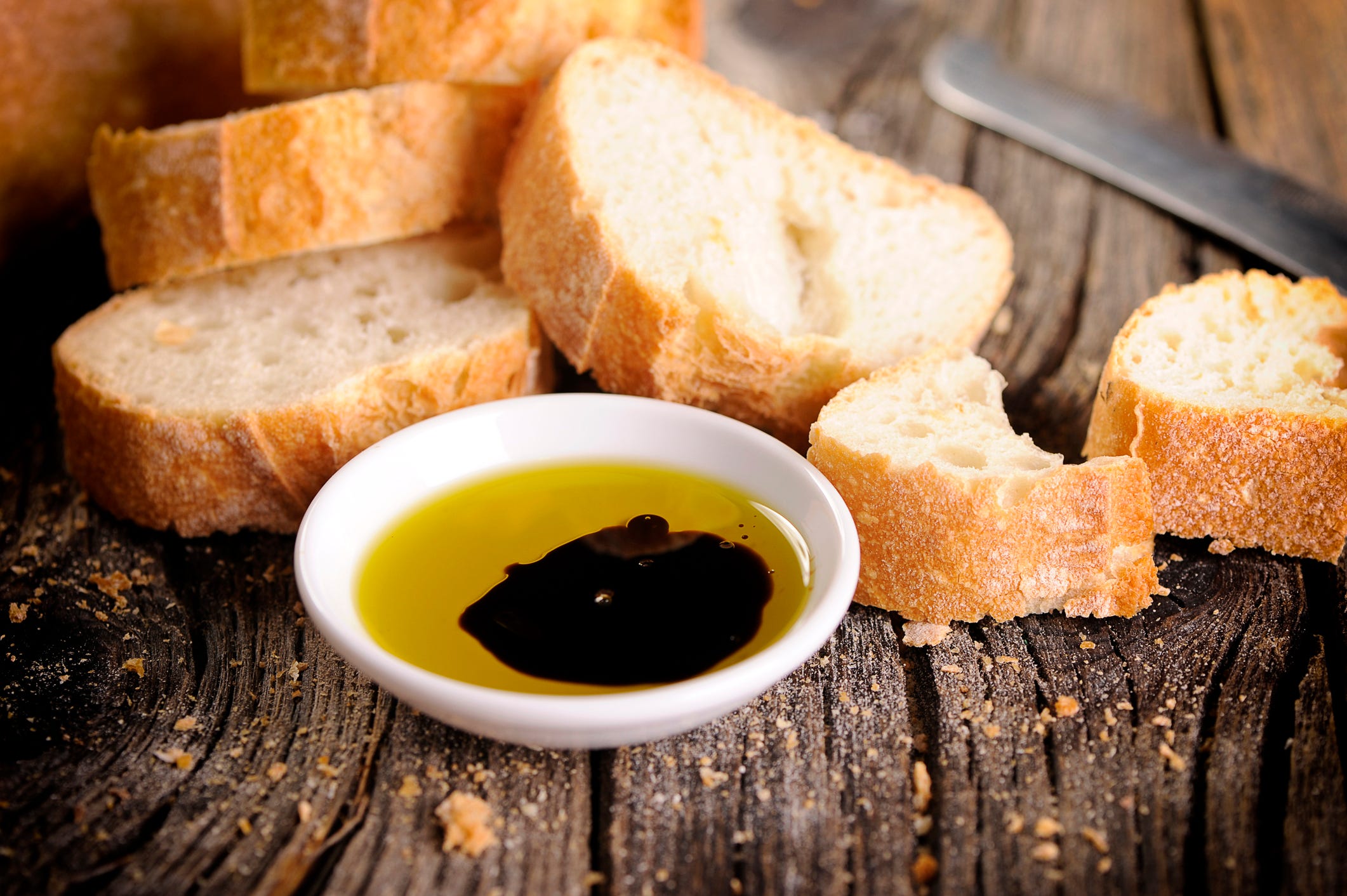
A glossy pool of balsamic rests in golden EVOO, ready for dipping.
At restaurants, our children knew the ritual: bread arrived, my Italian husband reached for the olive oil, and we dipped. When the balsamic vinegar was on the table, he added a splash to the center of the oil. Against the pale green liquid gold, the balsamic formed a glossy red-brown pool, a little prize waiting to be chased with a piece of bread. As we dipped, it shifted and slipped away, bringing back a childhood memory of beads of mercury rolling across the floor after a glass thermometer broke.
We sometimes made a dipping dish at home, though I never thought of it as a way to introduce our children to olive oil. We gathered around the table, tore off a piece of bread, dipped it, and went back for more. It was a simple pleasure we shared.
When a child is unsure about a food, it is natural to wonder what might make the next meal feel easier. Would a little olive oil make a vegetable more appealing? Would your child enjoy it on pasta, or prefer it with bread? Olive oil is already in many family pantries and part of everyday meals. Sharing it in different ways gives your child more chances to experience its flavor.
Why This Flavor Matters
Extra-virgin olive oil (EVOO) is a grade of olive oil, and each variety has its own aroma, flavor, and mouthfeel. Depending on the oil, it may smell green and herbal or more like ripe fruit. EVOO is not refined, whereas olive oil labeled simply “olive oil” is a blend that includes refined olive oil. Because EVOO is not refined, it retains more of the olives’ characteristic aroma and flavor. In a tasting, you may notice fruitiness, bitterness, or a pungent peppery sensation at the back of the throat. These sensory qualities are specific to EVOO and vary from one variety to another.
Olive oil is often associated with Mediterranean-style eating and is one ingredient within a broader pattern of foods and cooking traditions. In many kitchens, EVOO is used to cook vegetables, make hummus, stir into soups and sauces, bake into cakes, or use as a finishing touch. Its everyday versatility is part of olive oil’s place in family cooking.

Olive oil is added to the salad during family dinner time.
One EVOO may taste delicate and fruity, while another may taste more bitter or more pungent. These differences give your child a chance to become familiar with olive oil’s range of flavors and subtly expand their palate.
Pediatric Culinary Medicine Insight
Once a baby is ready for complementary foods, usually around six months, EVOO can be added to newly introduced foods. Breast milk or formula remains the main source of nourishment during the first year, and dietary fat continues to play an important role in infancy and early childhood. For that reason, fats are not generally restricted for babies and young toddlers unless a child’s pediatrician recommends otherwise. As a child moves into toddlerhood, olive oil can be one source of unsaturated fat in their diet.
Dietary fat helps the body absorb vitamins A, D, E, and K. EVOO is one ingredient in a varied diet, alongside foods that provide protein, iron, and other important nutrients children need. In the kitchen, EVOO adds richness, aroma, and flavor, whether used in cooking or added to a dish just before serving.
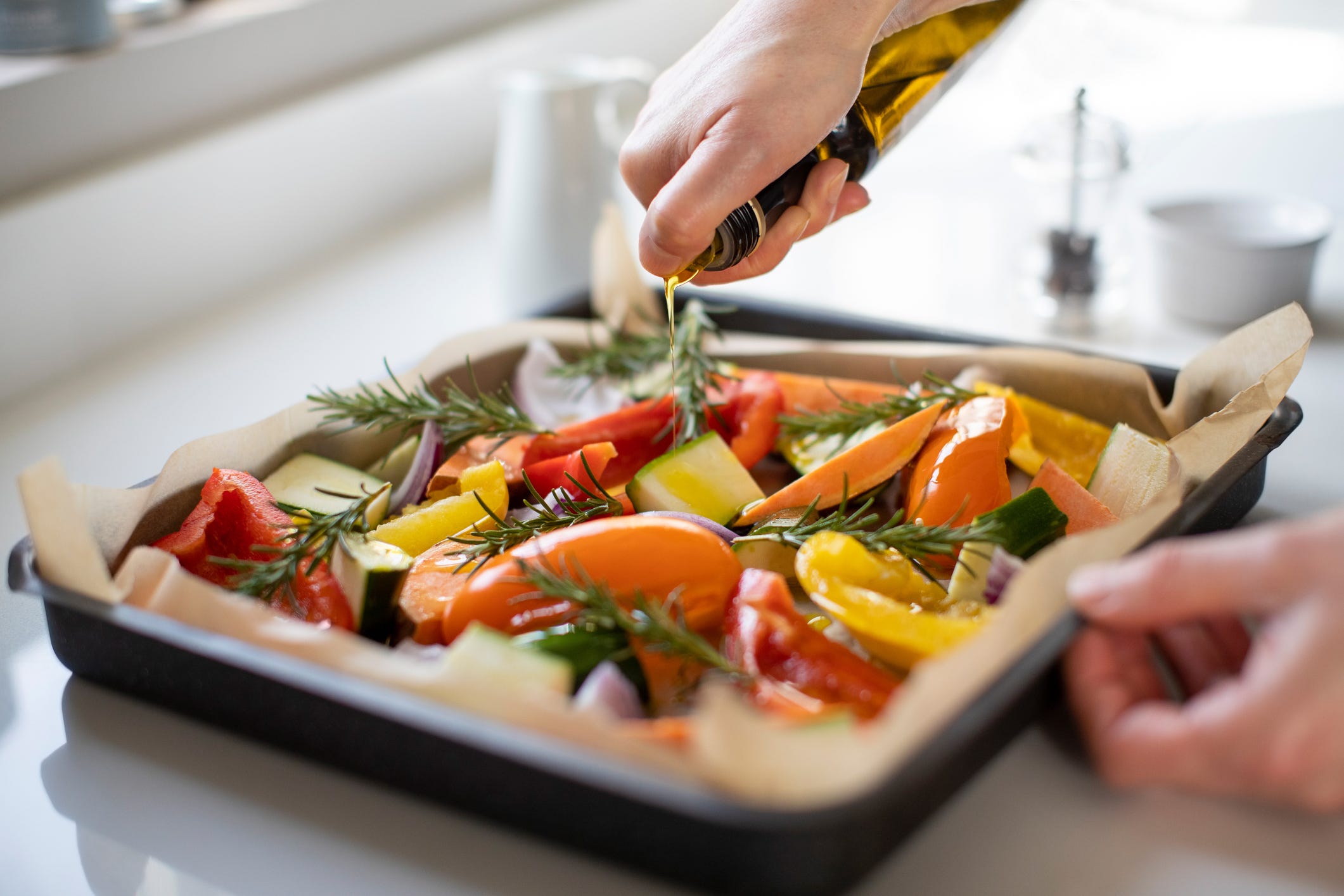
A drizzle of olive oil coats vegetables before they go into the oven.
EVOO brings its own aroma and flavor to a dish. Its fat carries aromas from ingredients such as garlic and herbs, helping them distribute throughout the food. When cooked with vegetables, potatoes, or legumes, EVOO blends with their flavors and adds richness. Stirred into a sauce, it gives the sauce a smooth mouthfeel. Added at the end, the oil’s fruity, green, or peppery notes stand out.
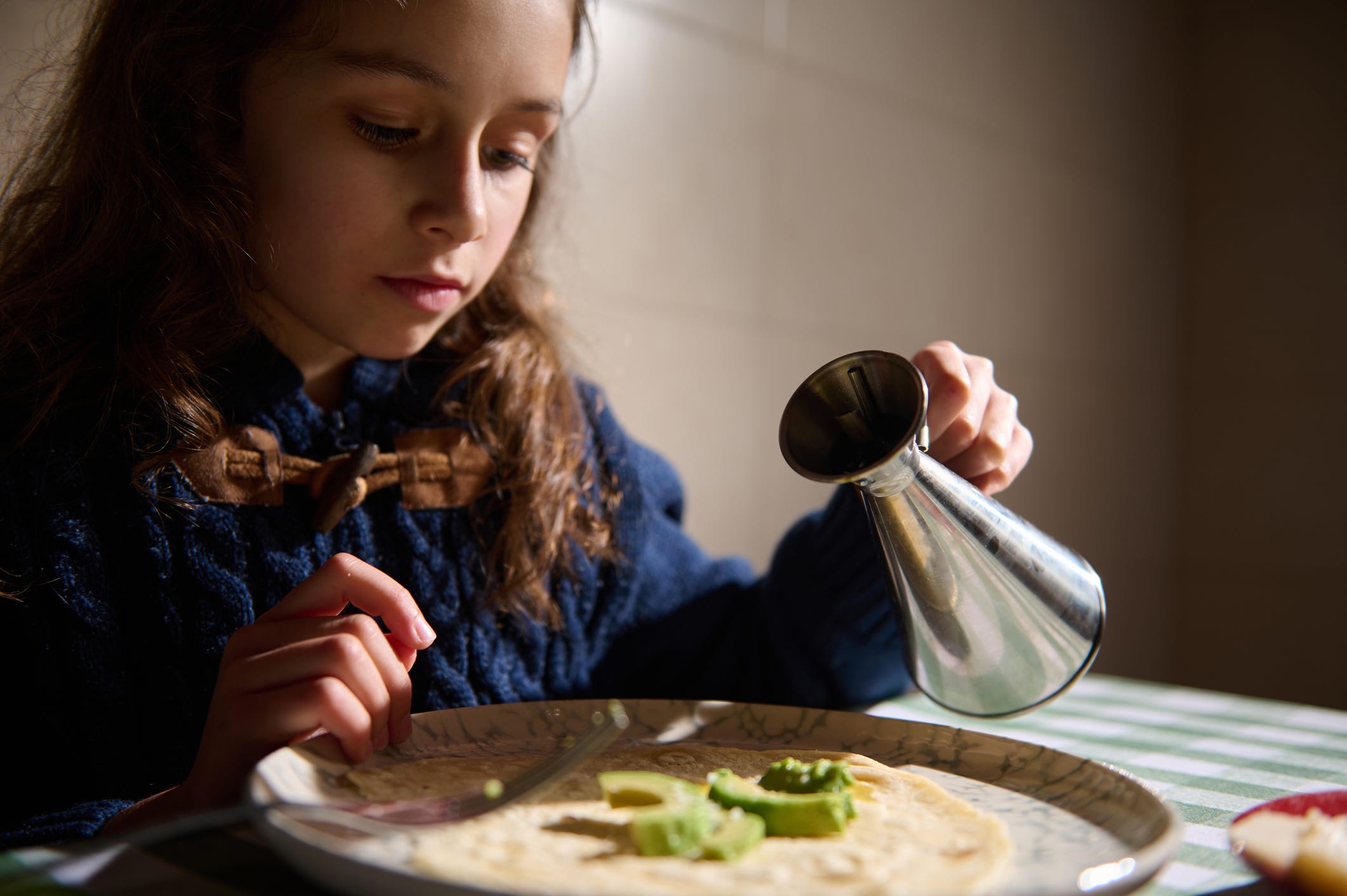
A little olive oil adds a different finish to familiar avocado.
On an evening when dinner is already underway and your child seems unsure, EVOO offers small ways to vary a familiar dish. Stirring a little into soup or sauce changes its richness and mouthfeel. A drizzle over roasted vegetables brings the oil’s aroma to the forefront. These adjustments may not guarantee what your child will eat, but they can ease the pressure to make a separate meal. EVOO can quickly add depth to one dish or help another flavor stand out.
Your child may be comfortable with EVOO in one dish but less sure about it in another.