


Kale often enters a child’s life through shared moments – watching, touching, and being included long before any expectation to eat.
There was a stretch of years when kale felt unavoidable. It showed up everywhere – in smoothies, salads, chips, grain bowls.
At our house, it arrived weekly. When our kids were young, we belonged to a winter CSA run by a local purveyor who also happened to be a friend. The bags were generous and beautiful – until one season when the greens kept coming. And coming. Eventually, after a few particularly abundant deliveries, our kids gave the bag a nickname of their own. The TMK bag. Too Much Kale. What I didn’t realize then was that kale wasn’t the problem. The pressure we carried into the kitchen was.
At the time, kale carried a lot of weight. It was trendy. It was virtuous. And for kids, it was often just one more green they were expected to tolerate. I found myself working harder than usual in the kitchen – not to “get them to eat kale,” but to keep meals from turning into a referendum on health. Even though kale is often described as a nutritional powerhouse, leading with that story asks children to think about food in adult terms – long before it feels meaningful to them.
Now our kids are grown. One of them has a young daughter of his own. Kale may feel old to him, but to her, it is brand new. No baggage. No trend cycle. No history of being told what green foods are supposed to mean. Just a leaf. A color. A smell. A texture she will come to understand in her own time.
That contrast matters.
Foods do not arrive at the table with fixed meaning. They carry the stories we attach to them. For one generation, kale may feel overdone. For the next, it is simply unfamiliar. Unfamiliarity is not a problem; it is an opening. If kale has already come and gone in your home, that does not mean the learning window has closed. It simply means it is returning with new context.
Kale often comes into focus when families are ready to slow down and relate to green foods differently. At this point, many children are better able to tolerate contrast at the table, and many parents have learned that not every food needs an immediate yes or no. Bitter greens like kale are better approached when meals feel predictable and pressure is low, allowing a child’s nervous system time to observe, compare, and decide at its own pace.
This is also when how kale is introduced begins to matter more than how often. A small amount alongside something familiar. A familiar flavor leading the first bite. A texture that feels manageable before one that feels new. These quiet choices help reduce sensory load and give the brain a preview of what is coming, making stronger green flavors easier to approach over time.
Why This Flavor Matters: Kale
Kale matters because it introduces children to bitterness in a form that can be shaped, softened, and made familiar. Bitter flavors are part of how children learn the full range of taste, yet they are often avoided or rushed past. When bitterness is skipped or framed as something to “get through,” children miss an important opportunity to build comfort with contrast.
From a taste literacy perspective, kale helps children learn that flavors are flexible. The same green leaf can taste sharp and grassy, mellow and savory, or lightly crisp and nutty, depending on how it is prepared. That flexibility teaches an essential lesson: different flavors are not something to avoid. They are the beginnings that the palate learns to recognize and navigate over time.
This kind of learning does not happen through nutrition explanations or bite-count goals. It happens when children are given repeated chances to notice how flavor changes, when a familiar food leads the experience, and when the table feels calm.
Kale also supports flavor memory. When a child experiences mild bitterness paired with known tastes and familiar textures, their brain maps pathways that help guide those sensations. Over time, green flavors move from being “too much” to being understood. That shift is subtle, but it is foundational. Eating a lot of kale is not a milestone to reach. Kale is a practice green – one that helps a child learn how to approach stronger flavors with confidence.
What matters most is not whether a child eats a lot of kale. What matters is whether kale becomes a food they recognize, approach, and understand. That familiarity builds confidence with green flavors far beyond this one ingredient, shaping how a child relates to vegetables across many meals and stages.
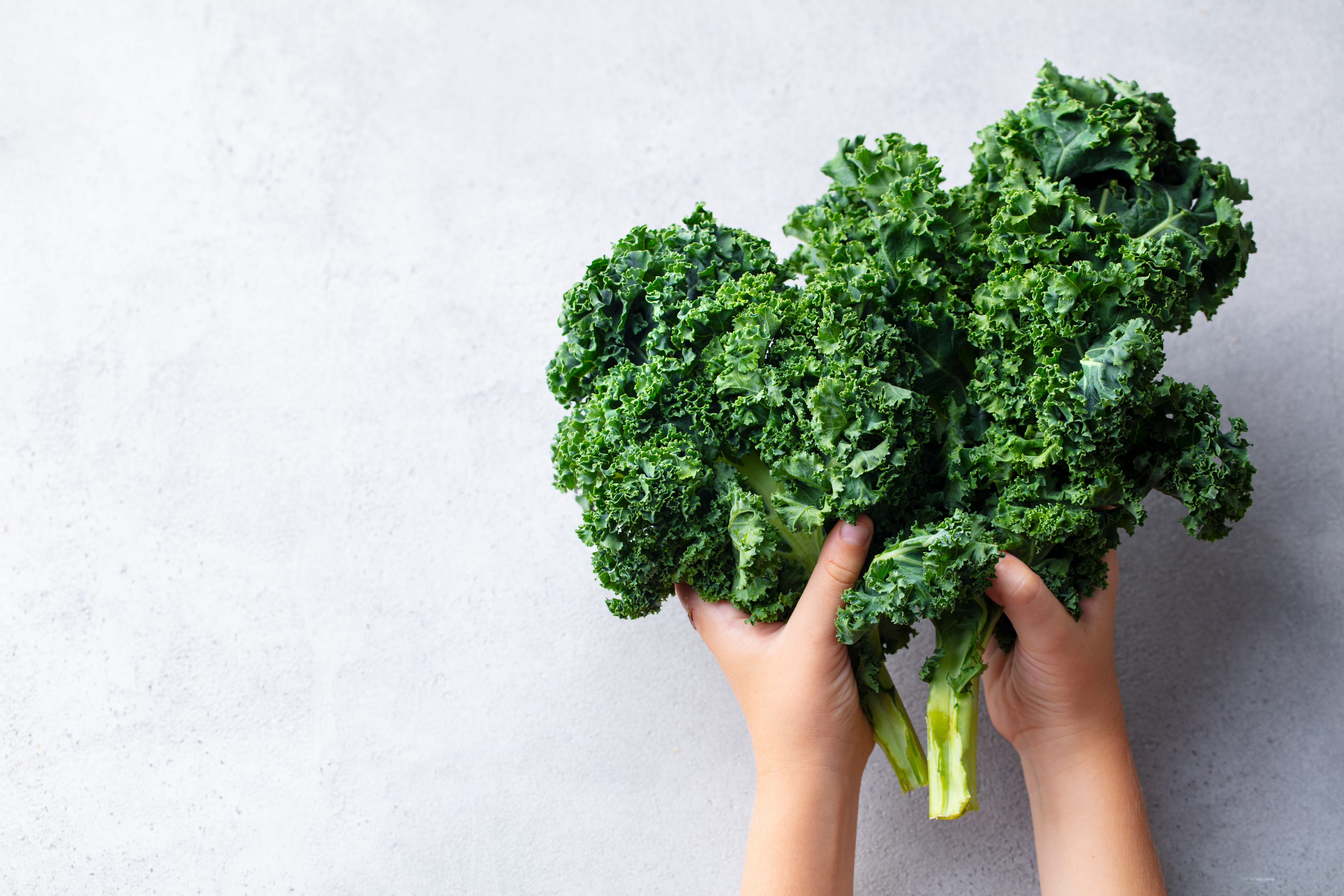
Before kale is tasted, it is often held, washed, and explored – important steps in helping green feel familiar and safe.
Pediatric Culinary Medicine Insight
When children struggle with green foods like kale, the issue is rarely willpower or refusal. More often, it reflects a mismatch between how the food is being offered and how a child’s sensory system processes new flavors. In Italian and French kitchens, babies often meet greens like kale early – but always softened, blended, and paired – so flavor becomes familiar long before it is expected to be liked.
Two concepts from pediatric culinary medicine help explain why kale benefits from a more guided approach: gustatory priming and microdosing.
Gustatory priming refers to the way familiar flavors prepare the brain for unfamiliar ones. When a child tastes or smells something known before encountering something unfamiliar, the nervous system receives a preview. This lowers sensory alert and makes contrast easier to manage. With kale, this might look like pairing it with lemon, garlic, olive oil, parmesan, or another flavor the child already recognizes. The familiar taste does not hide the kale. It gives the brain a foothold.
Microdosing works alongside this. Instead of asking children to engage with a full portion or a dominant flavor, very small amounts allow repeated exposure without triggering resistance. A few leaves mixed into something familiar. A small bite at the edge of the plate. A taste that ends before it feels like too much. Over time, these low-stakes encounters reduce sensory intensity and build tolerance naturally.
Kale also benefits from attention to oral-motor effort – how the food feels in the mouth. Raw kale requires significant chewing and coordination, which can amplify bitterness and fatigue. When texture is softened through chopping, massaging, sautéing, or blending, children are better able to focus on flavor rather than effort. Matching texture to developmental ability is as important as flavor pairing.
Together, these strategies shift the experience of kale from a challenge to a learning opportunity. The goal is not to convince a child to like kale, but to help their brain and body understand it. When taste learning is guided this way, green flavors become organized and familiar rather than overwhelming.
This is the heart of pediatric culinary medicine: guiding how flavors are introduced, paired, and experienced so children can build taste literacy that lasts. It is not about getting kale into your child or pushing through greens for the sake of exposure. It is about helping green feel understandable – so your child’s palate can make sense of it.
Levels of Flavor Confidence
By now, the three levels that guide each Flavor Pathway may feel familiar. They describe how your child approaches new tastes, shaped by confidence, sensory tolerance, and familiarity rather than age or appetite.
With kale, these levels often become easier to notice because kale asks more of the palate. Its bitterness, texture, and color introduce contrast that can feel challenging when confidence is still developing. That is not a problem to solve. It is useful information. Kale helps parents observe how their child engages with green foods when flavor carries more intensity.
As you read, you may recognize these levels not as steps to move through, but as patterns that already show up at your table. What matters here is not where your child is expected to be, but where they feel most at ease.