

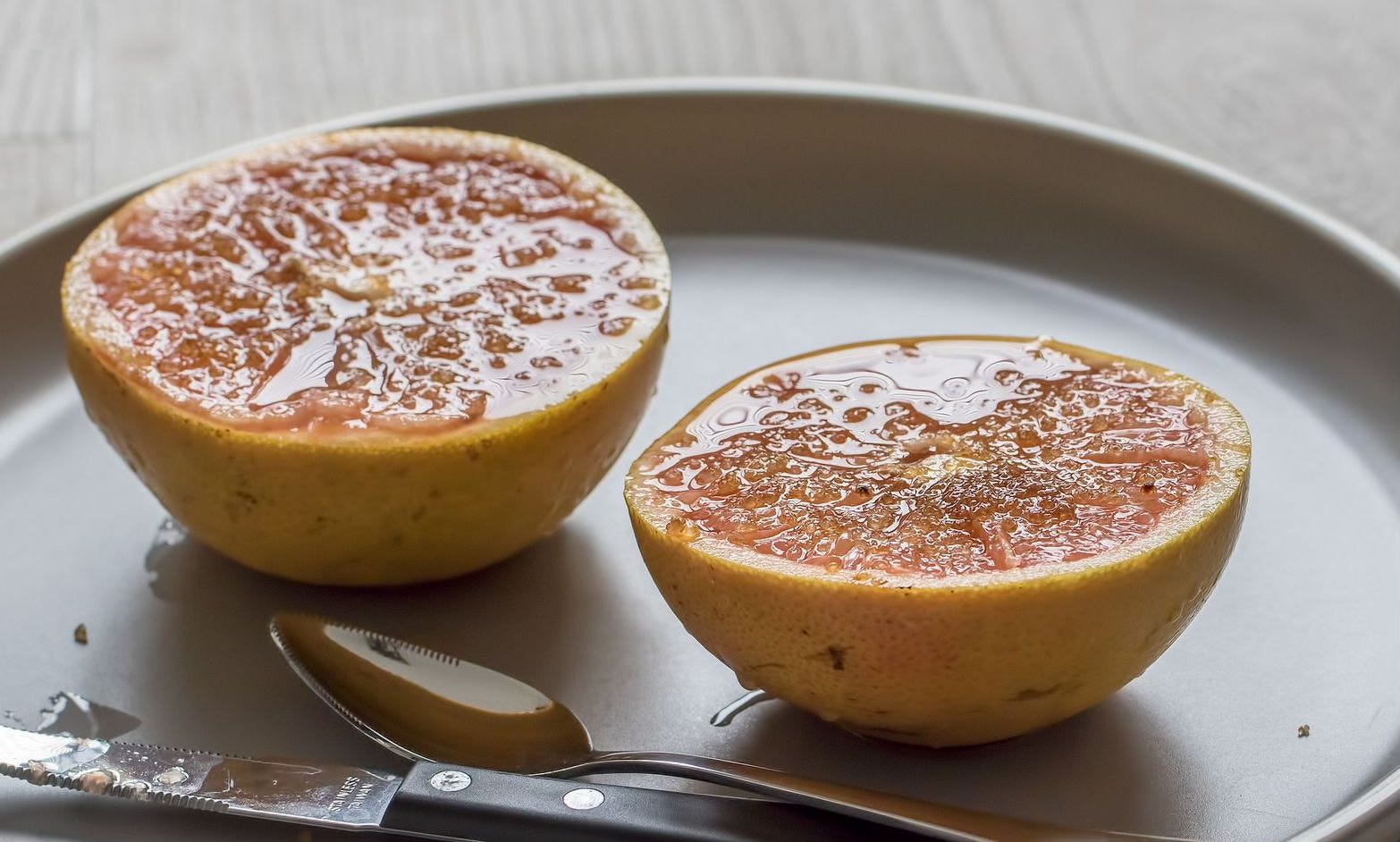
A grapefruit half softened with a touch of sugar, just as many of us remember. A small, steady ritual that builds comfort with bright, honest flavor.
Every winter, a box would arrive from Florida – bright, heavy, and smelling faintly of sun. My grandparents sent it north each year, filled with glossy ruby red grapefruits cushioned in straw-colored paper. My mom would set one on the counter, slice it cleanly in half, and loosen each section with careful strokes of a paring knife.
A teaspoon of sugar was my part. I sprinkled it across the glistening surface, watching the crystals melt just enough to gloss the fruit’s pink flesh. The first bite was always both surprise and delight – sharp, sweet, floral, and a little bitter. When I finished, I’d tilt the shell to my lips and squeeze out every drop of juice.
Those grapefruits were my first lesson in what flavor could be: not just sweet or sour but layered, bright, and alive.
Today, when I slice into a fresh grapefruit, I still think of those boxes from Florida. And I’m reminded of how simple, real foods, when offered thoughtfully, can help children build curiosity and confidence at the table in a way that packaged or processed versions cannot.
Why This Flavor Matters
Fresh grapefruit sits right at the edge of what many children find comfortable. Its bright acidity and gentle bitterness introduce a different kind of learning – that not every delicious food is immediately sweet, soft, or familiar. Exploring a flavor like grapefruit helps a child understand that food can be layered and interesting, and that curiosity is part of growing a confident palate.
A living taste experience: For families who value fresh ingredients and thoughtful preparation, grapefruit offers something that canned or prepackaged versions simply cannot. Shelf-stable grapefruit cups go through an enzyme or heat process to dissolve the membranes. This makes the segments easy to eat, but it also changes their texture and quiets the aromatic oils that give fresh grapefruit its floral character. Even “light” syrup or packing juice shifts the natural balance of sweet, tart, and bitter. What remains is predictable, but no longer vibrant.
A layered sensory ritual: Fresh grapefruit, by contrast, rewards participation. Cutting the fruit, loosening the sections, and squeezing out the last drops of juice are small kitchen rituals that help children learn how food behaves when handled with care. A serrated grapefruit spoon (or thin paring knife for older children) makes this process easier without removing the sensory learning that comes from seeing, touching and tasting the fruit.
Brightness across seasons, varieties and place: Grapefruit also teaches children that flavor has a seasonal rhythm. Its peak runs from winter into early spring, when varieties like Ruby Red, Rio Star, Oro Blanco, and Marsh White each offer their own balance of sweetness, tartness, and aroma. These subtle differences create natural openings for taste literacy – noticing color, scent, juiciness, and how flavor shifts with time and place.
Ruby Red is the classic winter grapefruit. Juicy, floral, and pleasantly tart with a mellow bitterness. A strong starting point with bright but not sharp acidity.
Rio Star, grown in Texas, has deeper color and more natural sweetness. The floral notes stand out, which helps children who enjoy fruity flavors.
Oro Blanco (a pomelo–grapefruit hybrid) is softly sweet with very low bitterness. Ideal for children who need a gentle, reassuring introduction to citrus complexity.
Marsh White is more traditional, with lighter sweetness and more noticeable acidity. A good match for children beginning to explore contrast.
A grapefruit enjoyed in a sunny kitchen in Palm Springs tastes different from one sliced in Park City. Noticing that the same fruit can taste slightly different depending on climate, season, and growing region gives children a grounded understanding of what real food can be. Fresh grapefruit segments do not need to look identical to taste wonderful. What matters is gently guiding your child to notice how the fruit smells, feels, and tastes.
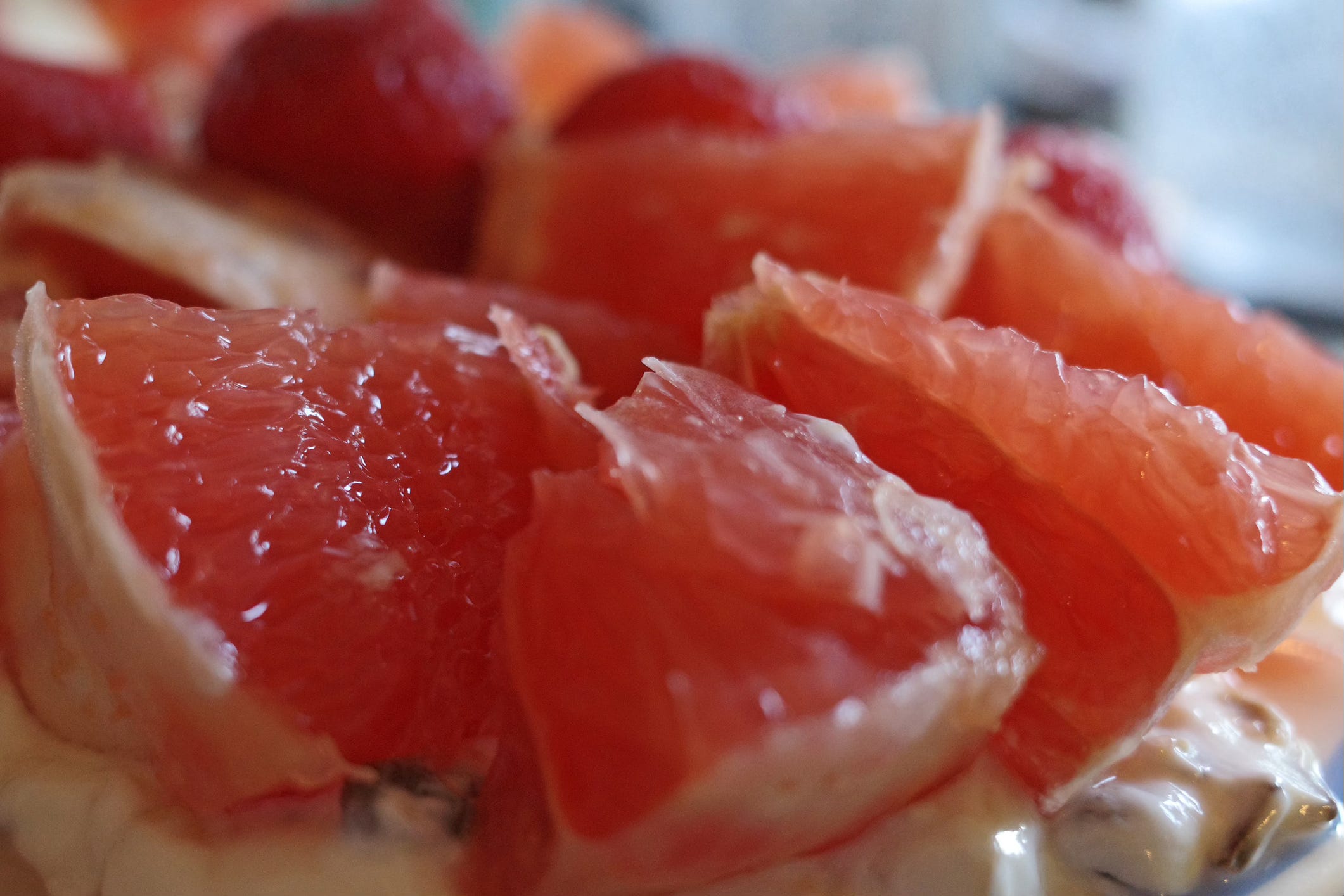
Each variety of grapefruit teaches a slightly different lesson in flavor – color, sweetness, bitterness, and scent.
As children notice these small differences; color, scent, sweet-tart balance, they begin forming early flavor memories. Bitterness becomes part of that learning.
Before we move into the Six Paths, here is how children learn to feel comfortable with bitter flavors and why grapefruit is such a helpful guide.
Pediatric Culinary Medicine Insight
Bitterness is one of the earliest and most nuanced flavors children learn to interpret. For many young eaters, bitter notes feel strong because their taste buds register them intensely. They also lack the lived experiences that help make sense of naturally bitter foods. Grapefruit offers an approachable introduction: bright, floral, slightly bitter, and balanced by natural sweetness.
Biology: Children naturally perceive bitterness more intensely than adults. Their sensory system notices sharp flavors quickly, which often leads to initial hesitation. This increased perception also gives children a strong foundation for learning complexity when given the opportunity to stretch their palate.
Limited Exposure: Most children have experienced fewer naturally bitter foods. Without small, early encounters, the neuro-flavor pathways that interpret bitterness as safe or interesting develop slowly. A drop of fresh grapefruit juice or a softened segment is enough to begin building these pathways.
Developmental Takeaway: When a child experiences bitterness in tiny, low-pressure moments such as one drip of juice, one softened bite, or shared taste with a parent, their sensory memory begins to shift. The flavor becomes more familiar, laying the groundwork for long-term flavor confidence.
Preparation also shapes the sensory experience. A chilled half highlights grapefruit’s floral sweetness. A lightly broiled surface softens bitterness. Pairing a bright segment with something creamy steadies the experience. These small culinary choices children learn that strong flavors can still feel safe.
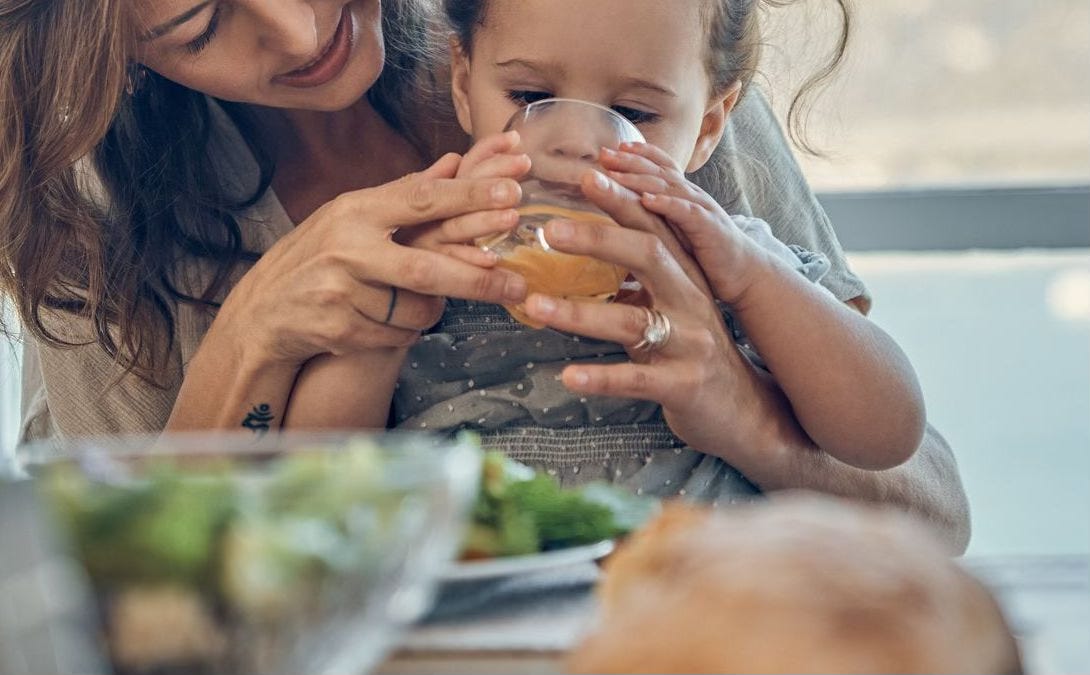
Taste literacy grows in these tiny moments – one gentle sip, one shared flavor, one memory of safety.
Confidence around bitterness is never built through “just take a bite”. It grows through calm repetition and predictable experiences where a strong flavor begins to feel familiar.
Levels of Flavor Confidence
Children build sensory memory when bitterness is offered in calm, predictable ways. Each tiny taste of grapefruit becomes a reference point. Over time, these familiar moments shape taste literacy, helping the brain recognize and trust more complex flavors.
The three Levels of Flavor Confidence give you a simple way to notice where your child feels most at ease and how to guide them forward. Every child moves through these levels at their own pace; some days they lean in, other days they hesitate. Both are normal parts of learning flavor.