

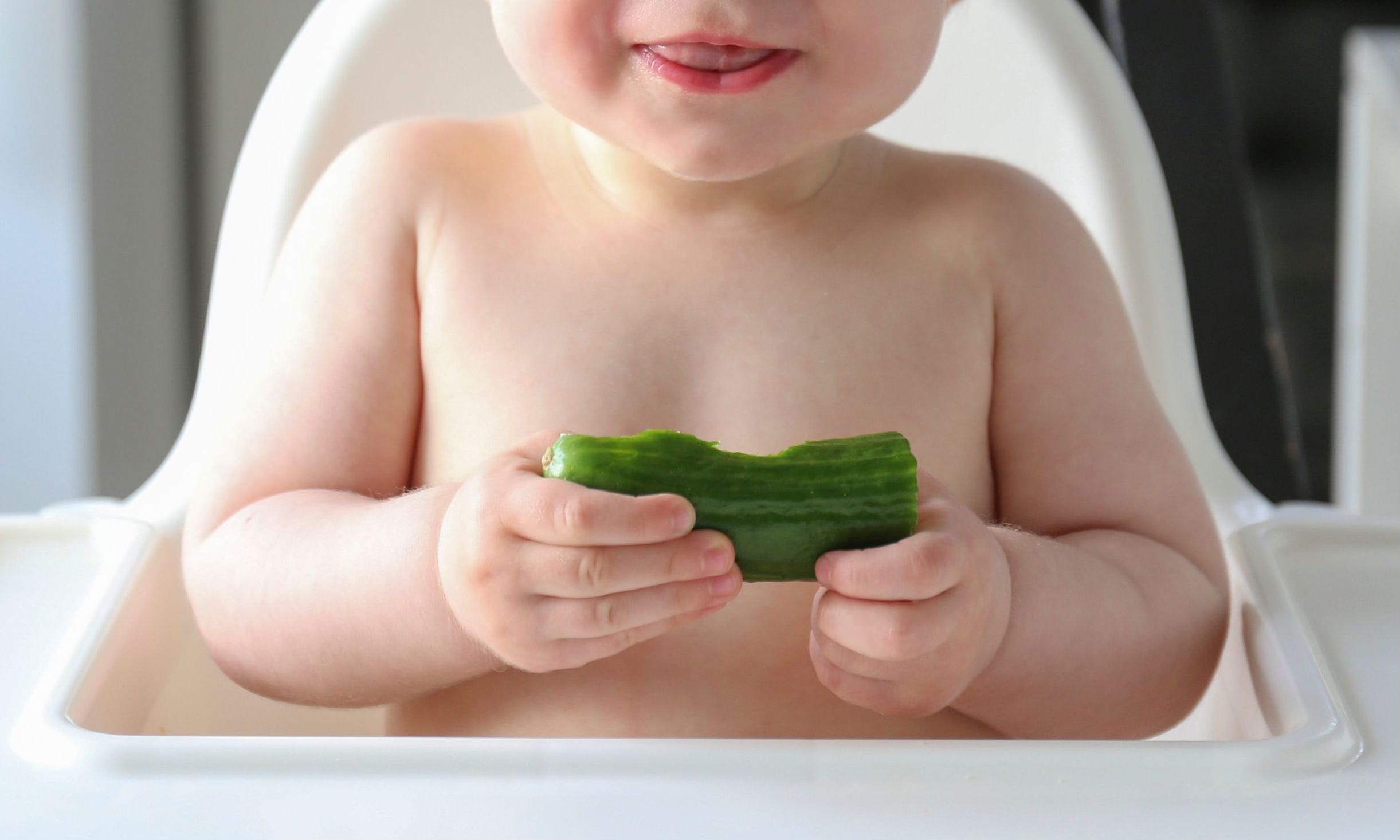
A familiar starting point. One food that feels easy can open the door to learning.
Cucumber is often the food parents point to and say,
“See? They do eat something.”
It becomes a quiet anchor at the table, a food you can count on when the rest of the meal feels less certain.
You might slice it alongside lunch, set it out with a simple plate of bread, cheese, and fruit, or pack it into a small container for the park. When you order a salad, cucumber may be absent or included as an afterthought.
It’s familiar and more delicate than it seems.
In restaurants, cucumbers are handled carefully. They release water, quickly lose their crispness, and can dilute flavor if not prepared just before serving. This requires timing and restraint, which doesn’t always align with a busy kitchen.
At home, that same tension shows up in quieter ways.
Some days they are crisp, cool, and easy. Other days, the peel feels thicker and the seeds more slippery or slightly bitter. A slice that worked yesterday can look almost identical today yet feel different enough for a child to pause.
When that hesitation happens because the cucumber is peeled, cut, or served in a new way, it can feel confusing. Nothing about it seems like it should be difficult.
This is where cucumber begins to reveal something more.
Children respond to more than the ingredient itself. The structure, the temperature, the way it breaks when they bite into it, and how quickly the flavor disappears all shape the experience.
What appears to be a simple, reliable food changes more than we realize.
When cucumber stays in place as the one food that “works” the experience can stall. Cucumber’s broader value is easy to miss.
That familiar cucumber slice can be a beginning. As it appears, with small variations in peel, cut, temperature, or preparation, the experience broadens while the cucumber stays familiar.
Over time, children begin to recognize subtle differences in cucumber, allowing familiarity to carry across different experiences.
Cucumber, more than many early foods, offers a quiet and reliable place to start.
It also reveals something parents don’t often expect: even a food that feels easy is constantly changing. That shift is what makes cucumber so useful.
Why This Flavor Matters
It is often overlooked because it feels easy.
Cucumber is mild, familiar, and frequently accepted by children without much effort. At many meals, it becomes a quiet constant on the plate, making it easy to underestimate what it offers.
Cucumber sits at a distinct point in a child’s early food experience.
Its flavor is subtle and does not depend on sweetness or added seasoning to be accepted. Instead, it introduces something different. The experience begins with a crisp bite, followed by a quick release of water, and then a gentle fading of flavor.
This pattern matters more than it may first appear.
When flavor is subtle, children tend to pay closer attention to how a food feels. Structure, temperature, and the way the experience shifts from the first bite to the second become more noticeable.
Cucumber creates a natural opportunity to observe these changes in a low-pressure way.
It also introduces early variability in a way that remains approachable. The same cucumber can feel slightly different depending on the peel, the cut, or how long it has been sitting. These differences may seem minor, yet they are meaningful to a child learning how to interpret food.
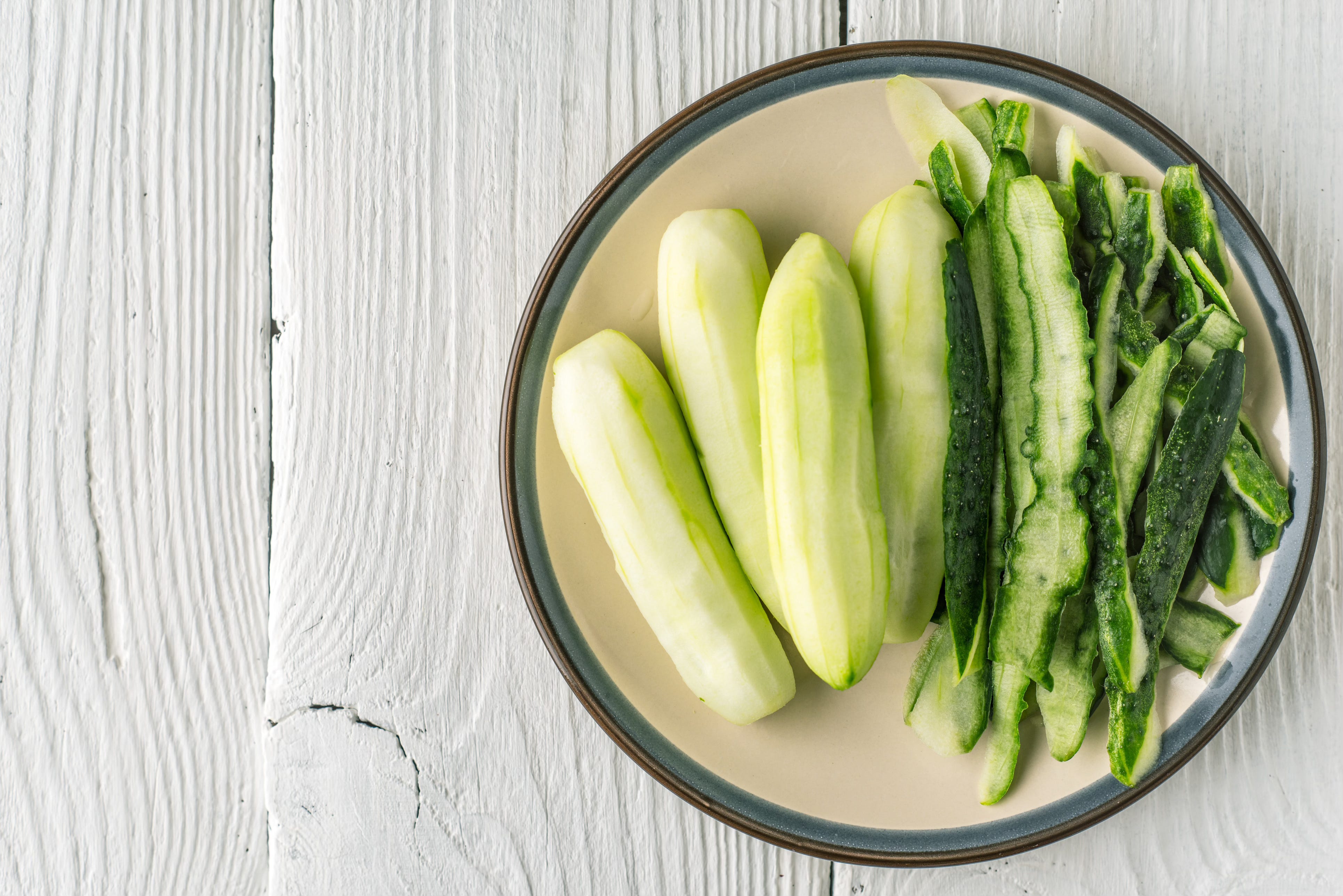
The same cucumber can feel different depending on peel, cut, and freshness.
At this point, cucumber begins to offer something more than a familiar presence on the plate.
It becomes a way to build recognition of the food itself and how it can change while still tasting the same. That understanding is an early foundation of taste literacy.
Confidence with food develops through this kind of repeated, connected experience. A food appears in ways that feel familiar, while gradually expanding what the child understands and accepts.
Cucumber offers that balance naturally.
It remains gentle while allowing for variation. The experience begins to broaden while the food stays familiar. In doing so, it offers a calm, steady way to move from a single, reliable “yes” toward a broader and flexible sense of comfort at the table.
Understanding this shift helps explain why cucumber plays a unique role in how children learn to experience food.
Pediatric Culinary Medicine Insight
Cucumber offers a different kind of learning experience than many early foods.
Cucumber introduces a pattern that is easy to overlook. The experience begins with a firm bite, followed by a rapid release of water, and then a gentle fading of flavor.
From a developmental standpoint, this sequence matters.
It shifts attention away from intensity and toward how a food behaves in the mouth. The outer flesh is crisp. The center is softer and more hydrated. The experience changes within seconds.
This pattern is subtle, yet consistent, helping the brain begin to organize sensory input in a meaningful way.
Cucumber also plays a specific role in helping children make sense of broader food experiences. It introduces early awareness of contrast, including the difference between cool and warm foods, the distinction between juicy and denser textures, and the sequence of crunch followed by release and softening within a single bite.
These are foundational elements of how meals are experienced, not just individual foods.
Cucumber can also be used intentionally within oral motor culinary pairings. Its crisp structure supports biting and chewing, while its high-water content softens quickly, making it a useful bridge between firmer and softer foods on the same plate. When paired with foods like yogurt, grains, or eggs, it helps children experience contrast while still feeling steady.
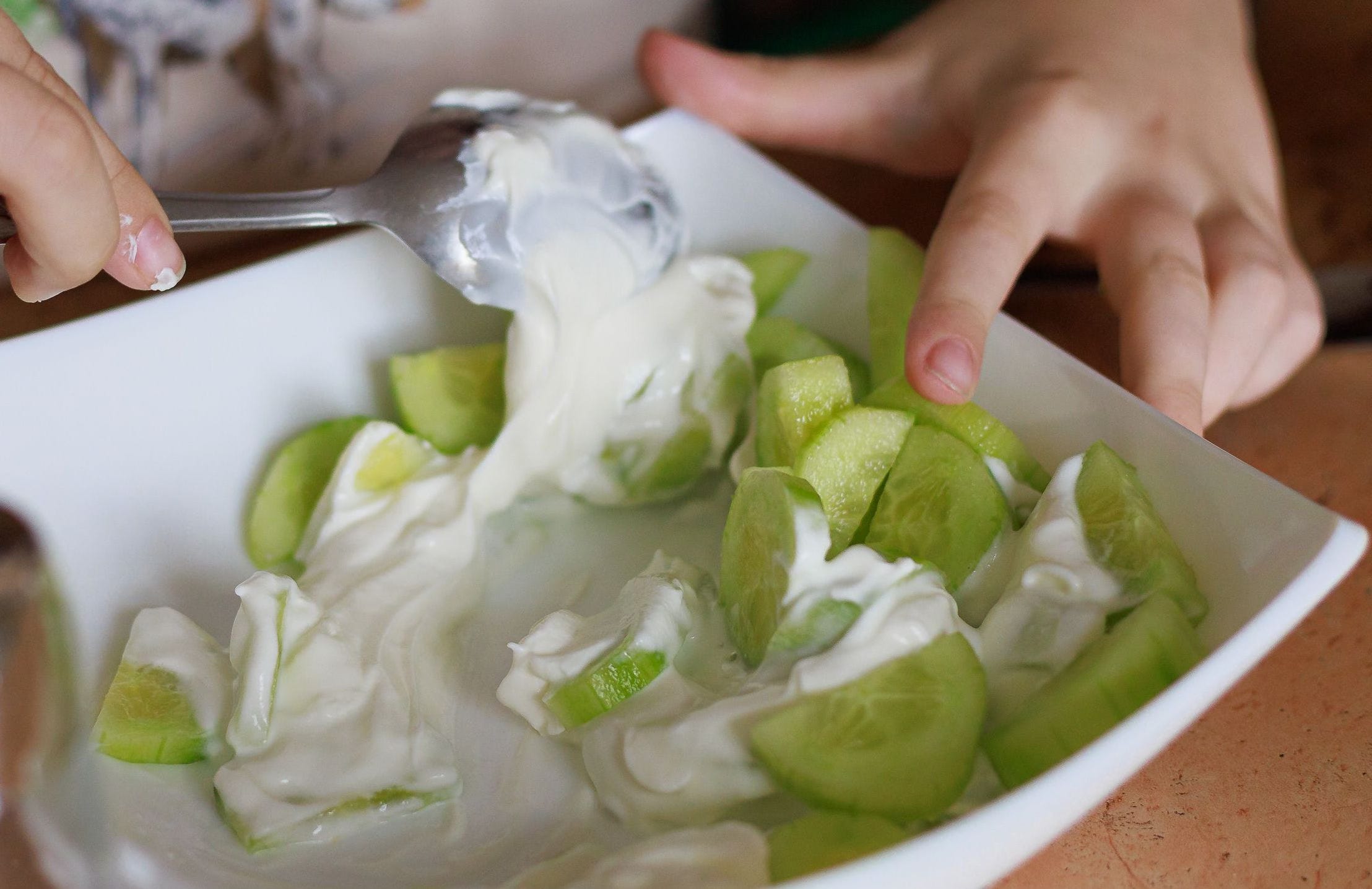
Pairing cucumber with yogurt creates a more cohesive texture and a steadier bite.
It also lends itself to gustatory priming. A small piece of cool cucumber offered before or at the start of a meal can gently awaken the palate. The clean, hydrating quality of cucumber prepares the mouth for what follows, making new or more complex flavors feel more approachable.
At the same time, cucumber responds clearly to small changes in preparation. Whether the peel is present or removed, the seeds included or not, or the cut thicker or thinner, each variation shifts the experience just enough to be noticeable while remaining recognizable.
This creates a natural setting for flavor scaffolding.
Rather than introducing something entirely new, the child is guided to recognize the same food across small variations. Over time, this builds a more flexible understanding of what “cucumber” is, expanding from a single version into a range of familiar experiences.
It also helps to notice what cucumber does not do on its own.
Because its flavor is so subtle, it does not build strong flavor tolerance in isolation. Its value lies in something quieter. It provides a calm, steady way to introduce variation, while allowing flavor to be layered gradually through pairing, temperature, and preparation.
Over time, cucumber supports several foundational elements of taste literacy. It helps children recognize a food across small changes, interpret texture as part of the eating experience, and begin to understand contrast within a meal. It also highlights how structure and water content shape each bite.
All of this unfolds in a way that feels steady and approachable, which is why cucumber is such a useful place to begin.
These patterns show up gradually at the table, and they can be easier to recognize when we look at how children move through different levels of confidence.
Levels of Flavor Confidence
Children build sensory understanding when foods are offered in calm, consistent ways. With cucumber, this learning centers less on flavor and more on recognizing how texture and water content feel from one moment to the next.
Each experience with cucumber, whether a crisp bite, a softer center, or a different cut, becomes part of how the brain begins to organize what this food is.
Over time, these small, repeated moments help children recognize cucumber across variations, building familiarity that supports taste literacy.
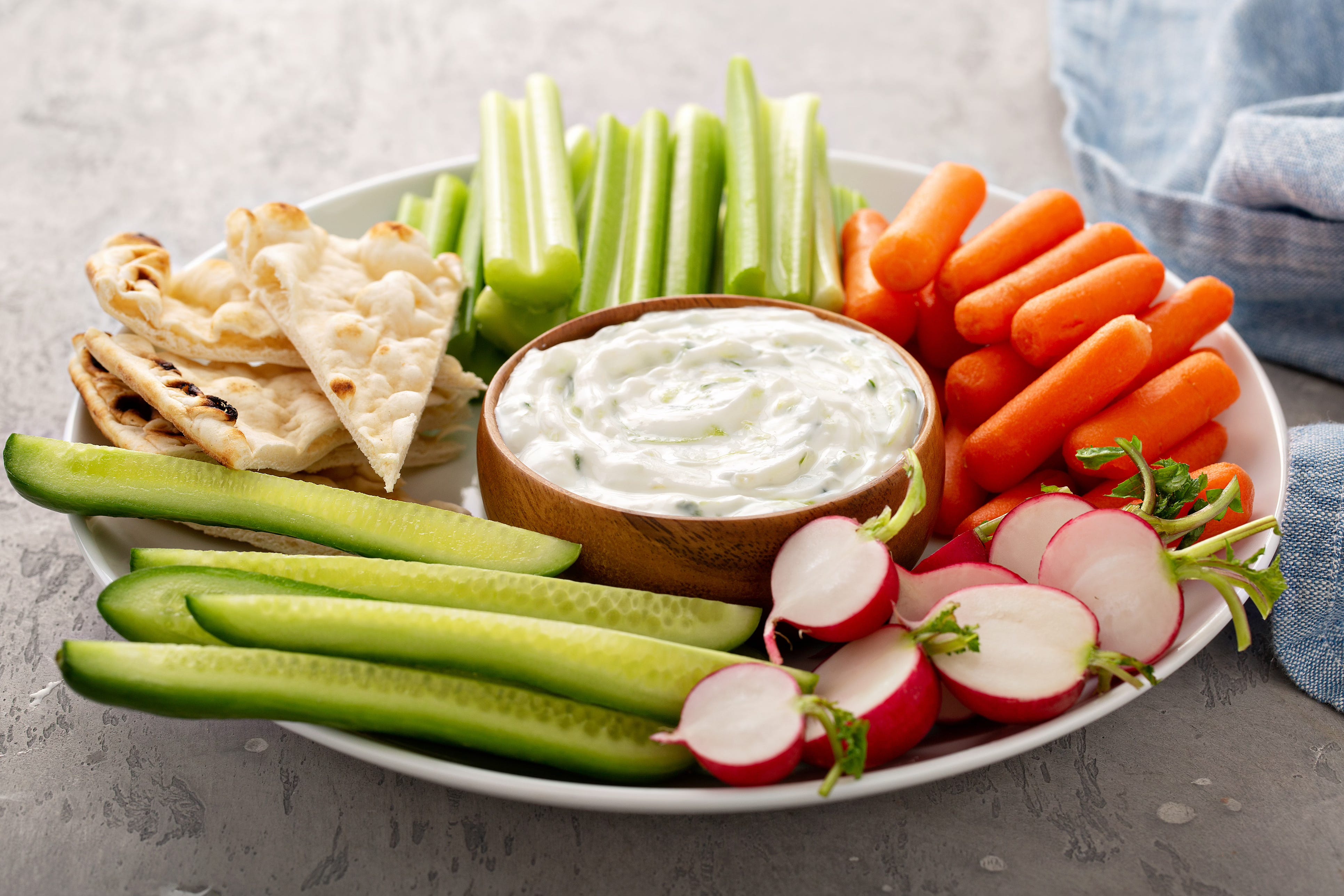
Cucumber begins to take its place alongside other foods, not just on its own.
The three Levels of Flavor Confidence offer a way to notice where a child feels most comfortable and how to gently expand from there. Movement between levels is not linear. Some days feel easy, while others bring hesitation. Both are a natural part of how children learn to interpret food.
Seeing where a child feels most comfortable makes it easier to decide what to offer next at the table.