

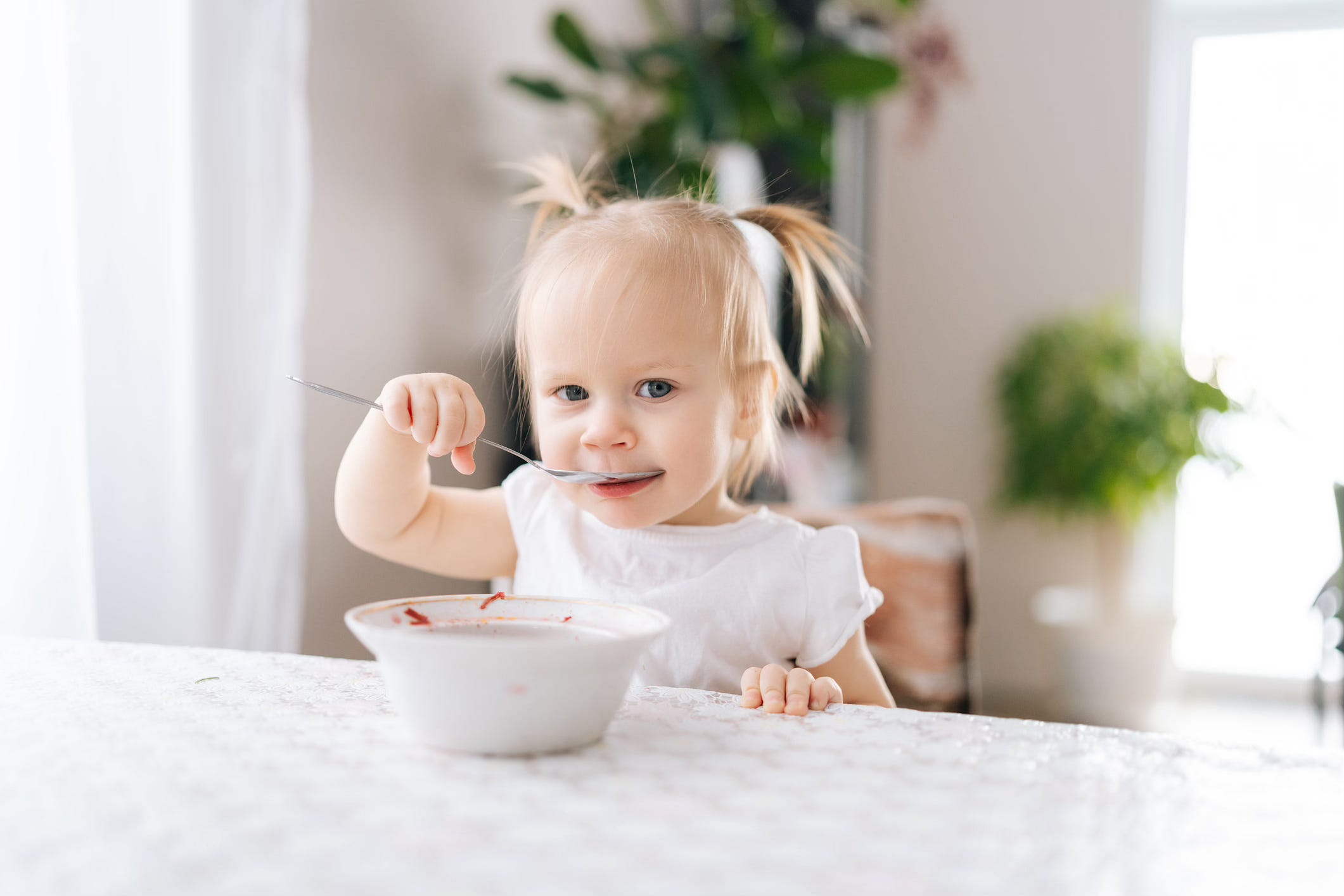
Beets often make a bold first impression. Their color signals ‘big information,’ but their flavor can meet children with kindness and warmth.
My earliest memory of beets came from a jar.
My mother would open a bottle of store-bought borscht, and the color alone stopped me in my tracks. It was so bright it felt unreal, almost like a food meant for grown-ups. She would tell me her grandmother loved it – a thread of taste passed down through Russian roots – but I could not understand how. The scent felt sharp. The flavor felt mysterious. The only part that made sense was the spoonful of sour cream she swirled in, softening the color into something more familiar.
Years later, I realized that my hesitation had far more to do with form than flavor.
Once I met beets outside the jar – at a farmer’s market, on a salad with goat cheese, and eventually in my own garden – everything shifted. Fresh beets were sweeter. Roasted beets were deeper. Chioggias, with their pink-and-white rings, were almost too beautiful to cut. They became something I looked forward to rather than avoided.
When our children were young, we planted beets in the garden behind our house. The candy-striped variety grew well in the cool spring soil. The kids loved discovering the rings inside each one, a small surprise that made the earthiness feel less startling. We used every part: roots, greens, even scraps for our hens or the compost pile. Preparing beets in different ways taught me something I never understood as a child: beets have more than one story to tell.
Looking back, I can see how much my reaction mirrored what many children feel today – not resistance, but uncertainty. Color and aroma became the story before flavor ever had a chance.
That is the heart of today’s flavor. Beets invite children to experience depth, color, and sweetness in a way that feels honest and approachable. Golden beets ease children in with warmth. Chioggias catch their eye before their palate. Red beets offer a deeper, more confident step when readiness grows.
For parents wondering how to “get it right” – or whether their child will accept a flavor this earthy – beets give us a chance to slow down. Their variations remind us that one food can show up in many forms, and that confidence grows when tasting feels safe, paced, and grounded in curiosity rather than pressure.
And when we slow down to notice those forms, we start to understand why beets matter so much in a child’s early flavor learning.
Why This Flavor Matters
Beets make you pause. Their colors are vivid. Their sweetness is gentle. Their earthiness is unmistakable. For many, beets carry an old-world memory – something a grandparent loved, or a dish you remember seeing but never tasting. Today, they belong just as easily on a modern table: warm golden beet with citrus, shaved Chioggias in a salad, red beets roasted until candy sweet.
Beets teach that a single ingredient can offer depth without pushing children past their readiness. For many parents, beets feel like one of those “tricky” vegetables – beautiful, but intimidating. Yet their gentleness often surprises children once the first moment of curiosity has passed.
Golden beets feel mellow and warm. Chioggias are crisp and playful. Red beets hold a richer earthiness. As children learn these contrasts – color, texture, sweetness – they begin building neuroflavor mapping, the brain-based patterns that help flavors feel predictable and safe. Neuroflavor mapping is your child’s brain learning the pattern: this color, this smell, this warmth, this sweetness – they belong together.
This is how children discover that “big color” does not mean “big intensity,” and that earthy flavors can feel gentle when introduced thoughtfully.
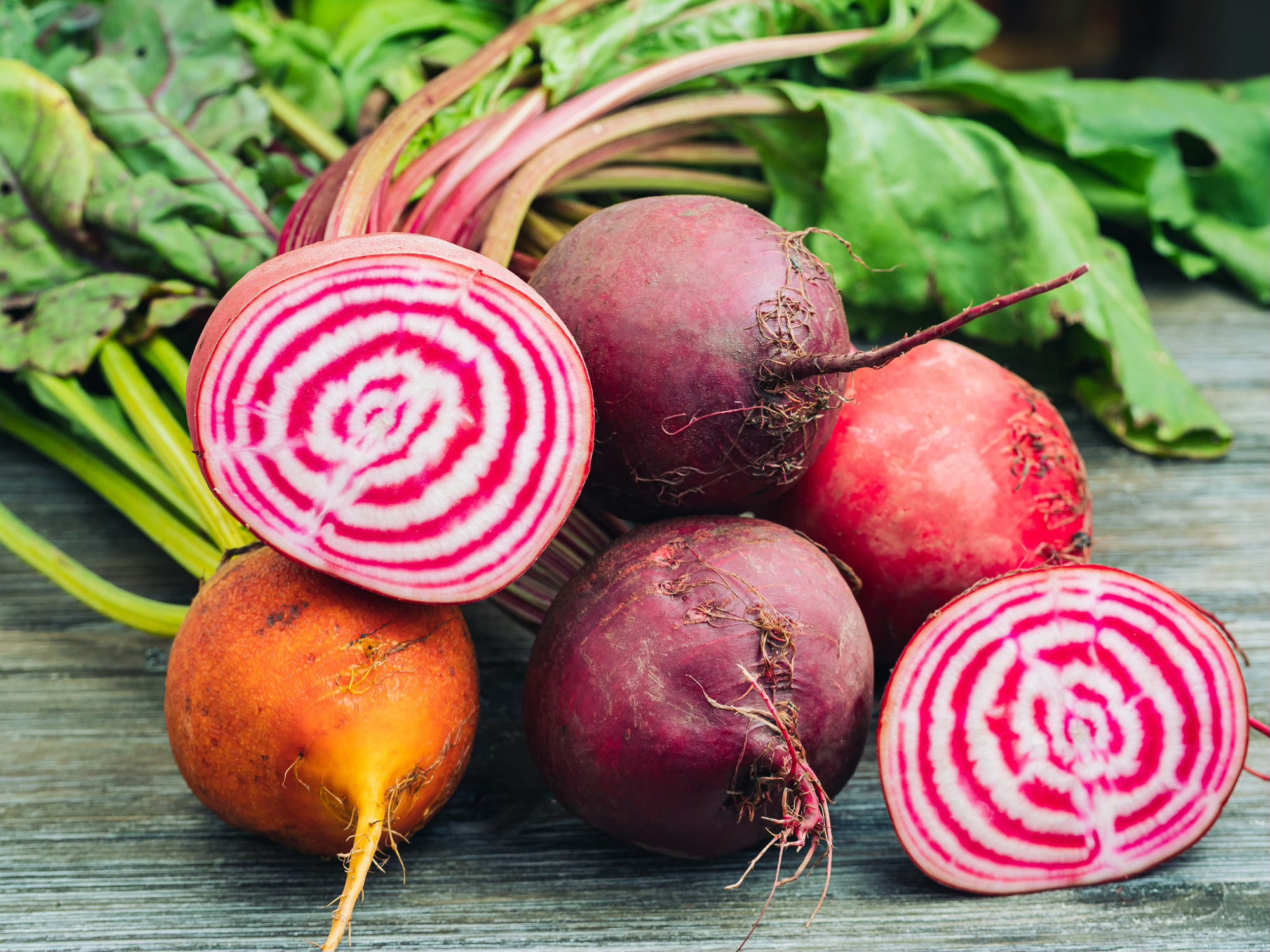
Chioggia beets invite gentle visual curiosity – early steps in neuroflavor mapping and sensory predictability.
Beets also pair beautifully with citrus, yogurt, chèvre, herbs, and warm grains. These natural pairings help children experience early palate layering without pressure. These quiet introductions help children build cultural palette fluency — an early openness to the flavors they’ll meet across family tables, restaurants, and travels. Beets appear in cuisines across the world – from Eastern European soups to Mediterranean salads – offering global flavors through a calm, familiar entry point.
When beets show up warm, predictable and approachable, they help build food confidence that lasts. Understanding why beets feel so powerful to children means looking a little closer at what their senses are taking in.
Pediatric Culinary Medicine Insight
Beets offer children a full sensory experience: color, aroma, warmth, texture, and even the way they stain fingertips. These cues create predictability – one of the strongest supports for trying new flavors – and help children feel more oriented than surprised. For a child, predictability is a kind of safety.
Part of this learning comes from simple physiology.
Beets contain betalains, the pigments responsible for their red, pink, or yellow hues. Some children (and adults) do not break these pigments down completely, leading to temporary pink or red urine or stool – beeturia. It is harmless and fades quickly. A colorful diaper or rosy tint in the toilet bowl is simply a sign the body is doing its normal job – processing natural pigments. Naming this calmly helps remove worry.
Beets connect naturally to wellness. They are hydrating, offer fiber for digestion and contain nutrients like vitamin C, potassium and folate. Yet their value for young eaters goes far beyond nutrition. What shapes confidence is the experience itself: slicing into a Chioggia to see rings, watching golden beets deepen color as they roast or noticing fingertips turn pink.
Beets also help children understand how preparation changes flavor. Raw beets taste crisp and mild. Roasted beets taste sweet and deep. Blended beets become smooth and mellow. This variation supports flexibility – a core part of taste literacy.
These sensory cues also work as gustatory priming – the small, steady exposures that prepare a child’s palate for deeper flavors. Even a fingertip touch or a tiny taste acts as microdosing for taste desensitization, gently lowering sensitivity to earthiness over time. Predictable, low-stakes exposure forms the backbone of taste literacy.
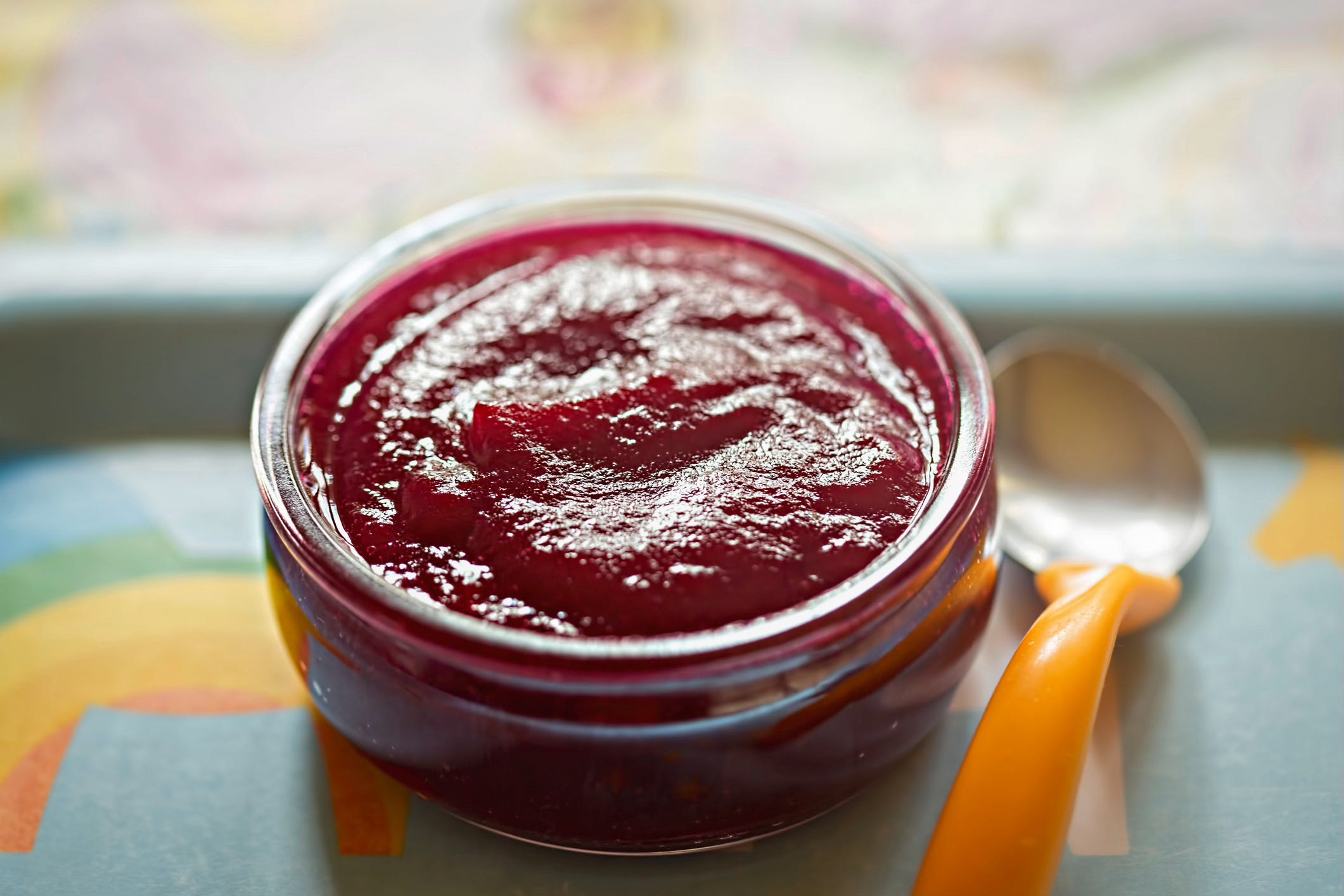
Warm, softened preparations lower sensory load and help children meet earthiness with emotional safety.
Beets sit at the intersection of flavor, sensory learning, and family habits – a meaningful space for growing confidence.
All of these sensory experiences – color shifts, warmth, aroma, texture – shape how children decide whether a food feels safe. This is where the three Levels of Flavor Confidence help us understand what a child is learning in each stage.
Here’s how we translate beet’s sensory cues into steady, developmentally aligned progress for your child.