

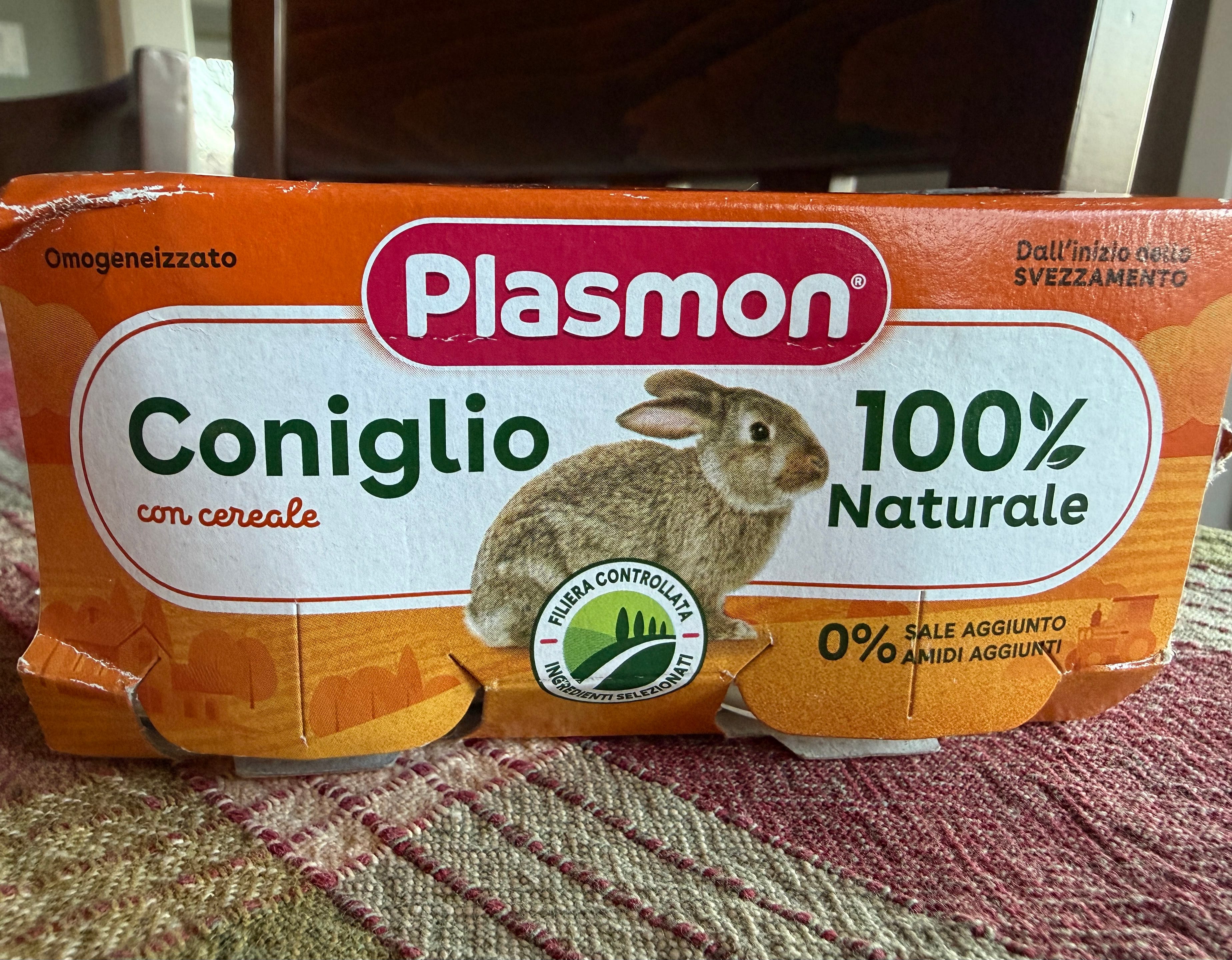
In many parts of Italy, rabbit is a familiar first food for babies – valued for its gentle texture and iron content, not because it’s novel.
I did not expect to be talking about rabbit at dinner in Bergamo.
My husband was there for work, collaborating with an Italian medical colleague. One evening, we shared a meal with him, his wife, and their young son, who was about four years old. As often happens when pediatric physicians and parents gather around a table, the conversation drifted toward children and food.
Out of curiosity, I asked his wife what first foods were common for babies in their region.
She answered easily.
“Coniglio,” she said. Rabbit.
I paused. Not because it felt wrong, but because it felt unfamiliar.
I told her that I was surprised. Then I added, almost immediately, that once I thought about it, it made complete sense. By that point in the trip, I had already seen little jars of puréed rabbit meat lining the infant food section of market shelves. I had even bought a few to bring home, more intrigued than hesitant.
She looked at me, genuinely puzzled. “You don’t feed babies rabbit in the United States?” she asked. “Why not?”
It was a fair question. In Italy, rabbit is understood as a gentle, digestible, iron-containing meat. It carries ease and familiarity. In the United States, rabbit feels unfamiliar or even exotic to eat, despite being lean, mild, and nutritionally appropriate.
That moment in Italy has stayed with me. Not because rabbit meat should or should not be on a baby’s spoon, but because it revealed something important about how feeding advice works. What feels normal in infant feeding is often cultural, yet what matters nutritionally is universal.
Moments like this are where my work as a pediatrician and chef often begins – at the intersection of development, culture, and nutrition.
For young children, iron is at the center.

What feels unusual in infant feeding is often cultural. Nutritional needs, however, are universal.
Why This Conversation Is Showing Up Now
If you spend any time on social media, you have likely seen the recent interest in whipped cooked bone marrow for babies. It is often framed as ancestral, whole-food, or more intentional than packaged baby foods.
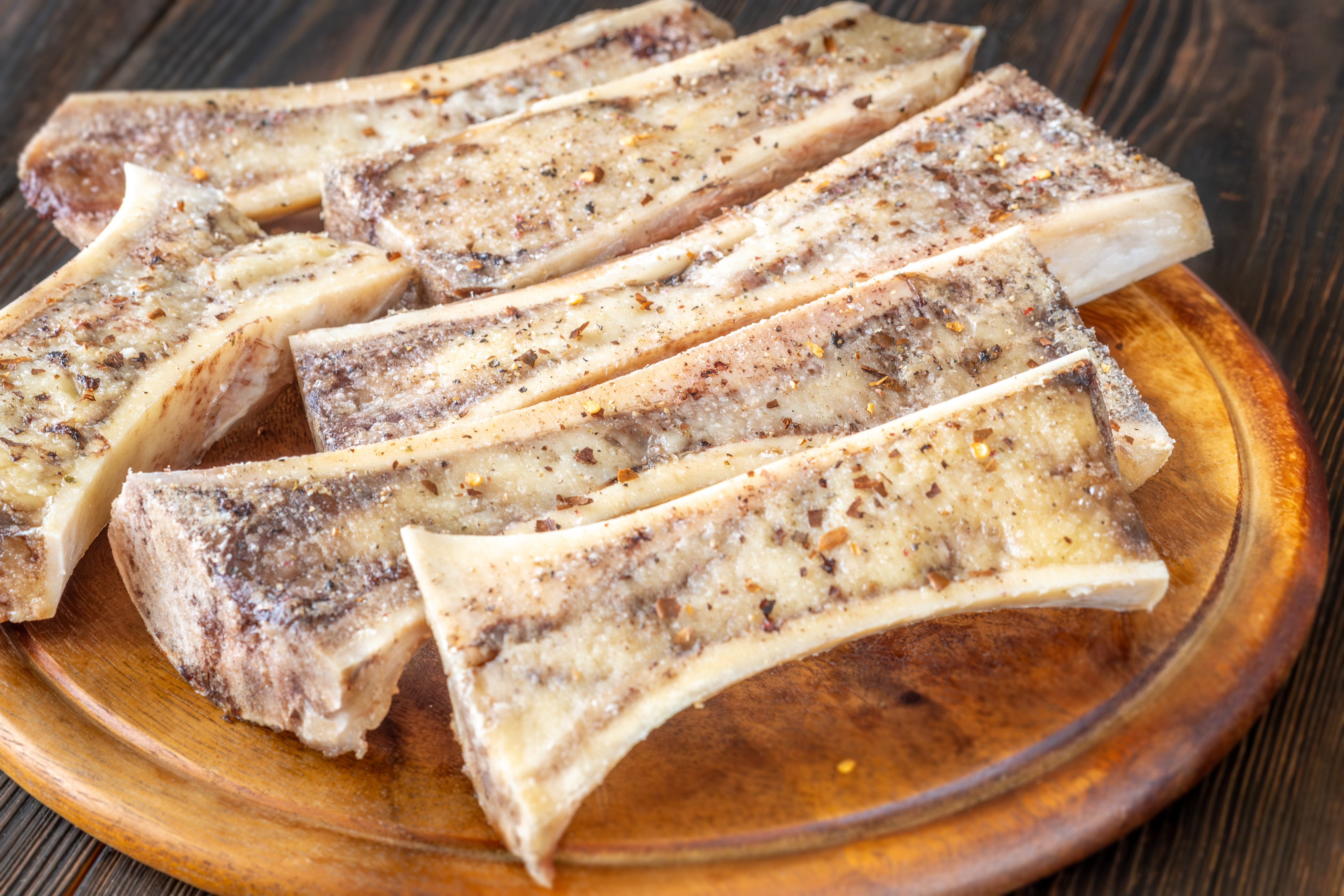
Bone marrow has recently gained attention in feeding conversations, often framed as ancestral or nutrient dense.
Underneath the trend is something worth honoring.
Parents want to do right by their babies. They want to avoid unnecessary processing. They want foods that feel real. And many have correctly heard that iron deficiency is common in infancy.
When feeding advice is fragmented or overly simplistic, foods that sound nutrient-dense can feel reassuring. Curiosity about feeding trends is understandable – especially when parents are trying to make thoughtful choices.
Iron, however, requires more precision than that in infancy.
It is about understanding what babies need from six months on, and why certain foods matter more than others at that stage.
A Deeper Explanation of the Six-Month Shift
Around six months, something significant has been changing in a baby’s body – and in the feeding conversation surrounding them.
Biologically, this is a period of transition. Growth patterns begin to shift from the rapid pace of early infancy. The iron stores babies are born with have begun to decline. Blood volume stabilizes. Brain development places increasing demands on iron availability. At the same time, breast milk or formula on its own, while still essential, is no longer adequate to meet certain micronutrient needs, such as iron.
Around six months, growth patterns and nutrient needs shift – iron becomes especially important during this stage.
Developmentally, babies are also changing in visible ways. Many are sitting with stability, bringing objects to their mouths, and curiously watching others eat. They may lean forward, reach, or show interest when food is nearby.
These outward signs are often described as “readiness for solids,” and they are real. But these signs of motor and cognitive development can be misleading if they’re interpreted only as behavioral milestones rather than signals that biology and development are converging.
This is often the moment parents start wondering if what they’re offering is “enough” nutrition as the signals around them suddenly multiply.
They may hear:
“Your baby is ready for food now.”
“Offer a variety of foods.”
“Iron is important at this age.”
“Some foods are better than others.”
At the same time, their baby may still seem content with milk, take only a few spoonfuls, or show more interest in exploring food than eating it.
That combination – biological change, developmental curiosity, and louder external messaging – is what creates uncertainty.
Parents are not suddenly less confident. They are responding to a real shift that is often explained incompletely.
What’s often missing from the conversation is this: six months is not about replacing milk or measuring intake. It’s about beginning to meet new nutritional needs alongside continued milk feeding, using foods that are efficient, absorbable, and developmentally appropriate.
When that context is missing, it’s very natural for parents to wonder if they should be doing more, trying harder, or choosing differently.
This creates a narrow window where nutrient density per bite matters more than at almost any other point in childhood. At this age, babies can’t compensate for nutritional gaps the way older children can. Every spoonful has a job to do, which is why choice, not quantity, matters most right now.
This is why iron-rich complementary foods are emphasized globally, regardless of culture. The goal is not variety for variety’s sake. It is meeting a biological need during a brief and important stage. As babies move through the first year, iron-supportive foods continue to matter – though texture, variety, and shared meals begin to take on a larger role.
Iron is not a “nice-to-have” nutrient in infancy. It is foundational. And timing matters as much as quantity.
If feeding has felt like a series of second-guesses, this is your reassurance: choosing iron-supportive foods early is not about perfection; it’s about clarity and alignment.
What follows is a closer look at how to think about iron-rich foods in practice, why certain trends sound convincing but fall short for babies, and how to make calm, steady choices from six months through the first year – without chasing every new idea.
Early feeding is not about volume or perfection. It’s about offering foods that quietly support growth, one bite at a time.