

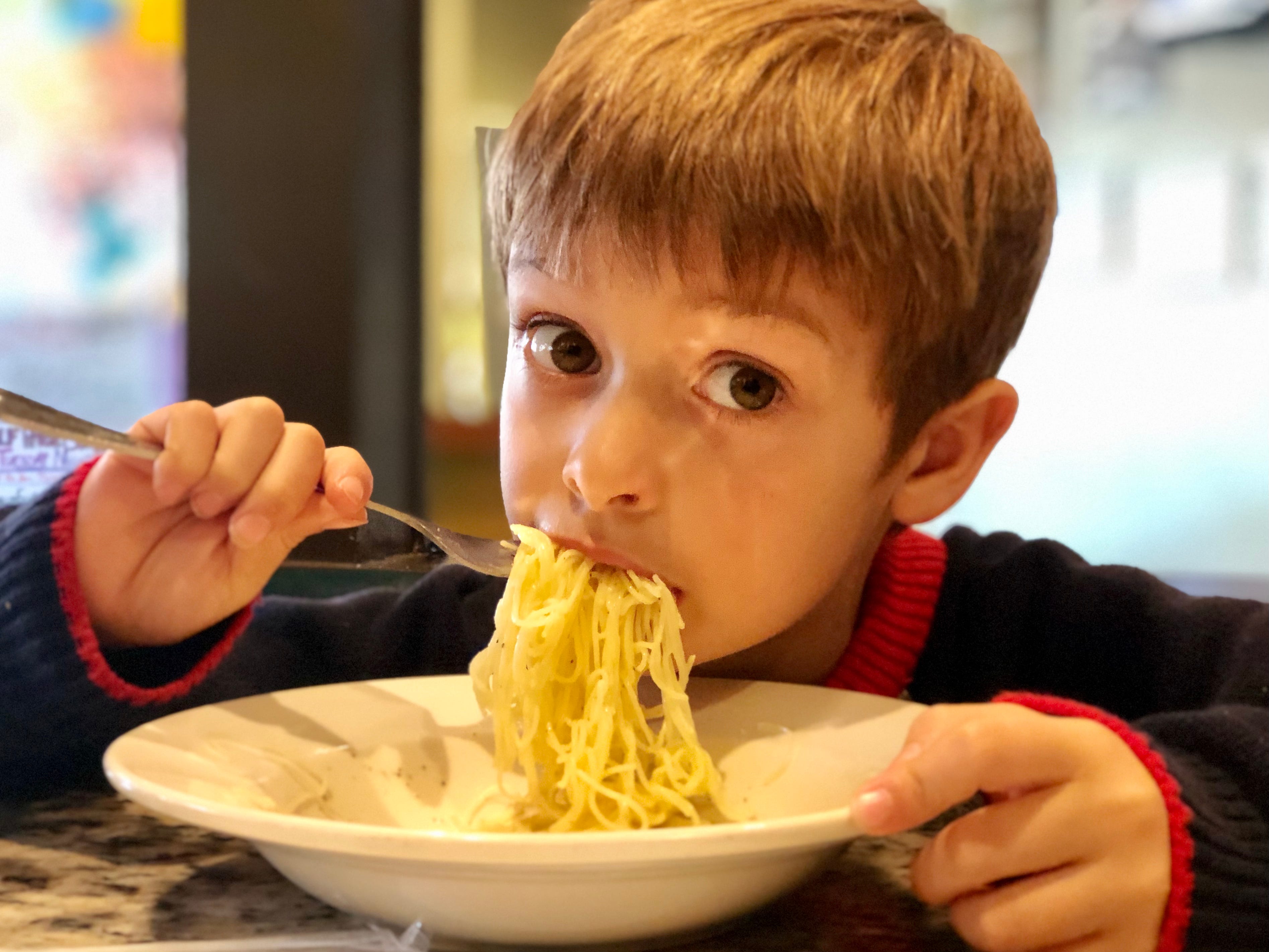
Over the past few weeks, several friends sent me the same articles, usually with a note that sounded both curious and concerned.
The messages were variations on the same theme: “I thought of you when I read this,” and “This feels like your work.”
They were referring to the release of Picky by Helen Zoe Veit and the broader conversation it has stirred among parents already questioning what is happening at their own tables. Most parents are not looking for a cultural debate. They want to know what to do when dinner is refused again at the end of an already full day. I have not yet read the full book. But the reviews, and especially the comment sections beneath them, have been revealing.
The headlines lean toward fascination. The comment sections tip toward nostalgia, blame and a familiar kind of worry that many parents carry quietly. Certain lines repeat again and again: “Kids today are not introduced to enough variety,” “Parents just need to be stricter,” and “My child would only eat bread if it was toasted exactly right.”
Mixed in are also quieter comments that land differently: “I tried so hard,” and “I feel like I did something wrong.” That framing tends to linger: It was a control thing.
It can feel like an explanation that finally makes sense of the struggle.
It is a tidy explanation, and in a stressful season, tidy explanations can feel relieving. They locate the struggle in willful personality rather than in a nervous system still learning to manage uncertainty. Feeding in early childhood rarely reduces itself to personality alone.
What if we have been interpreting these moments through the wrong lens, and as a result, placing unnecessary blame on children and pressure on parents?
A different lens does not excuse the struggle. It clarifies it and gives parents a steadier path forward.
Consider a common morning.
A Scene at the Table
Imagine a four-year-old sitting at breakfast. The toast in front of him is slightly darker than usual. The edges are crispier, the surface drier, and the aroma carries a faint hint of bitterness from deeper browning.
He pauses. He touches the corner, then pulls his hand back.
“No.”
To the parent, the difference is barely perceptible. It is the same bread, the same toaster, the same morning routine. Nothing meaningful has changed. To the child, however, the darker toast is not the same experience at all.
The crunch will feel louder. The resistance of the bite will feel sharper. The center may no longer feel soft and yielding. The aroma now carries a faint bitter note. His nervous system anticipates and registers these changes before he has language for them.
To him, the message is simple: this is not the same.
When he asks for it “the right way,” it can look rigid from across the table. It can feel oppositional in the moment. From inside his body, however, the reaction is protective.
Children do not experience food conceptually. They respond first through sensation, and only later through reasoning. Texture, temperature, aroma, and sound register immediately and intensely. A darker piece of toast is not a minor aesthetic change. It is a new sensory event.
What we label as pickiness, control, or stubbornness often begins as uncertainty.
Why Tan Foods Feel Safer
During early childhood, many children begin to narrow their food choices toward flavors and textures that feel predictable and easy to manage. Toast, pasta, yogurt, crackers, waffles, chicken nuggets, and plain rice become the steady center of a child’s plate. These foods are often described casually as “beige”, but their appeal is not random.
They tend to smell neutral and avoid sharp acidity or pronounced bitterness. Their textures are consistent, without sudden contrast, and easy to anticipate from bite to bite.
Color functions as an early signal. Bright green often accompanies bitterness. Deep red frequently signals acidity. Mixed dishes suggest layered textures and competing sensations. For a young palate still learning to decode these contrasts, neutral tones require less interpretation.
For a developing brain, familiarity lowers the stress response. That is why these foods feel calming.
The young child’s brain is still building the neural pathways that support flexibility. When predictability is high, the nervous system stays regulated. When predictability drops, stress responses rise more quickly. Narrowing toward familiar foods is not an effort to win a power struggle. It is an attempt to stabilize the experience.
Seen this way, the so-called “beige food phase” reflects regulation more than preference.
The Brain Behind the Behavior
Young children live in highly sensory bodies. In early childhood, sensation drives a child’s behavior more than reasoning does. Their taste and smell systems are active and highly responsive. At the same time, the prefrontal cortex – the part of the brain that supports impulse control, perspective, and flexibility – is still developing.

Many children gravitate toward foods that feel consistent and easy to manage.
They feel more than they can explain, and they react before they can reason through a sensation.
A slightly firmer noodle can feel dramatically different. A mixed casserole, where soft meets crunchy and sauce coats unevenly, can feel chaotic in the mouth. A new smell may feel intrusive rather than intriguing.
Adults tolerate variation because we have years of sensory experience to draw from. We know that a darker toast, while perhaps disappointing, will not ruin our day. We have experienced subtle bitterness before and categorized it as safe.
Children do not yet have that depth of experience.
When faced with uncertainty, they narrow their tolerance. They cling to what feels known. This narrowing can look like inflexibility. It is rarely permanent. It is a nervous system attempting to manage unpredictability without yet having the neural pathways that support calm override.
Children are not trying to make a parent’s morning harder. They are responding to sensory input with the regulatory capacity available to them.
Understanding that difference changes how we respond.
Temperament Changes the Volume
Development explains why narrowing happens. Temperament helps explain why it looks so different from one child to another.
Two children can sit at the same table, be offered the same meal, and respond in entirely different ways. The difference is not willpower. It is wiring.
Some children are naturally more sensory-sensitive. They notice subtle shifts that adults barely register. Chicken that is slightly more browned feels drier in the mouth. Scrambled eggs that are firmer than usual sit differently on the tongue. A banana that is softer than yesterday’s can feel unexpectedly intense. A sauce that spreads and touches other foods on the plate may feel overwhelming rather than incidental.
For these children, the sensory world is vivid. Their systems amplify nuance. Small differences feel large.
Other children are cautious by temperament. They warm slowly to new environments, new teachers, and new routines. They prefer to observe before participating. Predictability brings comfort across many areas of life, and food is no exception. A new dish does not simply introduce a new flavor. It introduces uncertainty.
Still others have strong internal autonomy. They respond quickly under pressure. The more urgency they sense at the table, the more firmly they hold their position. Their refusal is not an attempt to be disobedient or to dominate. It is an effort to preserve internal steadiness when they feel pushed.
These temperament traits are part of a child’s biological framework. They are not strategies designed to exert control, nor are they evidence that something is broken. What matters most is how temperament interacts with environment.
When developmental sensitivity meets a modern food landscape filled with constant options, engineered flavors, and heightened parental concern, the story becomes more complex.
And that complexity requires a steadier lens. This is where the language we use begins to matter.
Is Food Neophobia a Myth?
When developmental sensitivity meets a modern food landscape, the language we use begins to matter.
The term food neophobia literally means fear of new foods. At first glance, the word sounds clinical and definitive. Fear suggests something fixed and biological – something a parent must simply endure.
Developmental research does show that many children, particularly between ages two and six, become more cautious about unfamiliar foods. Bitter flavors can register more intensely. Sourness may feel sharper. Mixed or layered textures can feel unpredictable. Even temperature contrast can feel abrupt.
That heightened sensitivity is real.
Consider a familiar meal like macaroni and cheese. One day it tastes exactly as expected: creamy, mild, smooth. The next day a different brand or a new combination of cheeses is used. The sauce is slightly thicker. The flavor shifts subtly. The noodles are a different shape.
To an adult, the variation is minor. It may even feel like a welcome variety. To a four-year-old, it can register as a different food entirely. This is not irrationality. It is perception.
A period of food caution in early childhood does not determine how a child will eat later. Developmental sensitivity changes as the brain matures and taste literacy develops.
History complicates the conversation further. In earlier generations, children typically ate what the family ate. Meals occurred at set times and snacking was limited. Flavor exposure unfolded naturally through shared dishes and seasonal availability rather than through customized alternatives. Separate children’s menus were uncommon. Repetition and contrast were built into daily life.
Today, the backdrop has shifted. Many packaged foods are engineered for consistent texture and predictable sweetness or saltiness. Snack access is frequent. Grazing can replace clear meal rhythms, and appetite becomes less predictable. Restaurants routinely offer simplified children’s menus that narrow flavor range rather than expand it.
When we ask whether children are “more neophobic,” we may be asking the wrong question.
A more useful question is how early flavor development unfolds inside this modern food environment.
A child who regularly snacks on lightly salted crackers and drinks sweetened yogurt pouches may encounter steamed broccoli as dramatically bitter. Not because the child cannot tolerate bitterness, but because the palate has not yet had steady exposure to it.
Children’s taste pathways are remarkably adaptable. They recalibrate in response to repeated experience and environmental input. Adaptation, however, does not occur in isolation. It unfolds with appetite rhythm, structured meals, gentle scaffolding of texture and flavor, and exposure that remains emotionally neutral.
Neophobia is not a permanent trait. It is a developmental sensitivity interacting with environment.
When we consider both pieces, feeding struggles feel less mysterious – and far less personal.
Where Frustration Grows
Most feeding tension does not begin with conflict. It begins with concern.
A child’s list of accepted foods quietly narrows. Your once-easy eater now pushes a plate away. A favorite meal is suddenly refused. A parent notices the shift and wonders whether it signals something larger.
Is this normal? Did I miss something? Is this the start of lasting pickiness?
Concern is not overreaction. It reflects care. Parents want their child to grow well and to eat with confidence. When change appears at the table, attention naturally sharpens.
The concern can subtly alter the emotional tone of the meal. A parent may lean forward slightly. The voice may tighten without meaning to. Encouragement becomes more directive.
“Just try one bite.”
“You liked this last week.”
“It tastes the same.”
From an adult perspective, these statements are reasonable. They are grounded in memory and reassurance. From the child’s perspective, however, the food already feels uncertain. Additional focus can amplify that uncertainty. The body stiffens. The shoulders rise. The child withdraws.
The parent sees resistance and feels frustrated. Meals that once felt easy begin to feel charged. Over time, the table can carry tension before the first bite is taken.
This is often the moment when the interpretation shifts: It has become a control issue.
Yet escalation at the table is rarely about power. It is often about two nervous systems responding to one another in real time.
Children are highly sensitive to emotional tone. They borrow regulation from the adults around them. When a parent feels steady, that steadiness supports the child’s capacity to stay calm. When urgency enters the interaction, even quietly, vigilance increases.
A meal that feels pressured narrows tolerance.
A meal that feels predictable widens it.
Parents are not the cause of feeding struggles. They are the most powerful stabilizing force within them. When the goal shifts from correcting behavior to steadying the environment, flexibility has room to grow.
What Expands Taste Over Time
In pediatric culinary medicine, we treat taste as a development skill rather than a personality trait. It is something children learn and something that parents can actively shape.
Taste literacy is the ability to experience flavor, interpret texture, and gradually tolerate contrast. Like reading or riding a bicycle, it develops through repeated practice in an environment that feels safe enough for learning to occur.
A child who eats only lightly toasted white bread today is not fixed in that preference. That choice reflects where the sensory system feels steady right now. With calm repetition and thoughtful variation, that same child may later tolerate a slightly darker toast. Over time, perhaps a mild sourdough. Eventually, a firmer crust with deeper flavor.
Progress does not occur because a child is persuaded. It occurs because the nervous system adapts over time.
When meals feel predictable, a child’s body remains regulated. Familiar foods serve as steady anchors on the plate. There is something recognizable and dependable. That steadiness lowers alertness and creates space for small shifts.

Familiar foods can serve as anchors while new experiences unfold nearby.
Within that stable environment, small variations can be introduced gradually. Broccoli appears again, placed beside a familiar food rather than replacing it. The child notices it without pressure. They see it on a parent’s plate and watch as someone cuts into it. They catch its aroma. Nothing dramatic happens when it sits there untouched.
Over time, the brain begins to associate these steady encounters with safety.
Understanding why children narrow is the first step. What matters next is how widening unfolds.
When the list of accepted foods begins to narrow in early childhood, widening does not happen spontaneously. It unfolds with intention. Intention shifts the focus from correcting the child to shaping the environment. It preserves steady anchors, allowing appetite to build, and introduces contrast gradually enough for curiosity to emerge.