

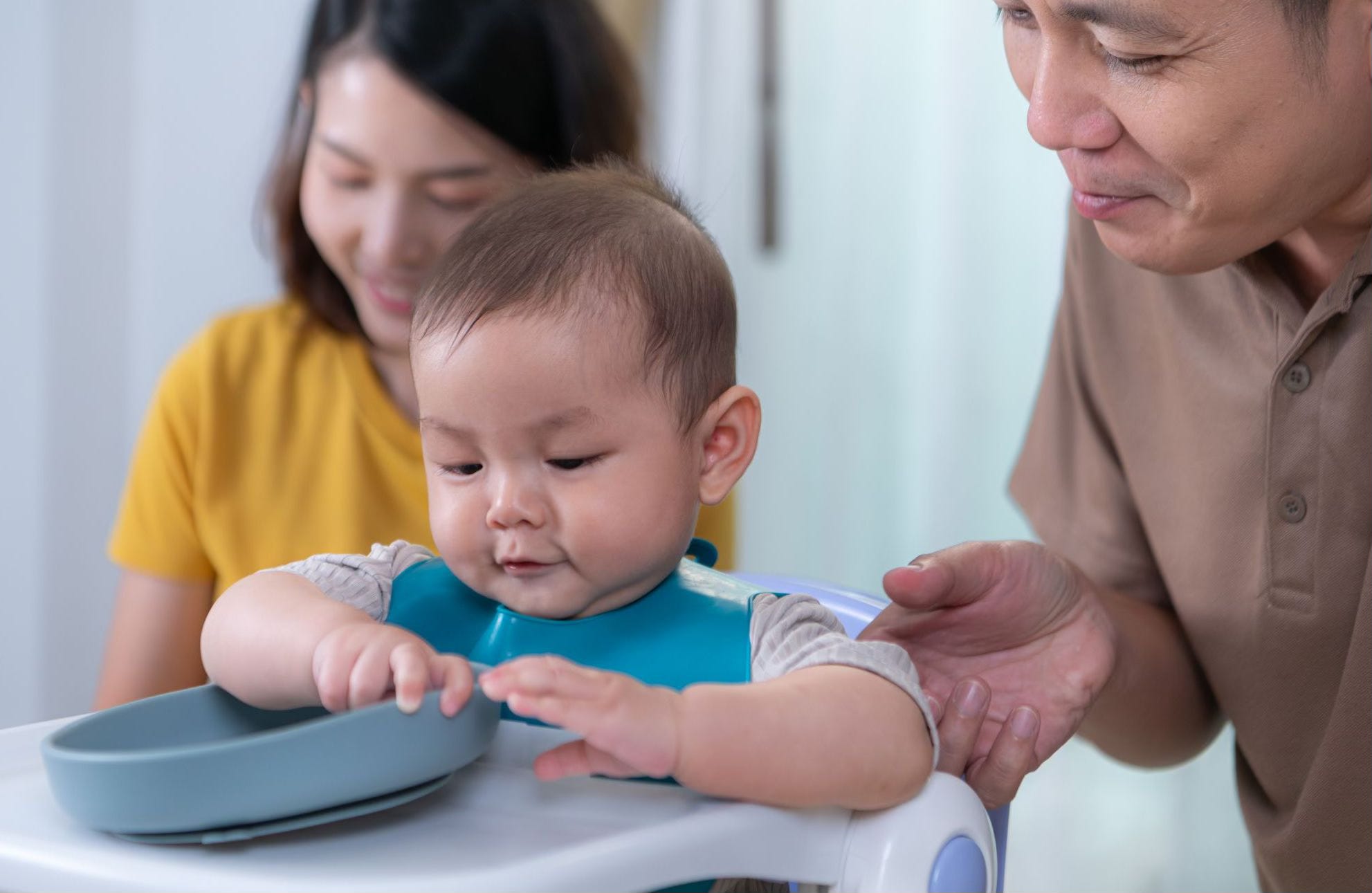
Feeding today may look different - but connection at the table is timeless.
A New Kind of Baby Dinner Party
You spooned applesauce into tired mouths, soothed fussy eaters, and likely wiped yogurt off your blouse with grace. Now, decades later, you’re watching your grandchild being raised in a feeding world that looks completely different. A world where “baby-led weaning” often sets the tone.
Instead of your grandchild being fed with a small bowl and spoon, there’s a tray the size of a cutting board, a silicone mat on the floor, and the baby in a painter’s bib that looks more Pollock than purée. Instead of being fed by a spoon, your grandbaby picks up large pieces of food and tries them on their own.
For many grandparents, baby-led weaning raises honest questions:
What happened to the spoon(s)?
Is baby-led weaning a thoughtful method, or just another modern trend?
Is this feeding, or food as performance art?
You are not alone. There are countless grandmas, aunties, and grandpas quietly unsure how to make sense of and participate in this new way to feed babies.
You’re not wrong for wondering what’s changed, or why feeding involves such a different setup: oversized trays and floor coverings with lots of messy self-feeding exploration. And that unmistakable gag reflex that makes everyone freeze at the table.
Let’s take a calm, thoughtful look at what’s really happening here and where it leads.
A Short History of Baby-Led Weaning
Baby-Led Weaning (BLW) began gaining momentum in the early 2000s through the work of Gill Rapley, a British public health nurse and midwife. In her clinical and home visits, she noticed something important: babies around six months – when they could sit upright, bring objects to their mouths, and show interest in family food – were often eager to feed themselves soft, manageable pieces of food when given the chance.
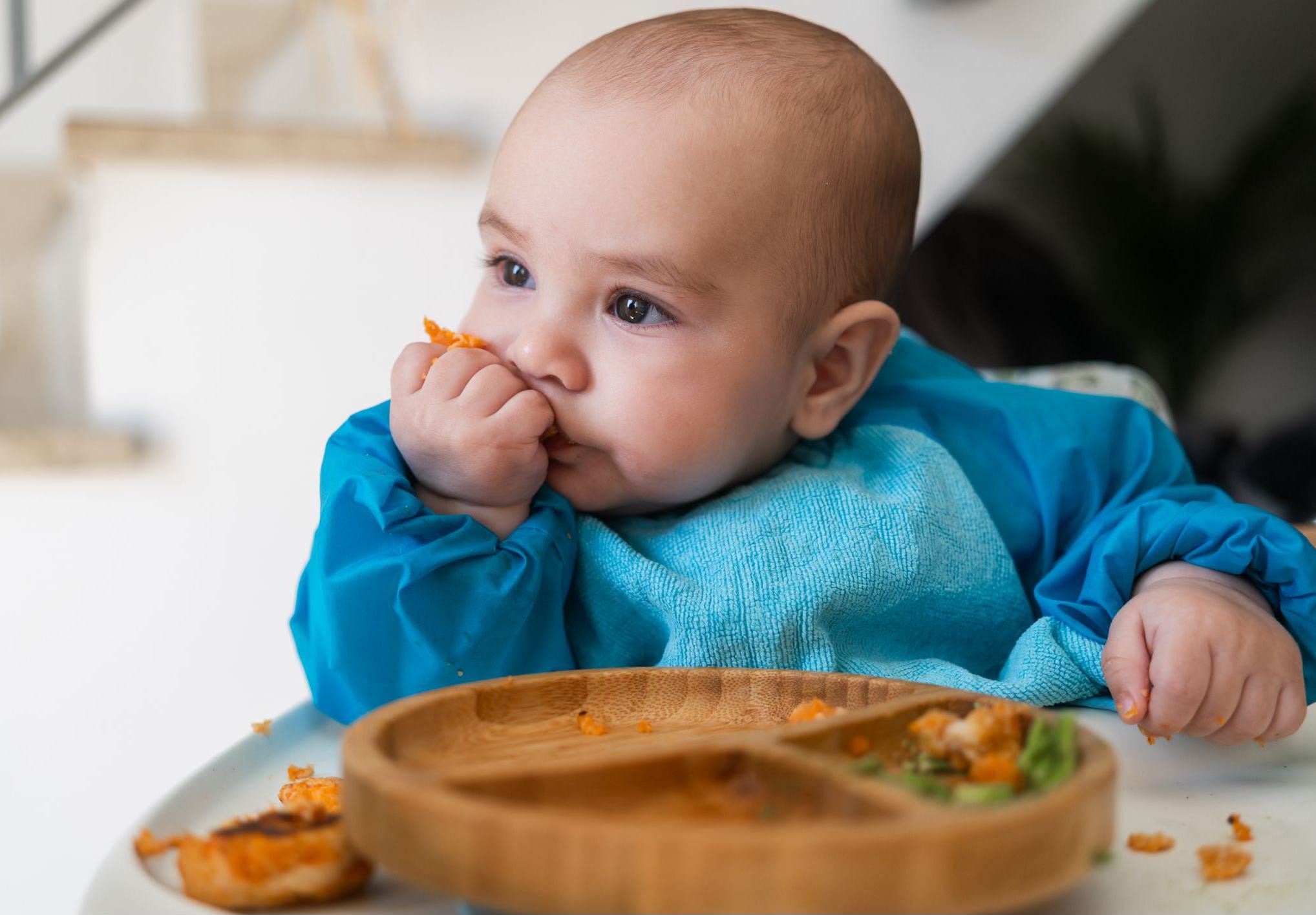
Self-feeding isn’t about skipping steps. It’s about noticing when a baby is ready.
Rather than refusing food itself, babies seemed to be resisting how they were being fed. Rapley proposed waiting until developmental readiness (typically around six months) and then offering safe finger foods to support independence, motor development, and appetite awareness.
Her observations reframed how and when babies begin to eat, but the story of flavor learning starts much earlier. Decades before Rapley’s work, research by Julie Mennella and Gary Beauchamp had shown that a baby’s palate begins developing long before the first bite, through the flavors carried in amniotic fluid and breast milk. In other words, even before self-feeding is possible, babies are already tasting the world around them.
Rapley also noticed that when babies were spoon-fed before they were ready, many babies pushed food away, turned their heads, or clamped their mouths shut. What she saw wasn’t stubbornness; it was biology. The tongue-thrust reflex, immature swallowing, and limited oral control are all natural safety mechanisms that protect the baby’s airway.
While babies should be exclusively fed breast milk or formula, by around four to six months, their palates are primed and ready for flavor. Gentle, guided taste exposures, not meals, can begin laying the groundwork for flavor learning. Readiness for texture and self-feeding develops as babies grow; readiness for flavor begins almost from the start.
In 2008, Rapley co-authored Baby-Led Weaning: Helping Your Baby to Love Good Food, and the method quickly spread. For many parents, BLW felt intuitive, respectful, and empowering. It aligned with a growing cultural interest in the Montessori principle of a child’s autonomy, responsive parenting, and consent-based caregiving.
How Interpretation Drifted
As baby-led weaning gained visibility, especially online, it began to lose some of its nuance. What began as an observation about readiness and confidence evolved into a method that sometimes forgot the flexible, responsive framework.
In practice, some families began interpreting the approach more narrowly, often reducing it to a kind of checklist:
No spoons
No purées
No adult assistance
No “solid foods” until exactly six months
These weren’t Rapley’s prescriptions, but they became the shorthand. While BLW intended to promote autonomy, it sometimes led to uncertainty and missed opportunities, especially around flavor exposure, allergen timing, and shared mealtime participation.
Reclaiming the Heart of Feeding
Feeding is more than just about nutrition and energy needs. Feeding is also about rhythm, interaction, sensory learning, and shared experiences. The original baby-led weaning model never intended for a baby to be sitting, away from the table, in a highchair with limited parental modeling or reciprocal interactions.
What seems to get lost in modern interpretations of BLW is the gentle scaffolding that helps a child move from:
Eating with their hands, to using a fork and spoon
Eating off their highchair tray, to eating from a plate at the table
Exploring foods and flavors in single bites, to eating shared family meals
These developmental and social transitions don’t have to be abrupt or all-or-nothing. The transition from a baby eating with their hands to happily mastering a spoon or fork can be slow and steady. Progression to confident self-feeding is shaped by a child’s development and readiness.
Many pediatricians now reference a hybrid approach – a blend of self-feeding and spoon-feeding that meets a baby’s individual needs. It sounds flexible and often is. But here, we gently guide families further: toward a calm, developmental path that focuses not just on what babies eat, but how they learn to taste, trust, and participate at the table.
This is where guided scaffolding helps – making these next steps of a baby’s feeding progression visible, gradual, and doable.
The Overlooked Window: Flavor Exposure Before 6 Months
Many parents, especially those guided by baby-led weaning, have felt that “starting solids at 6 months” is a semi-hard rule. But, as pediatric feeding guidance has evolved, there’s more nuance behind the timeline than meets the eye.
There is a short but powerful window, between 4 and 6 months of age, when many babies are especially receptive to new tastes, flavors, and feeding experiences. This early “flavor window” is a developmental stage that coincides with a baby’s increasing oral awareness, readiness for sensory input beyond milk alone, and growing alertness to their surroundings. (Not every baby is ready in this window – and that’s okay. When they are developmentally ready, a gentle approach to flavor exposure can open the door to their future food flexibility.) This natural openness to new flavors does not mean that babies should be fed full meals at 4 months, or that purées are the only option. However, the idea that babies aren’t ready to eat “solid” foods before 6 months of age overlooks a key time when babies are most receptive to flavor learning.
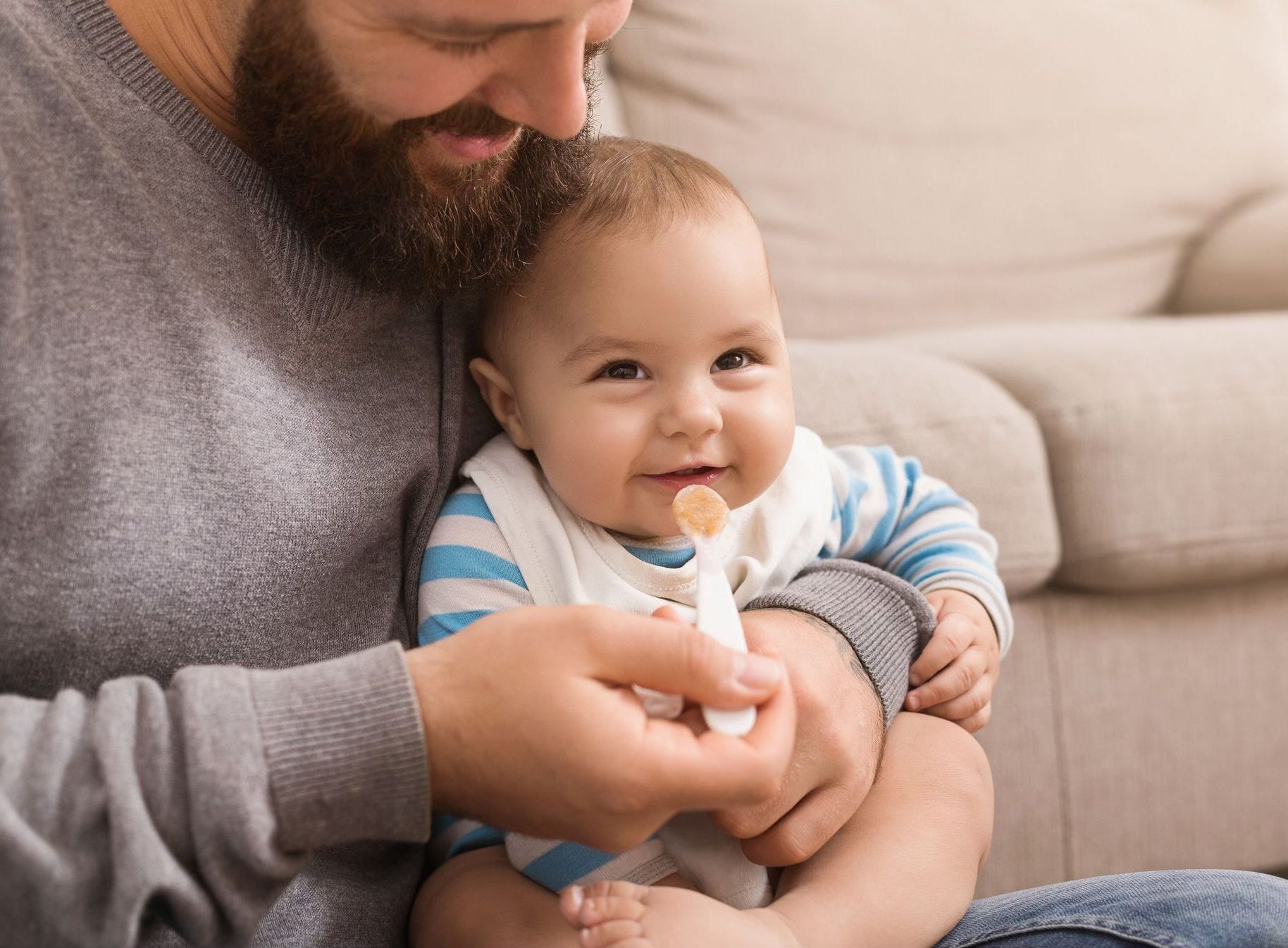
Exposure builds trust – long before volume builds intake.
In many European countries, pediatric guidance has long included tiny amounts of vegetable-infused water, broth offered to babies before solids begin, and bitty tastes of vegetable purées. These micro-tastes are for early exposure to a variety of flavors. In this age-specific early flavor window, exposure to food flavors is not about nutrition or quantity; it is about gentle, sensory priming. It’s about offering babies a safe, developmentally appropriate way to experience taste before it becomes varied texturally or infused emotionally.
Tiny tastes, off a finger, a pre-loaded spoon, or a bit of soft food, can begin to build a child’s comfort with newness. It’s also when bitter, sour, and savory tastes are often more readily accepted. Preferences haven’t yet taken hold, and babies’ taste systems are still wide open.
Here’s how it might look:
A few teaspoons of zucchini water in a bottle once or twice a week
A hint of carrot or beet purée stirred into the formula or breast milk
Letting baby taste lemon on your finger (just a dab) as a playful introduction to tartness
When babies encounter flavors early, and often, in low-pressure ways, they’re more likely to accept those flavors later. Early “flavor window” exposure does create a sensory foundation that supports flexibility, although it may not completely protect against picky eating. Missing this 4 to 6-month flavor window isn’t a failure. Babies remain highly receptive to new flavors, textures, and even gentle spices through toddlerhood – especially in the first 18 months. But recognizing its innate potential can offer clarity, especially if feeding becomes more challenging down the line. The goal of feeding a baby isn’t only intake. The goal of guiding children to accept a variety of food flavors is calm, curious exposure.
These early moments of flavor exposure are a kind of sensory warm-up – a way to invite your baby to explore taste long before they’re eating full meals. A tiny dab of beet purée. A whisper of lemon on a parent’s finger. These are not about getting your child to eat more; these are intentional tastes to support your child’s curiosity and comfort. This is gustatory priming – the gentle flavor introductions that help your child’s palate and taste pathways feel ready when the textures start to shift.
Our One Flavor, Six Paths series is designed to guide this pathway step by step – offering gentle, developmentally aligned tasting experiences that adjust with your child’s readiness. Whether your child is at the youngest edge of the flavor window or your child is already much older, our One Flavor, Six Path series guides you and your child to begin the path that meets them where they are – with calm, developmentally aligned scaffolding to grow confidence, one taste at a time.
And just as there is a window for flavor openness, there is also a key window for supporting tolerance through allergen introduction – an area that often feels even more confusing to families.
Timing Matters: The Case for Early Allergen Introduction
While the term “early allergen introduction” has made its way into parenting circles, it often floats untethered or is mentioned in passing, but rarely fully clarified.
Research shows that introducing allergenic foods like peanuts or eggs early – ideally between 4 and 6 months – will help a baby’s immune system learn tolerance. Large studies, such as the LEAP trial, found that calm, repeated exposure during this window significantly reduced the risk of developing a food allergy. This information supports early and repeated exposure to the other most common allergenic foods in reducing the risk of developing an allergy. Early introduction does not mean rushing or replacing milk feeds; it means tiny, intentional tastes that fit within your baby’s readiness. This sensitive topic feels most doable when guided with medical grounding and real-life rhythm.
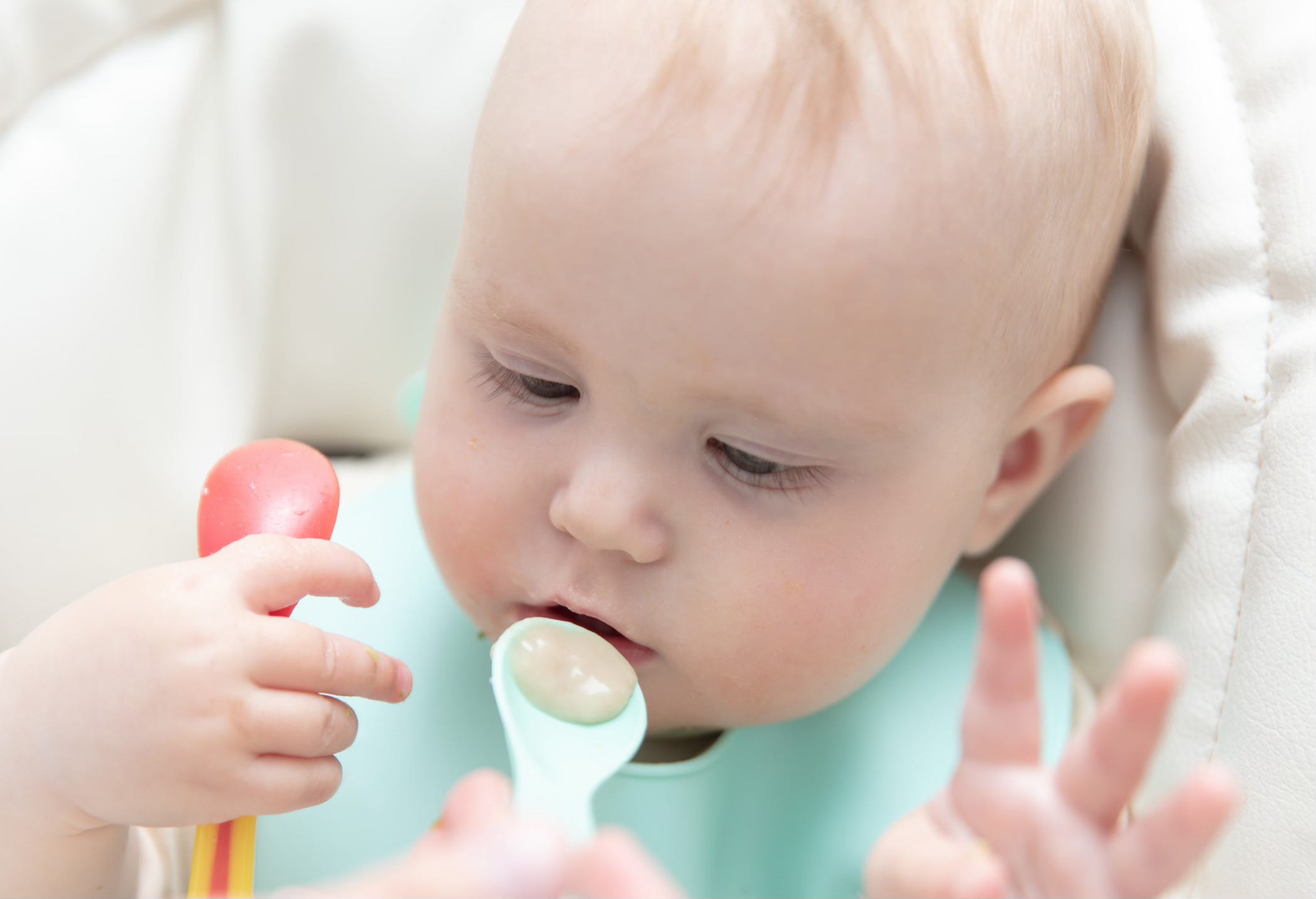
Early allergen introduction is not about rushing feeding milestones — it’s about readiness, rhythm, and connection.
The evidence is clear: a window of opportunity exists in early infancy where small exposures – when offered thoughtfully and safely – help the immune system learn. But unlike the checkbox approach parents may encounter, we thoughtfully guide this alongside developing your child’s taste confidence and flavor readiness. Offering a tiny swipe of peanut butter or a spoonful of softly scrambled egg is not about rushing. It’s about noticing readiness and cultivating curiosity around flavor in a calm space.
Alongside a child’s growing ability to develop immune tolerance, their need for iron also begins to rise. This quiet overlap during the early feeding window reminds us that starting solids is about more than just textures or timing. It’s an opportunity to scaffold flavor awareness, nutrient readiness, and calm exposure – before the social dynamics of the table fully emerge.
Iron Matters: Building Strength from the Start
Around 4 to 6 months of age, a baby’s natural iron stores begin to drop – a normal stage called the physiologic nadir. This is the developmental moment when babies’ bodies are hungry for key building blocks like iron, zinc, and B vitamins, not just for calories.
Iron supports oxygen transport, brain development, and growth. Even a mild deficiency can affect a growing child’s energy and attention. Offering iron-rich foods early helps refill those stores before they dip too low. Think tender flakes of salmon, puréed lentils, mashed beans, or slow-braised meats mixed with vegetables as iron-rich foods introduced through the same flavor pathways that guide their curiosity. These foods offer essential nutrition and deeper sensory experiences that shape your child’s future taste preferences. Parents shouldn’t feel pressure to “get in more ounces”. Instead, parents can feel confident scaffolding layers of flavor with purpose – so even a single bite can feel meaningful, nourishing, and enjoyable.
So, what happens when the early flavor window has passed, or textures begin to shift?
That’s where scaffolding begins.
It is also where the conversation between generations deepens. Guiding a child toward confident eating is not just about nutrients or textures. It is about rhythm, connection, and the quiet ways we teach one another – parent to child, grandparent to parent, and back again.
Author’s Note
Some gifts fill a moment. Others restore confidence.
A month inside the Fussy to Foodie™ Collective™ – the cost of a dinner entrée – offers the kind of calm and connection that lasts well beyond dinner, restoring confidence one bite at a time.