

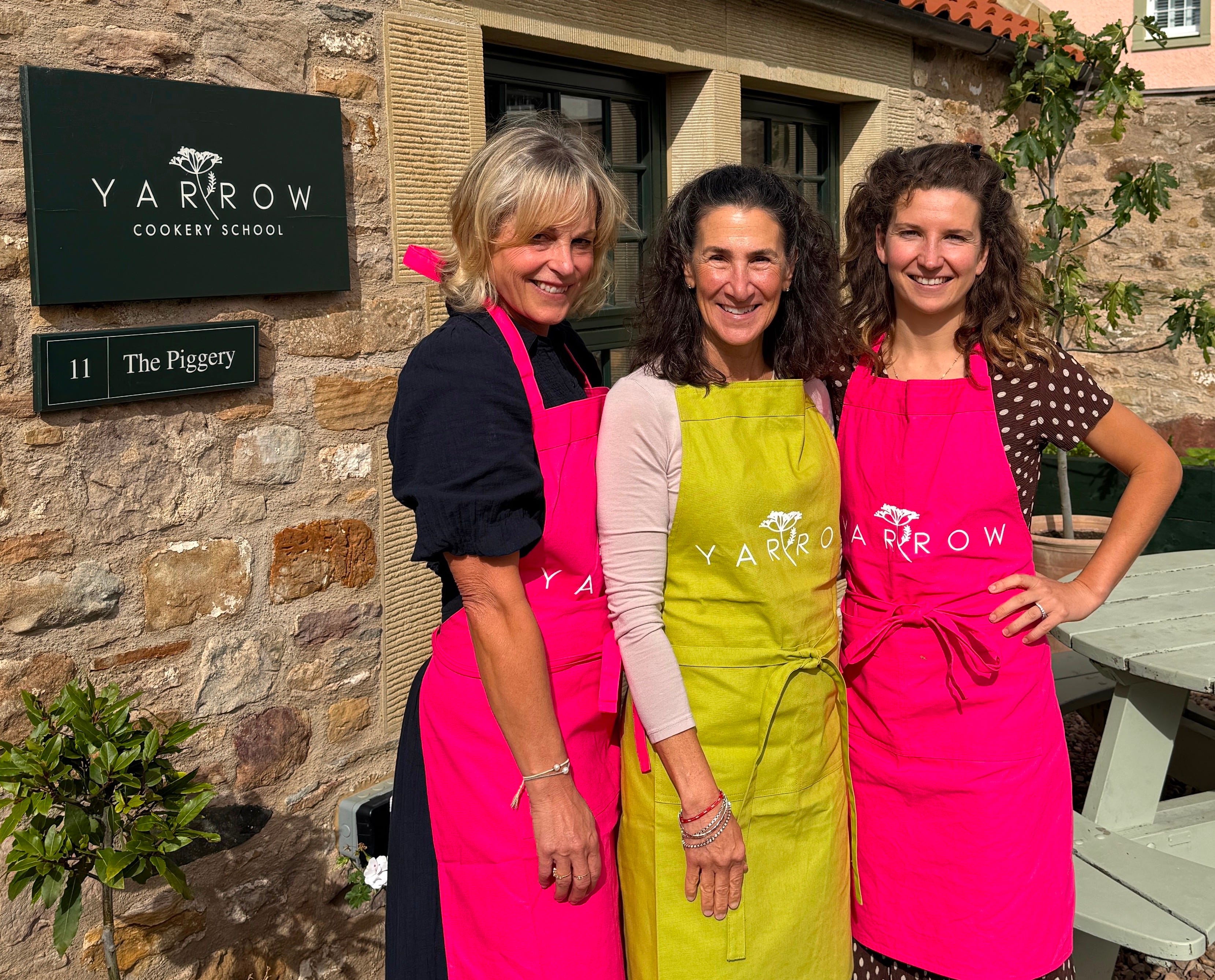
At Yarrow Cookery School, we cooked, learned about nutrition, and shared a meal.
More than 30 years ago, my husband and I hosted a dinner for friends and family at our home in Houston. When we served the brie, one guest cut off the pointed end of the wedge. Our French friend audibly gasped. “You never cut the nose off the cheese!” she said. She showed us how to cut alongside the point so everyone could have a portion from the middle of the wheel. That small correction became a cherished family story and a lasting part of our friendship.
When we visited those friends in Brittany recently, we remembered that dinner and laughed about it again. We had taught our children to cut the cheese the way our French friend had shown us, and we still follow that custom today. The point was never formal etiquette. It was a way to share something we had learned from another food culture. Our children learned by watching and taking part.
That memory made me think about how children learn from the food and routines adults share with them. It also brought to mind a question many parents face: What do I do when my child turns down dinner? Should I offer something else, end the meal, or try again later?
When this happens often, making dinner can feel like a series of guesses. On my trip, I began noticing how food was prepared to bring out its flavor, how meals fit into the day, and how children joined adults at the table.
I had visited Paris before, when our three children were younger. I remember the fun of exploring baguettes, pain au chocolat, croissants, whole milk yogurt, local cheeses, escargots, croque-monsieur, and waffles for le goûter. This recent trip brought back those family memories, while giving me a different perspective. This time, I traveled as a pediatrician and chef, paying attention to the food and the routines around it.
I returned thinking about eating as a daily activity children learn over time. My trip did not give me an answer for every difficult meal, but it did remind me that parents can guide the experience. Meals have a place in the day. Food can be prepared with care, and children can be welcomed to the table. They can watch adults enjoy food, join the meal, and become more familiar with what is served. These everyday experiences give children time to learn at their own pace.
Edinburgh
In Edinburgh, I was struck by how much Scottish food draws on the surrounding land and sea. Seafood, dairy, local produce, and livestock appear in traditional dishes such as Cullen skink, made with smoked haddock; Arbroath Smokies; haggis, including vegetarian haggis; neeps and tatties; and Balmoral chicken. These dishes have distinct flavors and reflect regional ingredients and traditions. Seeing them made me think about how children become familiar with the foods around them.
At a nutrition and cookery workshop at Yarrow Cookery School in East Lothian, I saw how cooking choices can bring out a food’s flavor. Emma Marshall, a registered nutritional therapist, led the session. We made zingy pea, broccoli, and mint soup; lemon cumin chicken; and spiced carrot and spinach mash. The greenhouse and garden made the ingredients feel close at hand. Cooking and eating together in the bright, welcoming space made the session memorable.
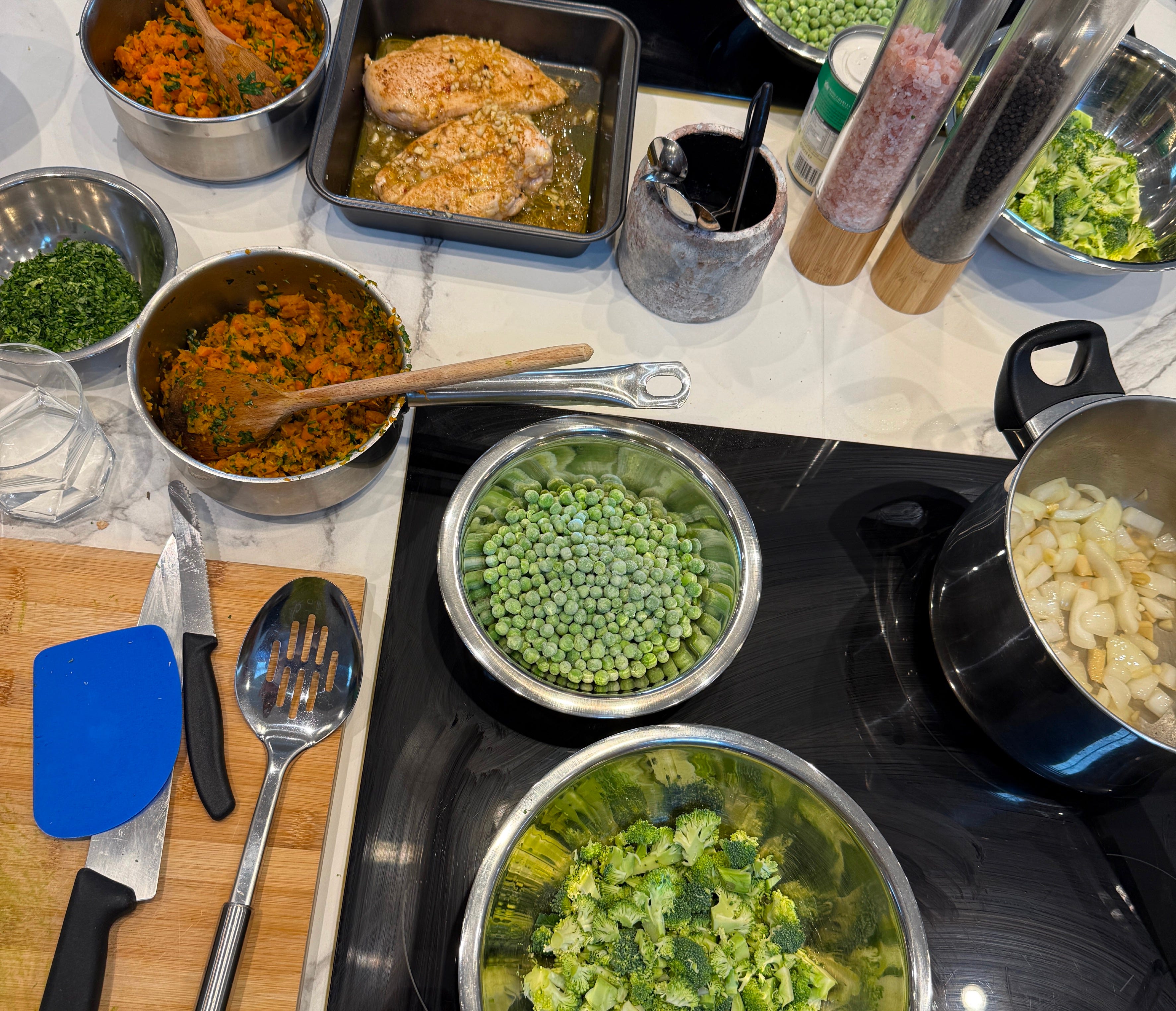
Preparing the dishes together at Yarrow Cookery School: lemon cumin chicken, spiced carrot and spinach mash, and the ingredients for the soup.
The workshop brought nutrition and flavor together in practical ways. Mint gave the soup freshness. Lemon and cumin seasoned the chicken. Spices made the carrot and spinach mash satisfying. I was reminded that a dish’s flavor depends on choices we make in the kitchen: what we add, how we cook it, and what we serve alongside it.
The workshop gave me a hands-on way to think about taste literacy: how children become familiar with flavors, textures, and different ways food can be prepared. We learned by cooking and tasting vegetables seasoned and prepared for flavor. That experience reminded me that nutrition and enjoyment can be part of the same meal. When parents prepare vegetables in ways they enjoy and include them in family meals, children have opportunities to notice and taste them over time. Those experiences can support familiarity with a wider range of foods as children grow.
Brittany
In the Côtes-d’Armor area of Brittany, our meals brought together food from the coast and the countryside. We enjoyed oysters and fish, local cheeses and butter, breads and pastries from nearby boulangeries and pâtisseries, and local produce preserved in jars, made into jam, or fermented. Friends had brought saucisson from Lyon. Some of the food reflected where we were; some had traveled with the people who shared it.
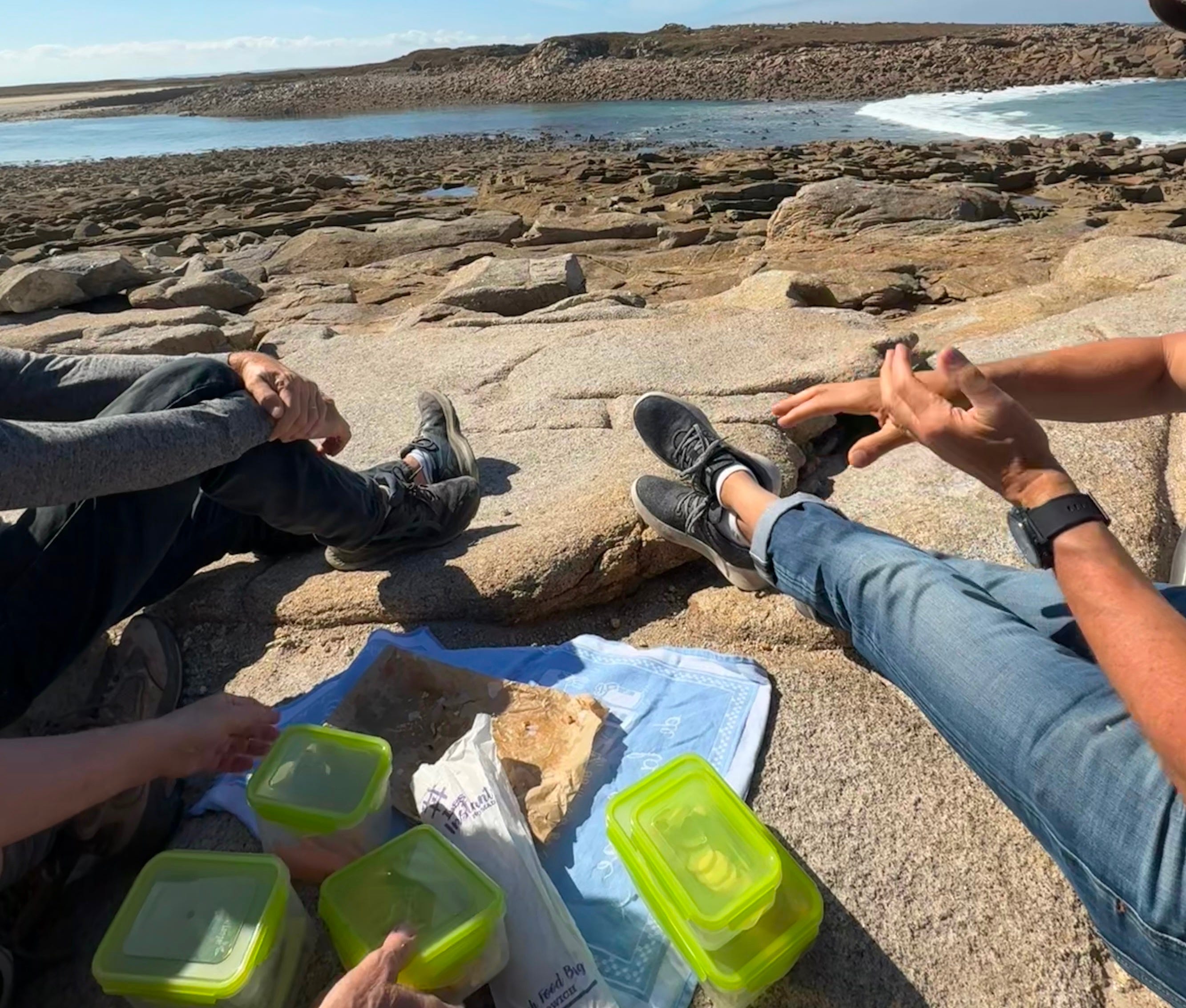
A seaside picnic in Brittany made food part of the day we shared.
Butter and cheese were plentiful. Cheese, tapenade, crêpes, and pâté each had their own flavors and place at the table. I noticed how the ingredients were prepared and how they fit into the meal. Enjoying the food was simply part of eating together.
I also noticed children eating with adults and taking part in daily life. On walks along the beach, children often greeted the adults they passed. It was a small exchange, but it gave me a picture of children joining the ordinary routines and relationships around them.
During our visit, my friends and I also talked about how parents try to respect children’s preferences and growing independence. Parents may still wonder when to guide and how to do so without creating pressure. If a child tends to eat only certain foods, should the parent change the meal, offer another choice, or invite the child to try what everyone else is eating? These are understandable questions. Each family makes decisions that fit their circumstances, their child, and the moment.
Our conversation reminded me that parents can guide these moments in simple ways: talk about a flavor they enjoy, invite their child to pass the bread, or explain a food tradition as it comes up. A child might listen, ask a question, or taste. These moments let parents model interest and curiosity about food and help children take part in family meals, even on a busy day.
Paris
Paris offered its own expression of French cooking, from croque-monsieur, duck confit, and boeuf bourguignon to soufflés and mille-feuilles. Breakfast might be café crème with tartine and confiture or pain au chocolat. Even a simple meal felt satisfying because the bread, butter, and cheese were so good.
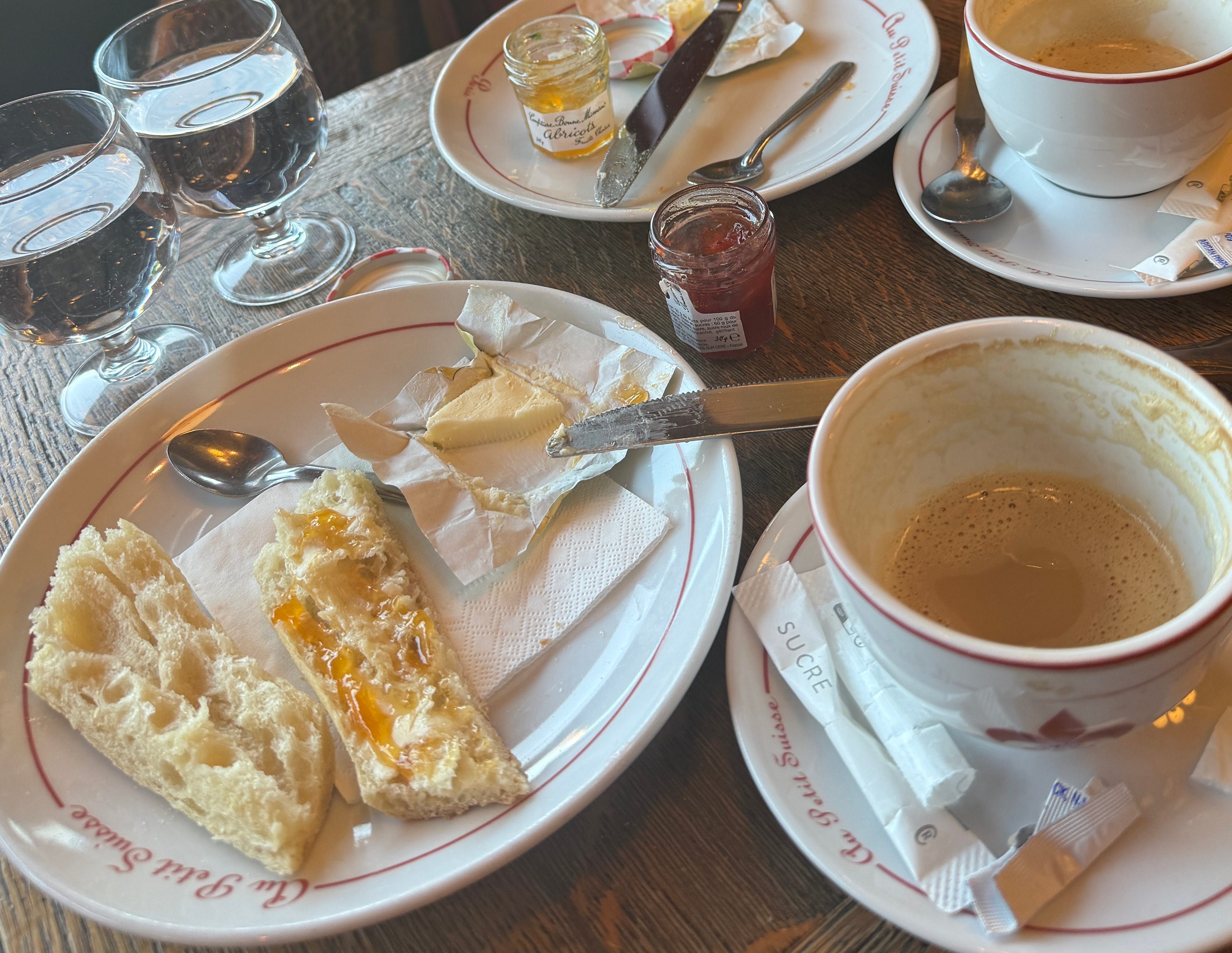
Café crème with tartine and confiture for breakfast.
One image I keep returning to is a set of school lunch menus displayed in a glass-fronted cabinet outside an elementary school. Several weeks of menus were posted by day. The menus identified vegetarian choices and some organic ingredients. I stopped to read them. I could not know what each child would eat, but I could see the menus were planned and posted where families and neighbors could read them. It reminded me that children encounter food through school routines as well as family meals.
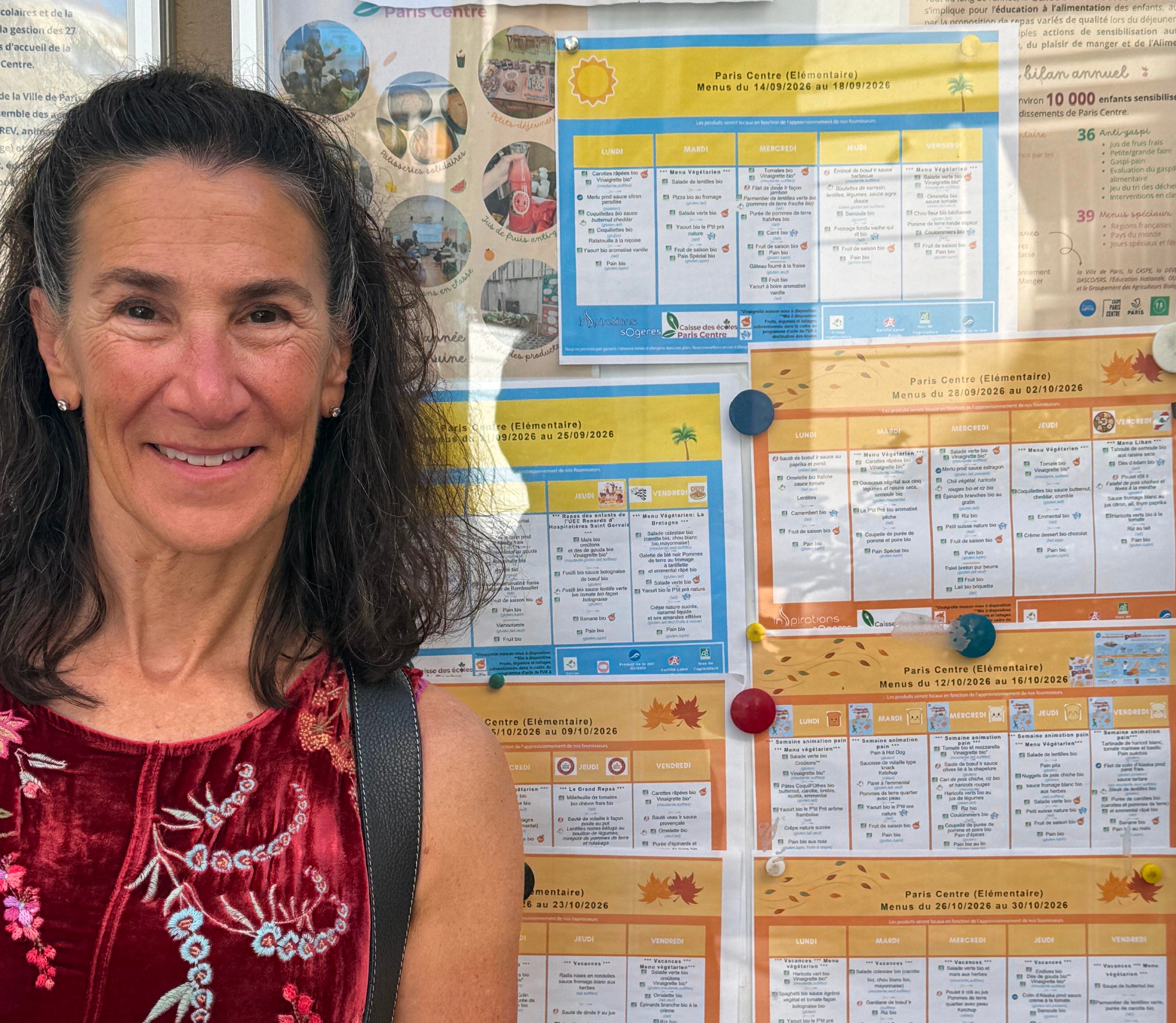
Outside a Paris elementary school, several weeks of lunch menus were posted for families and neighbors to see.
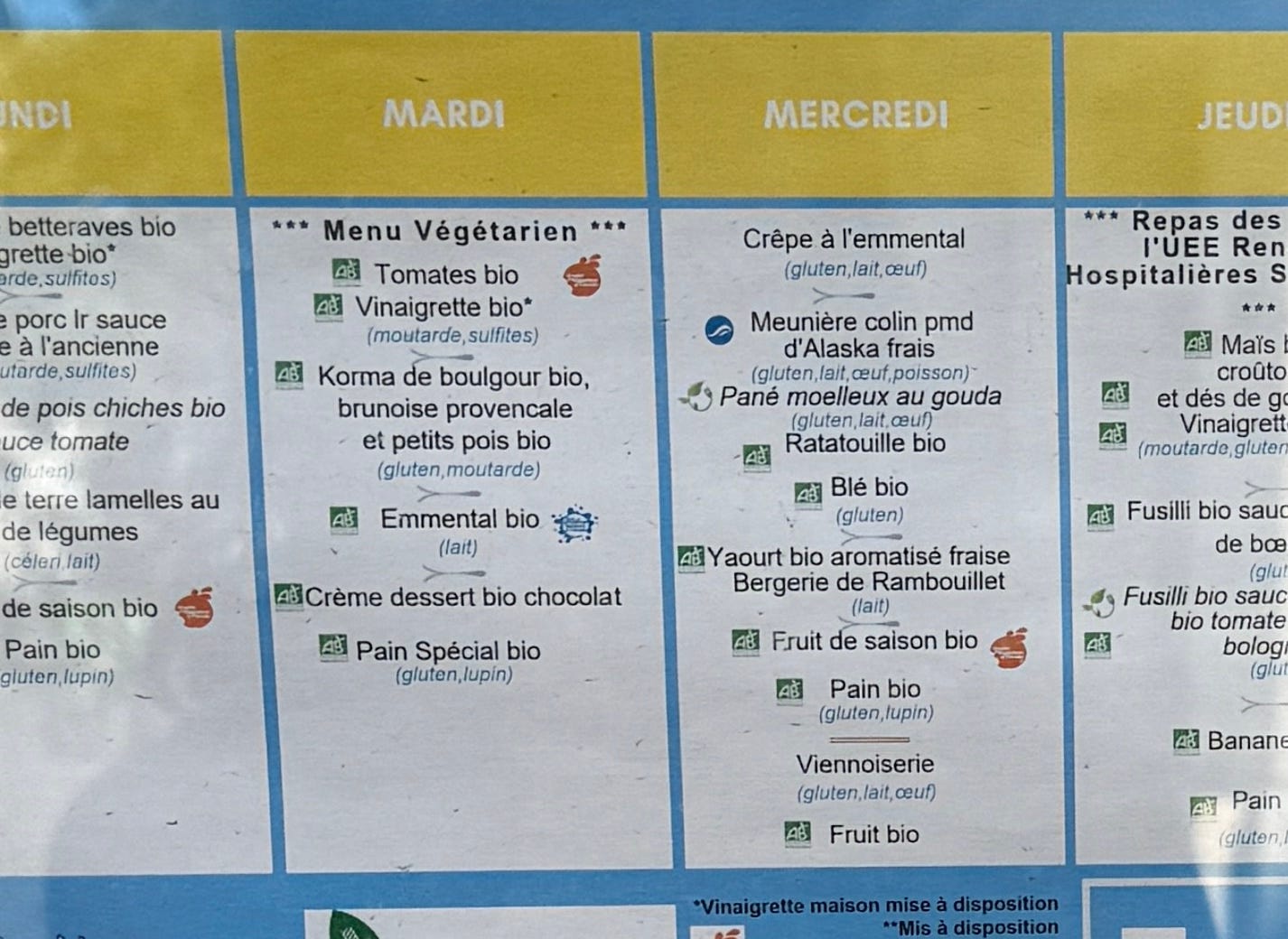
Paris elementary school lunch menu.
During our time in France, I noticed a rhythm to eating: breakfast, lunch, le goûter, sometimes an apéro, and dinner. Some lunches lasted an hour and a half to two hours. The afternoon goûter and apéro each had a recognizable place in the day. I saw fewer casual, unplanned snacks than I am used to seeing at home. I took this as an observation of a different culture, not a schedule for families to copy.
For a busy family, a predictable time for an afternoon snack and an approximate dinner time might make late-day food decisions feel less open-ended. But the details depend on work, school, activities, and who is eating together.
Bread was part of almost every meal we shared, and it appeared on the school menus, too. At lunch, a baguette sat on the table beside the other dishes. I could picture the same arrangement at home: bread alongside the rest of dinner. A child might eat only the bread that evening, while the rest of the family enjoys the fish, vegetables, or other dishes prepared for the meal. For families avoiding gluten, rice or a suitable gluten-free bread or cracker can fill that familiar place.
What stayed with me throughout the trip was how thoughtfully foods were prepared and paired. Ripe tomatoes were dressed in olive oil and torn basil. Radishes were served with salted butter. Buckwheat galettes came with Emmental, egg, and pepper, alongside a bolée, or small ceramic cup, of local cider. In the meals I remember, flavor was central.
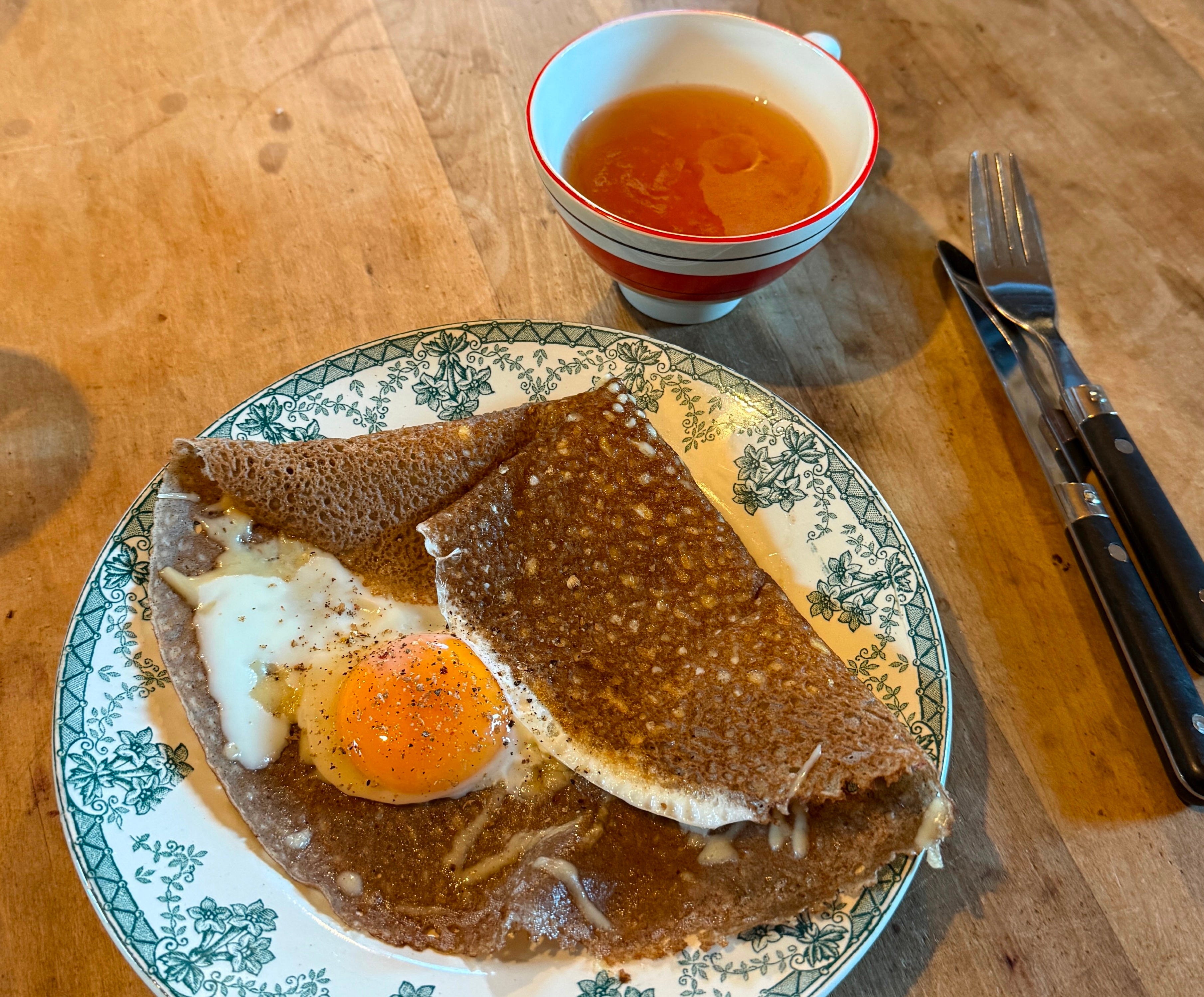
A buckwheat galette with Emmental, egg, and a bolée of local cider.
What I Brought Home
I did not return home with a list of Scottish or French foods every child should eat, or a meal schedule for families to adopt. I returned thinking about how meals might feel easier when they have a set place in the day and are prepared with flavor in mind.
Across Edinburgh, Brittany, and Paris, I kept seeing how food could nourish people and give them pleasure at the same time. Meals were flavorful, shared, and part of the rhythm of the day. That stayed with me because parents can feel pressure to make every bite count: to offer the right foods, meet nutrition goals, and still wonder whether their child is eating enough.
As a pediatrician-chef, I think of becoming familiar with food as a pathway. Children need time and repeated experiences, so no single meal has to prove that a parent is getting it right. Parents choose what to serve, prepare food with care, and welcome their children into the experience. A child’s appetite and response may vary from one meal to the next. The parent can keep guiding by bringing food to the table and sharing the pleasure of eating together.
There is a time to eat. Bring the meal you prepared to the table, enjoy it, and welcome your child into that part of family life. Your child may eat a lot, a little, or only one food that evening. You are still guiding your child through the flavors and meals your family shares. Over time, these shared meals help your child become more familiar with the foods your family enjoys.