

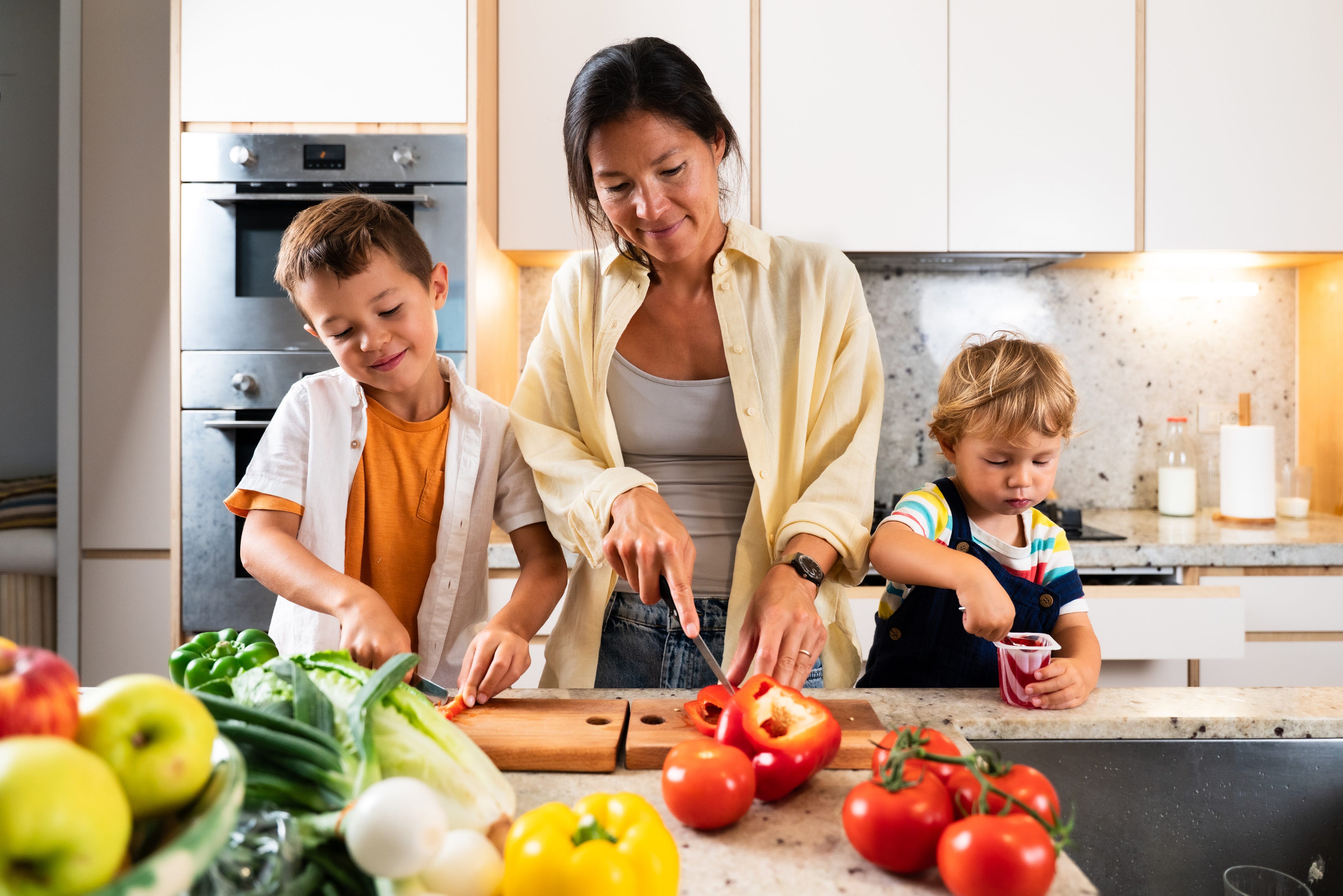
Children learn about food long before they taste it. Everyday experiences with ingredients, meals, and family cooking help build the foundations of both food confidence and gut health.
Parents hear a lot about gut health.
Social media talks about probiotics. Grocery stores are filled with products claiming to support digestion. Influencers recommend supplements, powders, and drinks that promise to improve the microbiome.
It can leave parents wondering whether they should be doing more.
Should they be giving their child probiotics?
If so, what kind and how often?
Is their child’s microbiome somehow falling behind?
Are their child’s stomach aches, constipation, and picky eating signs that something deeper is wrong?
Gut health is not something that comes from a single product, supplement, or probiotic.
At the same time, many of the families I meet are facing much more practical concerns. Their child only eats a handful of foods and vegetables are a struggle. Meals feel repetitive. Constipation comes and goes or their child complains of stomach aches.
Many parents eventually begin to wonder whether these things are connected. For many families, feeding can begin to feel like managing problems instead of sharing meals. Parents find themselves rotating through the same accepted foods, hoping everyone gets enough nutrition while avoiding another stressful dinner.
The answer is often yes, yet not always in the way people think. Gut health develops gradually through the foods children encounter day after day, week after week, and year after year.
That is good news because supporting gut health does not require daily perfection. Gut health develops through the same food experiences that help children become more comfortable with a wider variety of foods over time.
Parents often place a great deal of attention on vegetables. Yet gut health responds to a much broader pattern of foods. Beans, fruits, whole grains, herbs, nuts, seeds, and vegetables all contribute.
Let’s start with what parents mean when they talk about gut health.
What Parents Mean When They Talk About Gut Health
When parents ask about gut health, they are usually talking about one of three things:
Digestion
Comfort
Overall health
They want their child to have regular bowel movements, fewer stomach complaints, and the energy to grow, play, and learn.
Behind the scenes, the digestive tract is home to trillions of microorganisms collectively known as the gut microbiome. These bacteria, fungi, and other microbes live alongside us and interact with the foods we eat every day.
Researchers are still learning about the microbiome, but one finding continues to appear repeatedly: the foods we eat help shape the microbial community living inside the digestive tract. Different foods feed different microbes, and a wider variety of foods tends to support a more diverse microbiome. Diversity is generally associated with a healthier, more resilient digestive system.
While the microbiome has received enormous attention recently, most parents are simply hoping their child feels comfortable, stools regularly, and can eat a wider selection of foods. What matters most is understanding that the gut responds to patterns and that the foods children eat repeatedly help shape their digestive environment over time.
The Gut Is Learning from Every Meal
Every meal is an opportunity for learning. Children learn about food through repeated experiences, and the gut responds to those same patterns over time.
Many parents find themselves relying on the same accepted foods simply to get through the week. Busy schedules, hungry children, sports practices, and long workdays often make familiar foods feel like the safest option. The challenge is that when a child’s food world becomes limited, the digestive system encounters a narrower range of fibers, plant compounds, and nutrients. As a child’s food experiences expand, the gut is exposed to greater diversity as well.
In some ways, the gut learns through repetition much like children do.
A child who only encounters a handful of foods has fewer opportunities to discover new flavors, textures, and ingredients. Likewise, the gut has fewer opportunities to encounter the wide variety of fibers and plant compounds found in fruits, vegetables, legumes, whole grains, herbs, spices, and fermented foods.
This is one reason gut health and picky eating are connected. The goal is not to chase perfection or create a “perfect microbiome,” but to gradually expand the variety of foods a child encounters over time. The same food experiences that help children become more comfortable with flavor also help expose the digestive system to greater variety.
Parents often assume that supporting gut health requires significant dietary changes. Instead, it feels easier to just use daily supplements. It can be reassuring to know that the gut responds to patterns. Small shifts, consistently repeated, matter far more than any single gummy, powder, or supplement.
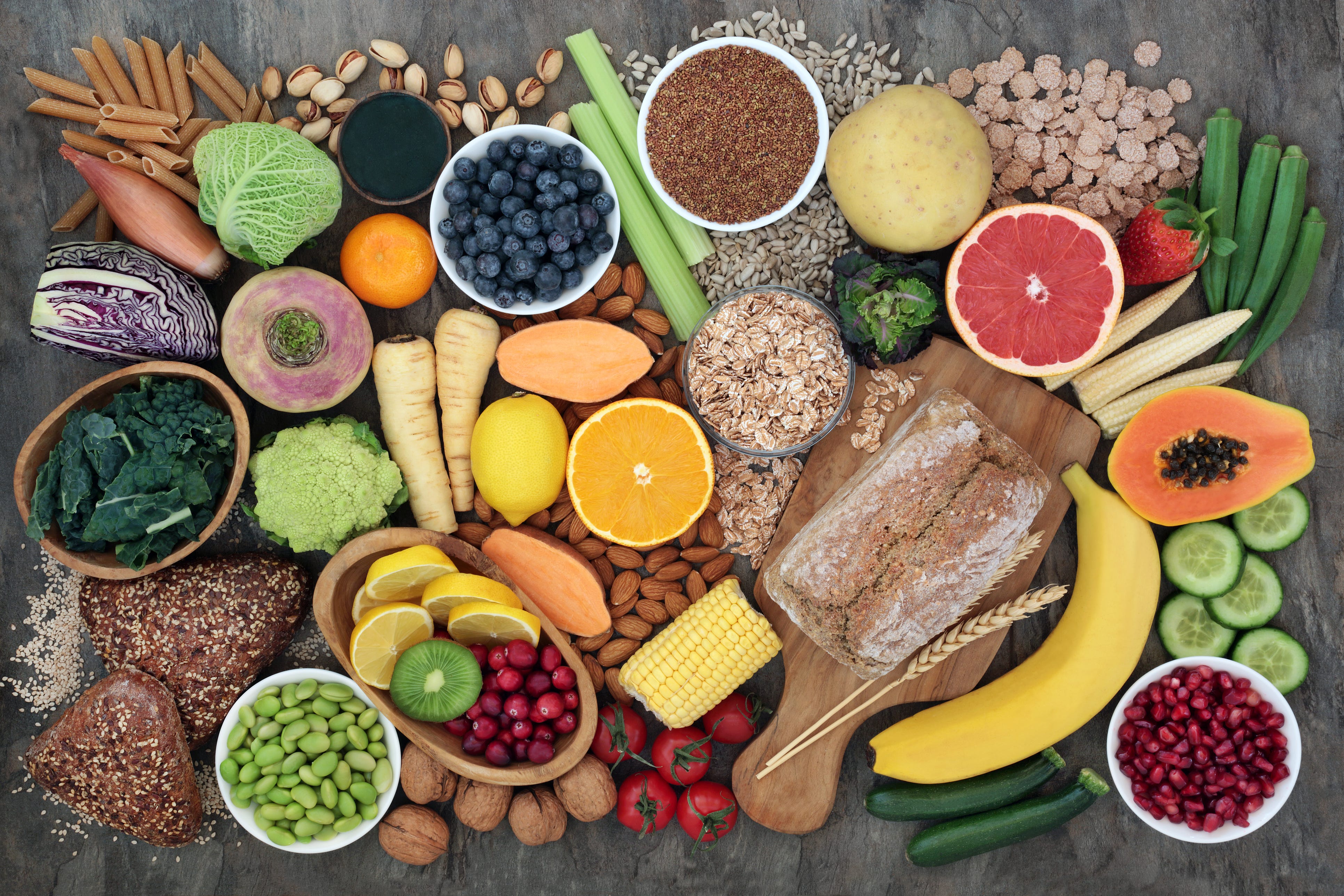
Gut health is shaped by a wide range of foods, not a single ingredient. Fruits, vegetables, legumes, whole grains, nuts, seeds, and herbs each contribute something different to the larger pattern.
What Supports a Healthy Gut?
Parents are often surprised to learn that the conversation around gut health is much broader than eating more vegetables, finding a superfood, choosing a particular probiotic strain, or searching for the perfect supplement. It is about creating more opportunities for variety. Vegetables contribute, but they are only one part of a much larger picture. Healthy digestion tends to emerge from simple food patterns practiced consistently over time.
Variety Comes First
The one principle that matters most is variety. Different foods provide a mixture of fibers, nutrients, and plant compounds. Over time, a broader range of foods creates more opportunities for both taste learning and digestive health.
It can be a relief to know that new meals do not need to be served every day. Rotating fruits, vegetables, grains, or proteins throughout the week provides children with familiar flavors in different ways.
Fiber Feeds More Than Digestion
Fiber, often discussed only in relation to constipation, also serves as food for beneficial microbes living in the gut. As gut microbes break down fiber, they produce compounds that help support the health of the digestive tract and overall digestive function. Rather than relying on supplements, most children benefit more from gradually increasing fiber through foods.
Plants Matter
Fruits, vegetables, herbs, legumes, nuts, seeds, and whole grains provide an enormous variety of nutrients and plant compounds. Each plant-based food contributes something slightly different to gut health. Although a child rarely embraces every plant food they encounter, continuing to encounter plant foods over time helps them become a larger part of a child’s regular eating pattern.
Legumes and Beans
Beans, lentils, chickpeas, and peas are among the most powerful foods for supporting gut health. They provide both fiber and nutrients while also helping children encounter new textures and flavors. Beans do not have to appear as a bowl of beans. They can show up in soups, dips, sauces, spreads, and blended recipes.
Whole Grains
Whole grains provide the additional fiber and nutrients that are removed during processing. Oats, quinoa, brown rice, barley, and whole wheat contribute to digestive health while helping children experience a broader range of flavors and textures.
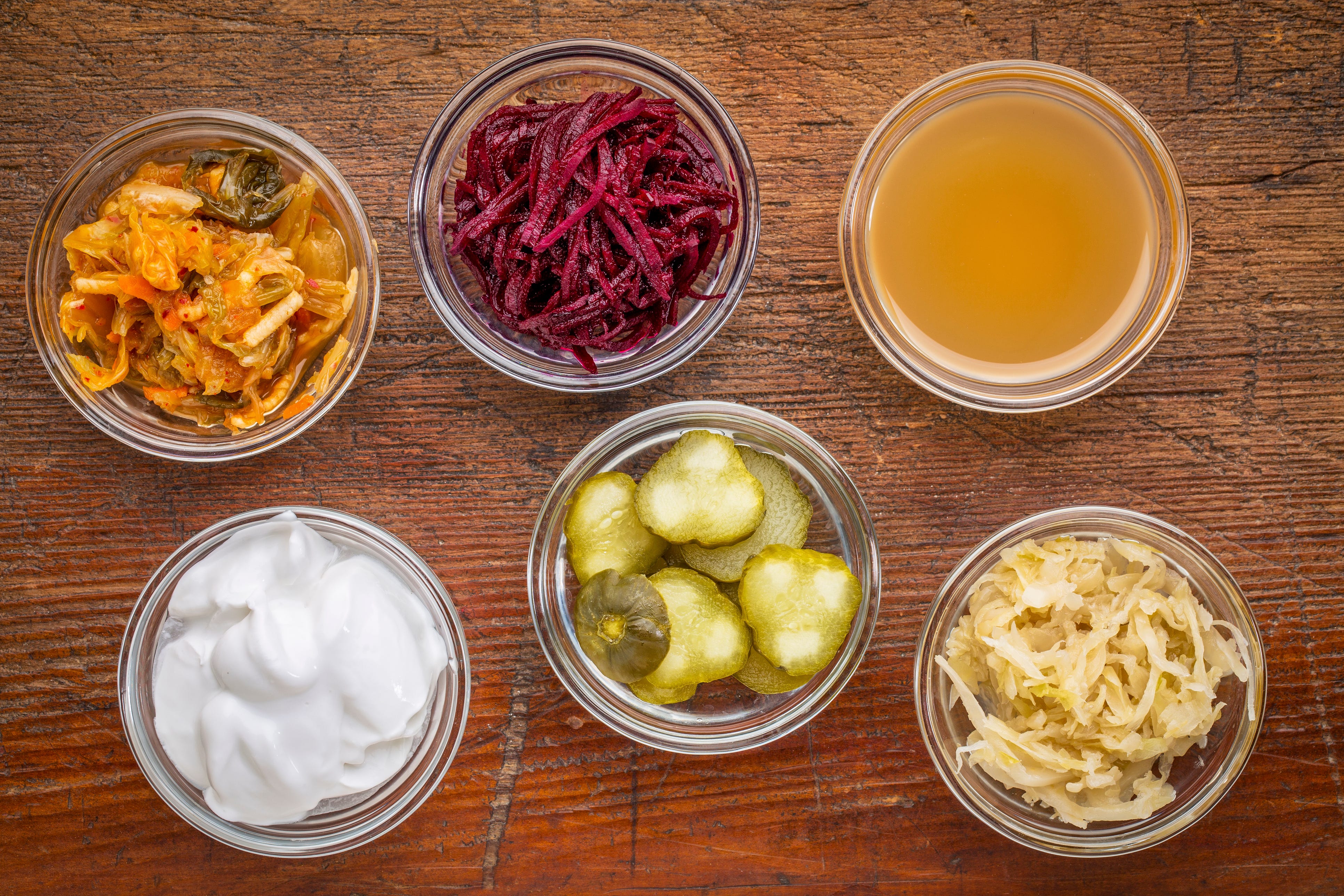
Fermented foods can be one part of a healthy dietary pattern. Their benefits are most meaningful when they are included alongside a wide variety of foods over time.
Fermented Foods
Foods such as yogurt, kefir, sauerkraut, kimchi, and other fermented foods contain beneficial microbes that support gut health. These foods can be valuable additions to a child’s diet. Unfortunately, a probiotic yogurt, soda, pouch, or puff cannot fully compensate for a diet that lacks diversity.

Water supports digestion by helping food move through the digestive tract and supporting regular bowel movements.
Hydration Matters Too
The healthiest diet works best when children are adequately hydrated. Water supports digestion by helping food move through the intestines to maintain regular bowel movements. Parents support their child’s gut health through the small, repeated choices that shape what their child eats and drinks over time.
Gut health depends on both fiber and water intake. A healthy gut is supported by a pattern of variety, exposure, hydration, and gradual dietary expansion over time.
Why Gut Health and Picky Eating Are Connected
Parents often describe feeling trapped between two competing realities. They know variety matters, yet they also know their child only accepts a small number of foods. Meals become repetitive because familiar foods feel safer and more predictable. Over time, parents may find themselves serving the same foods again and again, not because they believe those foods are ideal, but because they know their child will eat them.
This is often where questions about improving gut health begin.
A child who eats a limited range of foods also consumes a limited range of fibers, plant compounds, and nutrients. Over time, this influences their digestion, bowel habits, and the diversity of their gut microbiome.
It is reassuring to remember that picky eating does not mean that parents have done anything wrong. When a child’s diet becomes very narrow, it makes sense that the digestive system has fewer opportunities to benefit from the wide range of foods that support healthy gut function.
Parents often feel stuck in a frustrating cycle when their child refuses fruits or vegetables, and a child’s food world becomes smaller. Parents may be relying on a small collection of accepted foods just to get through the day. Convincing a child to suddenly eat more vegetables just doesn’t work.
Instead of focusing on getting a child to eat more vegetables tonight, it can be more helpful to focus on helping them recognize flavors, ingredients, and foods across multiple experiences. As foods become more recognizable, they are more likely to become part of a child’s regular eating pattern, and variety often follows.
A child who learns to recognize and accept a wider range of flavors will naturally eat a more varied diet as they gain more confidence at the table. Gut health and taste development are journeys that often grow together.
Five Food-First Shifts That Feel Manageable
Improving gut health does not require a complete kitchen overhaul. It is comforting to know that even the smallest of changes can be meaningful and lasting. Rather than trying to transform your child’s diet overnight, begin with choosing one of these shifts to practice consistently.
Add Before You Remove:
Instead of eliminating foods your child already accepts, look for opportunities to add something new alongside them. A favorite pasta can be served with a new vegetable on the table. A familiar snack can be paired with a different fruit. Small additions create opportunities for learning without increasing pressure.
Build Variety Through Familiar Foods:
Parents often assume variety means introducing completely new foods. Instead, it usually begins by helping children notice similarities between foods they already know and foods they have not yet encountered. If your child enjoys strawberries, try raspberries. If they enjoy yogurt, add a new fruit topping. If they enjoy crackers, experiment with different whole-grain versions. Children are often more willing to explore foods when they recognize something familiar.
Make Plants a Regular Part of the Meal:
Children benefit from encountering fruits, vegetables and legumes at meals regularly. Repeated experiences help children learn what foods look like, smell like, and eventually taste like. Gut health is supported by a child’s long-term eating pattern, not by a single successful meal.
Look Beyond Vegetables:
Parents often place their attention on vegetables even though many other foods support digestive health. Legumes, lentils, oats, dried plums, pears, kiwi, nuts, seeds, and whole grains all contribute valuable fiber and nutrients. A wider range of foods creates more opportunities for success.
Think in Patterns, Not Perfect Days:
One meal does not determine gut health. Neither does one snack. The digestive system responds to patterns repeated over weeks, months, and years. Parents who focus on steady progress often experience far less frustration than those chasing perfection. The goal is not a perfect daily menu. The goal is to help your child gradually build a broader, more varied relationship with food. That is a process that supports their long-term confidence at the table and overall health.
What You Can Do This Week
If there is one message, I hope parents take away from this article, it is this: Gut health improves through small patterns repeated over time. Rather than trying to change everything at once, choose one place to begin.
This week, consider trying one of these simple shifts:
Add one new plant food alongside a familiar meal.
Serve water consistently throughout the day.
Expand a familiar food into a slightly different version.
Help your child recognize something familiar about a food before expecting them to taste it.
Think about variety across the week rather than within a single meal.
Children often need to recognize a food before they are ready to accept it. That recognition may begin with noticing that roasted carrots smell a little sweet, that white beans can be blended like hummus, or that a new berry looks like one they already know. These small moments help foods feel familiar over time.

Food confidence develops over time through shared experiences with meals, flavors, and family traditions. Those same experiences also support digestive health and a broader relationship with food.
Closing Reflection
The conversation around gut health can feel overwhelming. Parents feel constantly prompted to buy a supplement, eliminate a food, follow a protocol, or fix a problem as quickly as possible. But healthy digestion is rarely built through a single product or dramatic change. Gut health develops through everyday experiences with food.
As children gradually learn to recognize more flavors, encounter more ingredients, and participate in more food experiences, they are doing more than expanding their diet. They are also building a foundation for lifelong health.
That process does not require perfection, a child who happily eats every vegetable, or a parent who gets everything right. It relies on moving one experience forward at a time.
The immediate goal is not to get your child to eat more vegetables tonight. The goal is to help your child build a broader relationship with food through many small experiences that gradually expand what feels recognizable and comfortable. Variety, digestive health, and food confidence often grow from that same foundation.
Most parents are not seeking to perfect their child’s health through a perfect microbiome. They are looking for less stress at mealtimes, fewer worries about nutrition, and confidence that they are moving in the right direction.
That confidence rarely comes from finding the perfect supplement. It grows from understanding how children learn about food and how small changes add up over time.
The small food experiences children accumulate over time support greater variety, digestive health, and a more connected relationship with food. Small steps may feel insignificant in the moment, but they add up to more progress than parents often realize.