

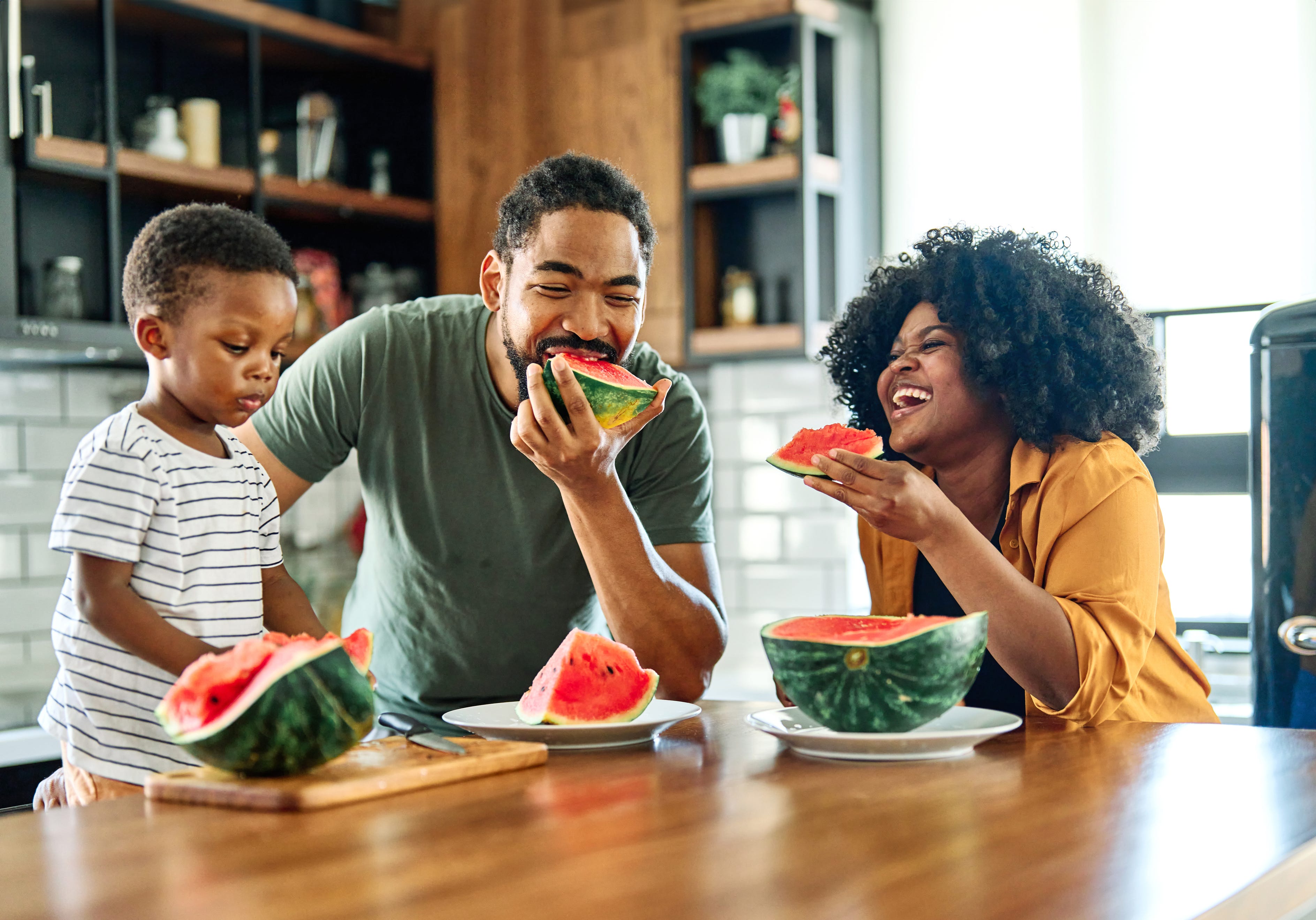
Children learn about food long before they learn about nutrition. Shared family meals help unfamiliar foods become familiar over time.
Few parenting challenges quietly work their way into everyday family life the way constipation can. It settles into the background of ordinary days until food begins carrying a responsibility it was never meant to have. Your child skips a bowel movement. Then another. They complain their tummy hurts and their next poop is painful. Suddenly, every meal feels like it could, and should, matter more.
The berries left in the lunchbox are no longer just berries. They feel like another chance that slipped away. The untouched cucumber slices pushed to the side of the dinner plate become another reminder that vegetables still feel out of reach.
The cheese, white rice, chicken nuggets, milk, applesauce, and crackers that once felt like dependable favorites now feel like obstacles. They are the foods your child will reliably eat, yet they are not helping the problem you are trying to solve.
Without realizing it, many parents begin looking at food through a different lens. Meals become less about enjoying time together and more about preventing the next painful bowel movement.
When your child cries because it hurts to poop, avoids using the toilet, or goes several days without a bowel movement, relief becomes the priority. Most parents would gladly serve the same five foods every day if they believed it would help their child go comfortably.
Parents naturally begin looking for answers.
The advice is remarkably consistent: eat more fiber, offer more vegetables, encourage more water, cut back on dairy, try prunes or prune juice. If that doesn’t help, someone suggests a fiber supplement, a probiotic, or polyethylene glycol 3350 (MiraLAX). Some of those suggestions help, at least for a while. Others feel impossible when the child sitting across the table refuses nearly every food on the list.
That is often the moment parents begin to wonder where things went wrong. The better question is whether there is another way to think about constipation.
Children eat foods, not nutrients
They eat foods they recognize.
Foods that feel familiar.
Foods they trust.
This distinction may seem simple, but it changes how we think about constipation. Many of the foods that naturally support healthy digestion are foods that children often need time to learn. A pear is not simply fiber to a three-year-old. It may feel grainy. Beans can be creamy or firm. Kiwi is bright green, slippery, and dotted with tiny black seeds. Even water has a temperature, a familiar cup, and a routine that influences whether your child wants to drink it.
Adults can separate nutrition from the experience of eating. Children do not. Children learn about food through thousands of everyday experiences that have little to do with nutrition labels.
That is one of the missing pieces in the conversation about childhood constipation. Helping your child become comfortable with foods that support comfortable digestion is a very different goal than simply getting them to eat more fiber.
Once we begin thinking this way, constipation becomes about more than today’s bowel movement. It becomes an opportunity to help your child build a relationship with foods their bodies can rely on for years to come.
Constipation Is Not Always Solved by “More Fiber”
If constipation were simply a fiber problem, the solution would be straightforward. Parents would offer more high-fiber foods, children would eat them, and constipation would improve. Anyone who has lived through constipation with a young child knows that it is rarely that simple. “Eat more fiber” has become such expected advice that we often stop asking another important question.
Is the goal to eat more grams of fiber, or is the goal to help your child produce bowel movements that are soft and easy to pass?
Those are not always the same outcome. Fiber is important for digestion, but it is not the only solution.
Different foods influence digestion in different ways. Some primarily add bulk, others help stool retain more water, and some support the natural movement of the intestines. Many foods contribute to several of these functions at once.
Parents don’t have time to become experts in digestive physiology to help their child. But understanding that different foods work differently helps explain why simply chasing a higher fiber number can feel frustrating. This also explains why one child seems to do well with oatmeal and pears, while another benefits from kiwi or prunes. Some children happily eat beans, while others need time to become comfortable with them. Even water matters because foods and fluids work together.
The long-term goal is not simply to eat more fiber. It is to help the body produce stool that is soft, comfortable and easy to pass. That sounds simple until you remember one important reality. The foods that most naturally support regular bowel movements are often the very foods children need time to learn.
Why Constipation and Limited Eating Often Overlap
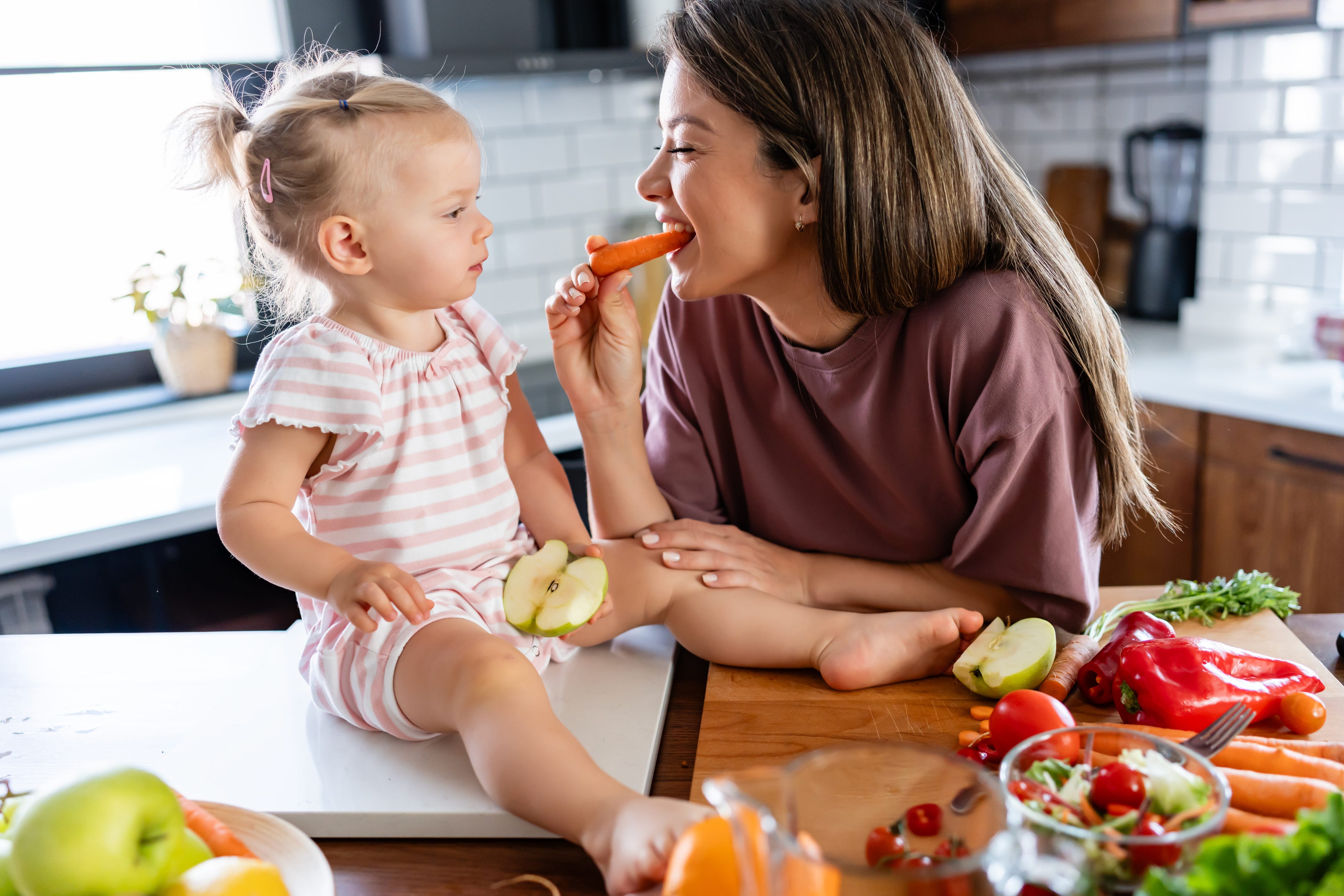
Children often learn new foods by watching someone they trust enjoy them first.
Many children who struggle with constipation also eat a limited range of foods. That does not mean those foods are “bad,” or that parents have done anything wrong. They are often the foods that feel familiar, predictable, and easy for a child to accept.
Over time, a limited range of accepted foods can leave less room for fruits, vegetables, beans, whole grains, and other plant foods that naturally support regular bowel movements. This is why constipation advice can feel so frustrating.
“Offer more vegetables” sounds simple until your child refuses anything green. “Add beans” seems reasonable until one black bean sends the whole plate away. “Serve more fruit” feels easy until applesauce is accepted but a slice of fresh pear is not.
The challenge is rarely knowing which foods may help. The challenge is helping children become comfortable enough to eat them.
Helping a child build confidence with new foods does not mean replacing the foods they already enjoy. It means creating small opportunities for unfamiliar foods to become familiar. A few pear slices beside a favorite snack. A spoonful of oatmeal at breakfast. A few beans next to rice.
Those moments may seem too small to matter. But children learn through repetition, not through one perfect meal. Once children begin accepting a wider variety of foods, the conversation naturally shifts from “How do I get more fiber into my child?” to “How do different foods help my child’s body work well?”
When Constipation Changes the Way the Body Works
For some children, constipation becomes more than an occasional hard stool. It becomes a pattern.
A child may begin withholding because one bowel movement was painful. The longer stool remains in the rectum, the more water the body absorbs from it, making the next bowel movement even harder to pass. Over time, the rectum can stretch, and the body’s normal signals become less reliable. Some children no longer recognize the urge to go until it is too late. Others may have softer stool leak around the backed-up stool, leading to accidents they cannot control.
This can be confusing for parents and deeply embarrassing for children, which makes it especially important to understand. These accidents are rarely a matter of laziness or defiance. They are usually a sign that the body needs time to recover. Understanding this changes the conversation.
The goal is no longer simply helping a child have a bowel movement today. It is helping the bowel recover while preventing the cycle of painful stools and withholding from starting again.
Think “Soft and Easy,” Not “More Fiber”
When parents are worried, it is natural to think the answer is simply more.
More fiber.
More vegetables.
More water.
More effort.
But what if the goal isn’t more?
What if the better goal is helping your child’s body produce stool that is soft, hydrated, and easy to pass?
That may sound like a small shift in thinking, but it changes the conversation significantly. Instead of measuring success by how many grams of fiber your child ate today, you begin asking a different question: How do my child’s everyday foods work together to support comfortable, regular bowel movements?
That question leads to one of the most important ideas in food-first constipation guidance.
Not all foods help the digestive system work in the same way.